Most kitchens do not run out of space. They run out of reachable space. Pots hide at the back of deep cabinets, small appliances cover the worktop, and the pantry holds things nobody can find. The fix is rarely a bigger kitchen. It is storage planned around how you actually cook.
This guide covers the storage ideas that make the biggest everyday difference in 2027: smart zoning, deep drawers, the appliance garage, the walk-in pantry, and the small upgrades that rescue wasted corners.
Start With Zones, Not More Cabinets
Before buying anything, divide the kitchen into zones. The classic work triangle of sink, fridge, and stove has given way to zone-based layouts, because modern kitchens often have more than one cook and more than one job happening at once. Keep five zones in mind: cooking (pots, pans, utensils, spices near the stove), prep (knives, boards, bowls near the main counter), cleanup (trash, recycling, dish soap near the sink), food storage (pantry items with the fridge), and everyday (plates and glasses near the dishwasher). When everything for a task lives where you do that task, cooking gets faster and the kitchen stays tidier.
Deep Drawers Instead of Deep Cabinets
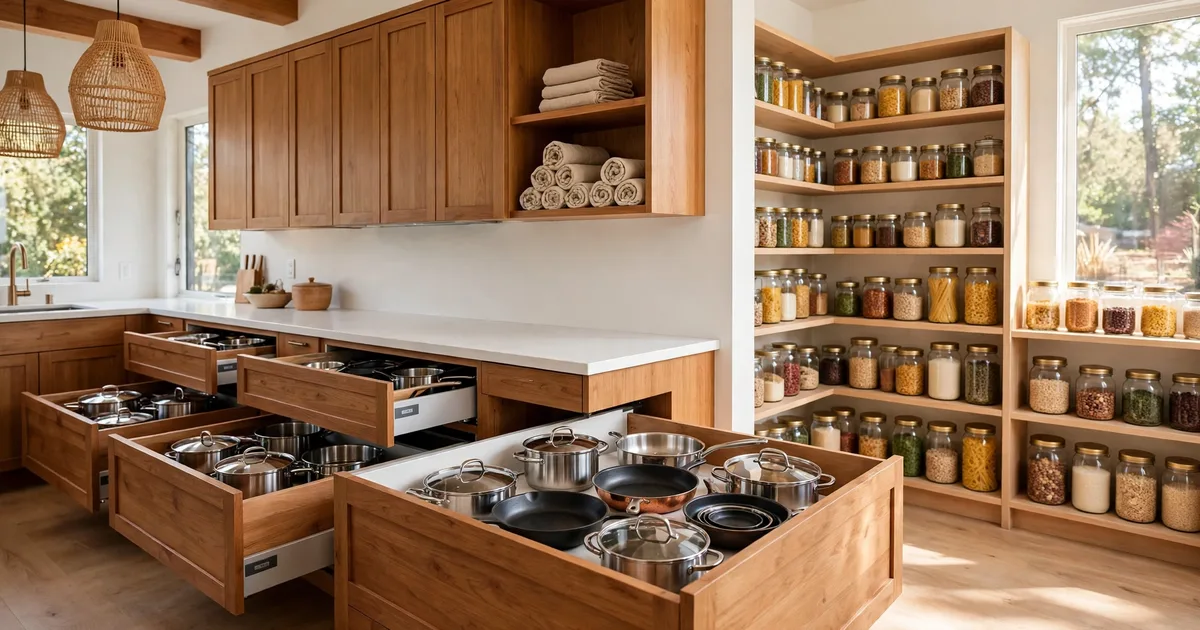
The single most useful upgrade is also the simplest: replace door-and-shelf base cabinets with stacks of wide, deep drawers. Instead of kneeling and digging to the back of a cabinet, you pull a drawer out and look down at everything — pots, pans, lids, mixing bowls, even plates. Use 30- or 36-inch-wide drawers with full-extension slides for heavy items, add dividers inside so pans and lids do not slide around, and keep the heaviest items in the lowest drawers. If you can only afford one upgrade, start here.
The Appliance Garage: Clear the Worktop
Small appliances are the fastest way to lose worktop space. An appliance garage is a countertop-level cabinet with a lift-up, pocket, or tambour door that hides them. Plug the appliances in inside, slide them out when you need them, and close the door when you do not. Searches for appliance garages rose 453% in Houzz’s 2026 trends data. Plan the garage near the prep or everyday zone, make sure it fits your tallest appliance, add an outlet inside, and leave a little spare space.
Walk-in Pantry or Tall Pull-Out Pantry
A walk-in pantry is a small room lined with shelves, and it holds more than any cabinet can. It takes bulk goods, small appliances, and even a second fridge, and it can double as a prep or coffee zone, keeping mess out of the main kitchen. Searches for walk-in pantries rose 63% in the same Houzz data. If you do not have room for one, a tall pull-out pantry cabinet does the same job in a small footprint: a floor-to-ceiling cabinet with roll-out trays, where nothing gets lost at the back. Even a slim vertical pull-out between the fridge and a wall can hold canned and dry goods.
Rescue the Corners and Narrow Gaps
Corners are the most wasted space in most kitchens. A lazy Susan or a blind-corner pull-out brings the back of a corner cabinet out to you. Modern articulated pull-outs glide trays fully outside the cabinet frame, so nothing hides behind a door.
Use the narrow gaps too. Slim six- or nine-inch pull-outs beside the stove hold oils, vinegars, spices, and utensils right where you cook. Vertical tray dividers turn a thin cabinet into storage for baking trays, chopping boards, and lids. A pull-out trash and recycling bin near the sink keeps bins out of sight and cleanup quick.
The Island and the Coffee Station
A kitchen island is one of the best storage assets you can add, especially a moveable one. Searches for moveable kitchen islands rose more than 800% in Houzz’s 2026 data, because they add worktop, storage, and seating without a fixed commitment. Use the island for deep drawers on the working side and seating on the other. A coffee or drinks station is the same idea at a smaller scale: group the coffee maker, mugs, and supplies in one spot, ideally inside an appliance garage or a dedicated pantry shelf, with an outlet nearby.
Small Kitchens: Go Vertical and Declutter First
In a small kitchen, go vertical: floor-to-ceiling cabinetry, hooks and rails on the wall, and the space above the fridge. Keep daily items at eye level and seasonal items high up. But before adding storage, declutter — remove duplicates, broken gadgets, and food past its date. Then add upgrades in this order: deep drawers, a tall pull-out pantry, an appliance garage, and corner solutions.
Mistakes to Avoid
Do not add storage without a zone plan, or you will store the wrong things in the wrong place. Do not choose shallow drawers for heavy pots, or shelves you cannot reach. Do not forget outlets inside garages and pantries, or the appliances will end up back on the worktop. And do not fill every inch: leave breathing room, or the kitchen will feel cramped even when it is organised.
A well-stored kitchen is not the one with the most cabinets. It is the one where everything you need is within reach, and everything else has a door to hide behind.