

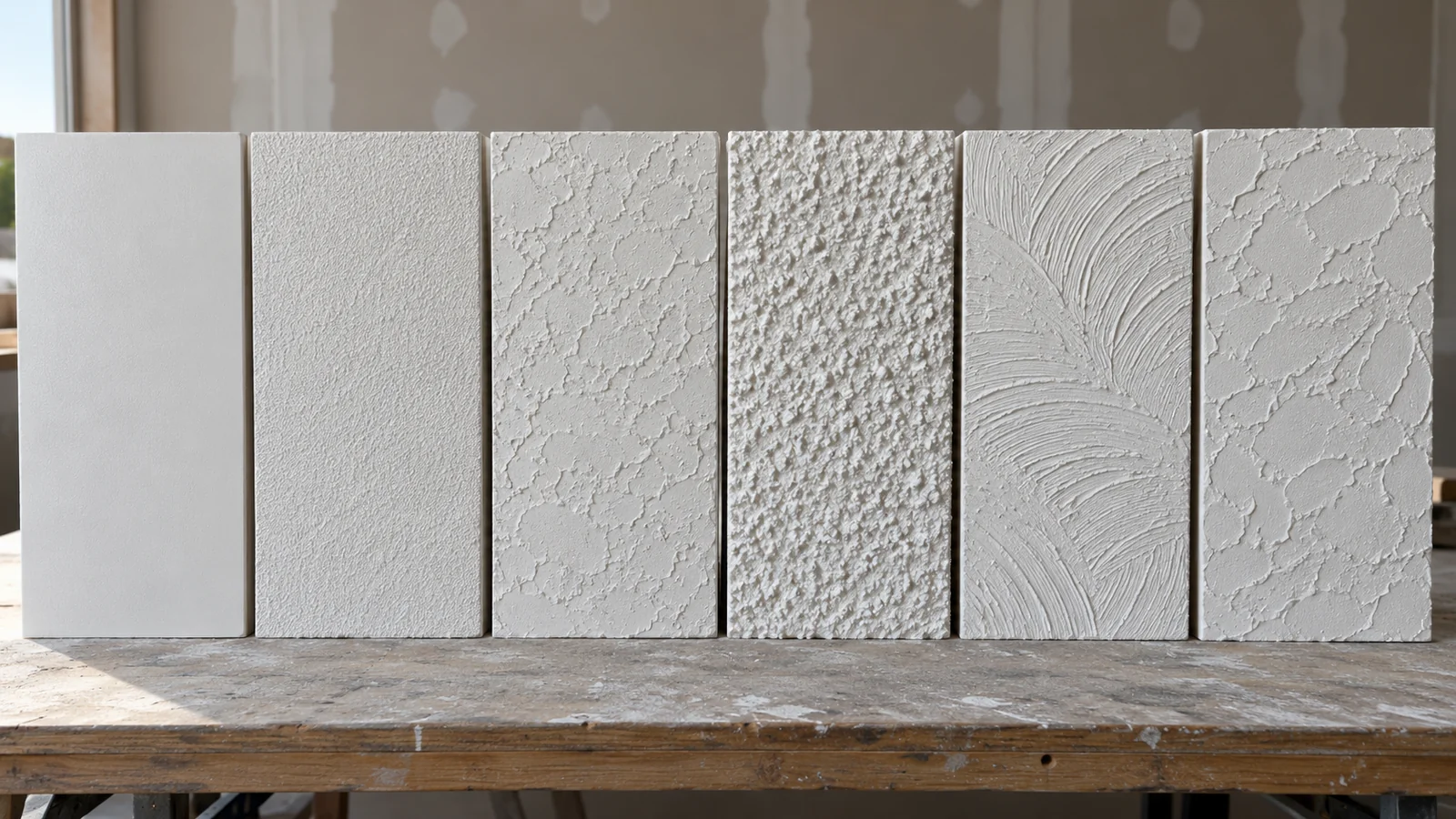
Ceiling textures include orange peel, knockdown, popcorn, slap brush, skip trowel, swirl, and decorative plaster. Orange peel and light knockdown are practical choices for many homes, while smooth ceilings suit a more minimalist look. The best finish depends on surface quality, room conditions, and budget.
Textures create different shadows, conceal minor drywall imperfections, and need different tools. This Homeaholic guide explains 15 finishes, room choices, costs, and DIY options.
What Are the 15 Types of Ceiling Texture?
The most recognizable ceiling finishes range from sprayed dimples to hand-troweled plaster. Texture describes the visible surface, not the ceiling’s structural shape or base material. These examples cover drywall patterns and related alternatives.
1. Smooth Ceiling
A smooth ceiling is an untextured, painted surface rather than a raised pattern. It looks clean and is generally easy to dust, but it exposes sanding marks, uneven joints, and poor patching. In strong side lighting, a Level 5 gypsum-board finish may be appropriate. Choose smooth when minimal detail matters most.
2. Orange Peel Ceiling Texture
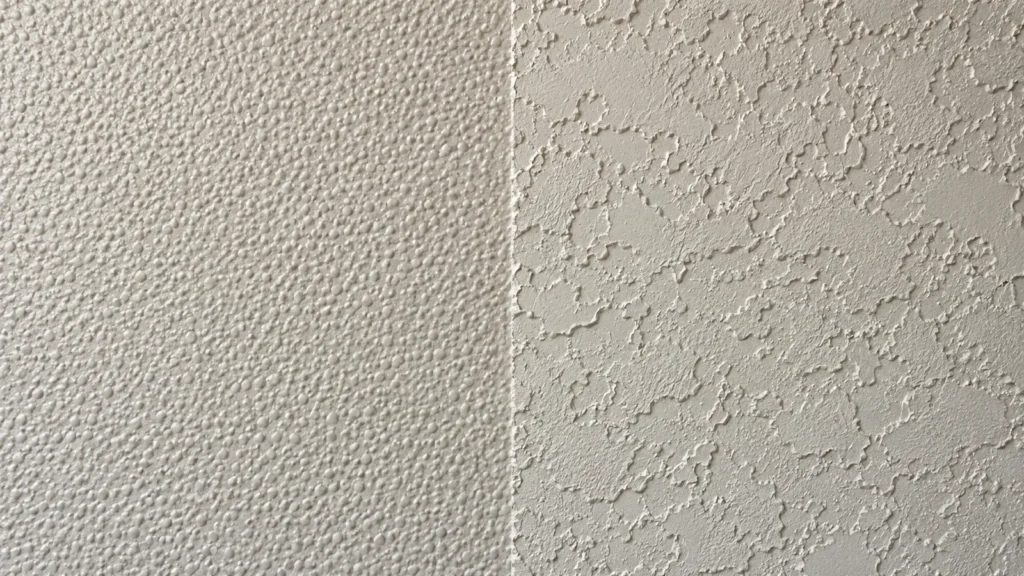
Orange peel consists of small, irregular sprayed dimples resembling citrus skin. Fine orange peel is subtle; coarse orange peel produces deeper shadows. It is relatively forgiving of minor surface variations and suits bedrooms, hallways, and family rooms. The pattern depends on sprayer settings and material consistency. Practice before repairing.
3. Knockdown Ceiling Texture
Knockdown features raised splatter flattened into irregular islands with smooth spaces between them. Installers spray texture, allow it to firm up, and lightly pass a wide knife over the peaks. Flattening too early causes smearing; waiting too long makes the ridges difficult to level.
4. Popcorn Ceiling Texture
Popcorn, sometimes called cottage-cheese texture, has coarse, closely spaced bumps. It was common in older housing because it reduced the need for perfectly finished drywall. It collects dust and is hard to patch. Some historical popcorn coatings contain asbestos. Never scrape, sand, or drill a suspect old coating before an appropriate professional assessment.
5. Slap Brush Ceiling Texture
Slap brush, or stomp brush, is made by pressing a stiff-bristled brush into wet compound. Each impression leaves raised, flowerlike or irregular marks. It uses simple tools, but uneven pressure creates inconsistent results. Work in sections and establish a repeatable stamping rhythm before starting overhead.
6. Slap Brush Knockdown
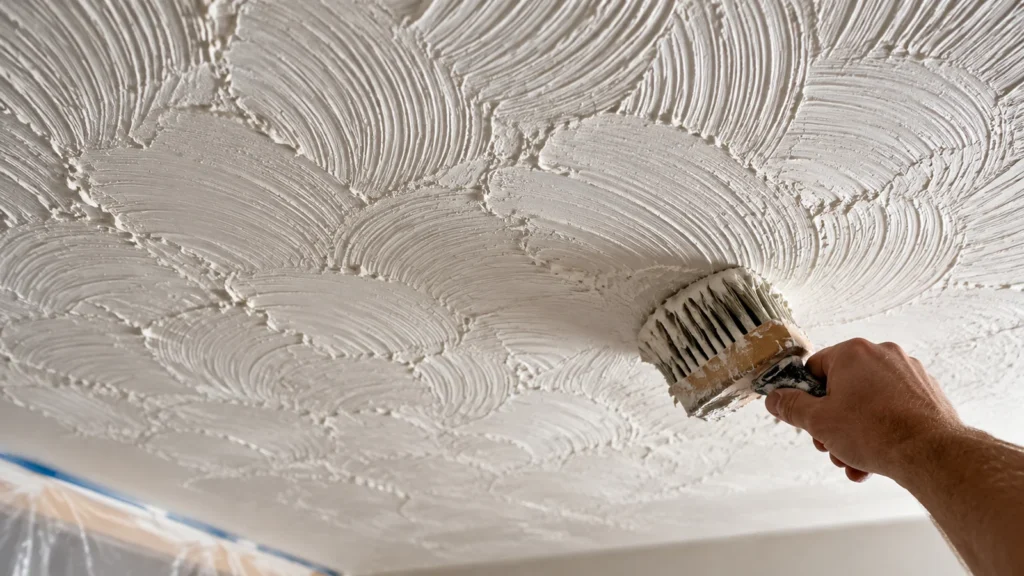
This variation begins with stomp-brush impressions and then flattens their high points with a finishing knife. The resulting surface has softer peaks and visible brush direction. It suits traditional rooms where texture should be noticeable without looking excessively rough. The timing of the knockdown step matters as much as the original brush pattern.
7. Skip Trowel Ceiling Texture
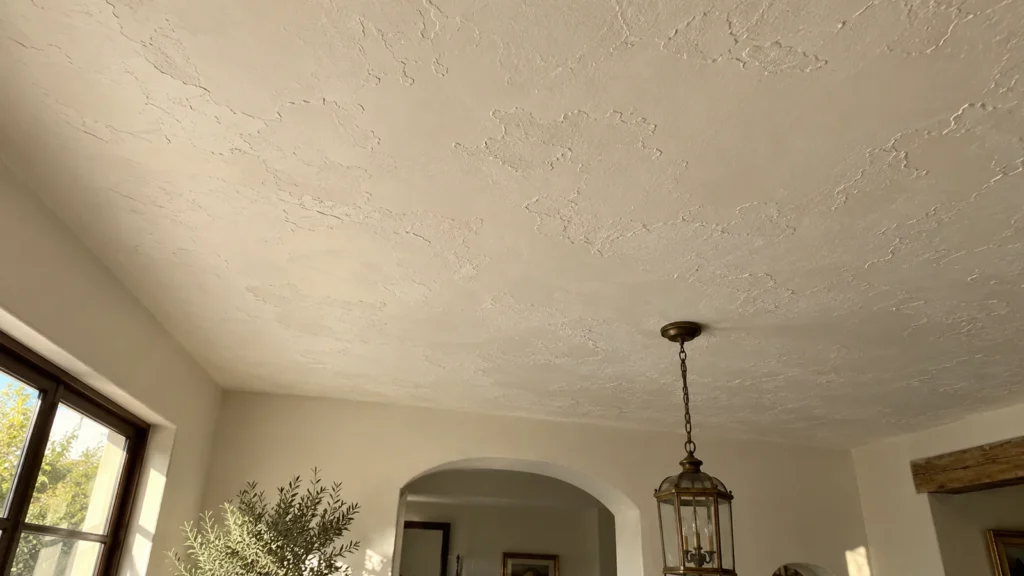
Skip trowel uses a blade to leave scattered thin patches of compound, with smoother areas visible between them. Its slightly weathered, handmade character complements rustic and Mediterranean-inspired interiors. It may seem random, but consistent pressure and restrained material thickness are essential. Poorly blended repairs show up especially clearly when sunlight grazes the ceiling.
8. Swirl Ceiling Texture
Swirl patterns consist of overlapping curves or semicircles drawn through wet compound with a brush or sponge. They can look elegant in traditional dining rooms and period-style homes. Drifting arcs become obvious across a large ceiling. Make a full-sized trial pattern, not just a small dab of material.
9. Sand Swirl Texture
Sand swirl combines curved marks with a fine granular surface. The added grain catches light differently from an ordinary smooth swirl, giving the ceiling a slightly stronger pattern. Use a compatible manufactured texture rather than mixing in arbitrary sand. Dust can collect in its grooves.
10. Spray Sand Texture
Spray sand creates a relatively uniform, fine-grain finish without the large, flattened islands of knockdown. It softens minor imperfections. Match the sprayer, nozzle, and product to manufacturer guidance. Uneven spray overlap may produce differences that become visible after painting.
11. Comb Ceiling Texture
Comb texture is formed with a toothed tool pulled through wet compound. Installers create parallel lines, arcs, waves, or repeated geometric shapes. It is decorative, not a substitute for proper preparation. Repairs are challenging because groove spacing, direction, and depth must match the surrounding surface.
12. Spanish Lace Texture
Spanish lace produces interwoven-looking patches from splattered and sometimes partially flattened compound. It creates a busy, ornamental effect suited to selected traditional interiors. Contractors use the name differently in different markets, so an approved sample is more reliable than terminology. Fine lace suits smaller rooms better.
13. Santa Fe Ceiling Texture
Santa Fe has broad smooth-looking patches interrupted by irregular troweled texture. A skilled installer can control the balance between flat and textured coverage so it feels intentional rather than unfinished.
14. Hawk and Trowel Texture
Hawk and trowel describes a hand-applied technique using a board to hold compound and a blade to spread it. The finish can include soft ridges, layered sweeps, and flattened patches. The result depends on installer technique. Approve a physical sample and ask how future patch repairs will be handled.
15. Venetian Plaster Finish
Venetian plaster is a layered decorative mineral finish rather than a conventional sprayed drywall texture. Depending on the product and technique, it can appear softly mottled, smooth, or polished. Because preparation and finishing require specialist skill, it is generally better suited to premium projects than budget repairs.
Which Ceiling Texture Is Most Popular?
Orange peel, knockdown, and smooth finishes are the most practical shortlist, but no reliable global dataset establishes one as the single most popular ceiling texture. Preferences differ between construction markets, older homes, and contemporary renovations. A subtle, consistent finish usually adapts to more decorating styles than a heavily patterned ceiling.
| Finish | Appearance | Minor flaw coverage | Cleaning | DIY difficulty |
|---|---|---|---|---|
| Smooth | Flat and minimal | Low | Easier | High for flawless results |
| Orange peel | Fine dimples | Moderate | Fairly easy when painted | Moderate |
| Knockdown | Flattened islands | Moderate–good | Moderate | Moderate |
| Popcorn | Deep bumps | Good | Difficult | Not ideal for old coatings |
| Slap brush | Stamped ridges | Good | More difficult | Moderate |
| Skip trowel | Irregular patches | Moderate | Moderate | Higher |
For a modern room, choose smooth or fine orange peel. For a family living area with a few cosmetic irregularities, light knockdown is a sensible compromise. For a handcrafted look, consider skip trowel. Heavy patterns can help disguise small defects, but they cannot fix water damage, loose joints, or a sagging ceiling.
What Ceiling Textures Are Trending in 2026?
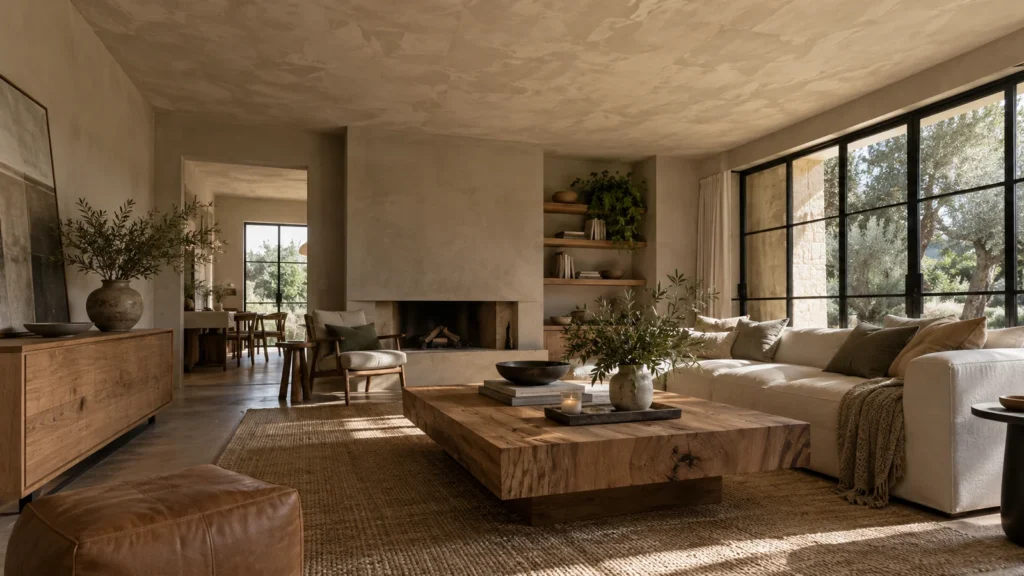
Subtle finishes and handcrafted character coexist in 2026. Houzz’s 2026 design research highlights growing interest in artisan plaster and natural materials. Its UK emerging-trends report also records increased searches for wood ceilings, exposed beams, and painted or wallpapered ceilings. These indicate design interest, not worldwide sales rankings.
Smooth matte ceilings remain suited to minimal interiors, especially with discreet lighting. Fine orange peel or restrained knockdown provides detail without dominating the room. Mineral plaster brings softer tonal variation, while wood planks and slats introduce a distinct material; technically, planks are coverings rather than applied ceiling textures.
- Understated contemporary: smooth, fine orange peel, or light knockdown.
- Warm handcrafted: subtle plaster or controlled skip trowel.
- Architectural statement: wood slats, painted ceiling, or tray detailing.
- Long-term flexibility: neutral color and a pattern that can be patched or repainted.
Choose a finish after viewing a sample with the room’s daylight and electric lighting. Deep texture throws stronger shadows and can make a low ceiling feel visually busy. Trends cannot override maintenance or moisture requirements.
Which Ceiling Texture Works Best by Room?
Room conditions should determine the texture before appearance alone. Living rooms suit smooth finishes, orange peel, and light knockdown. Bedrooms often benefit from restrained patterns that do not compete with lighting or furniture. A dramatic swirl or Spanish lace ceiling makes more sense in a deliberately traditional interior than an otherwise minimalist bedroom.
Kitchens favor smooth, adequately sealed and painted surfaces because grease is difficult to clean from ridges. Bathrooms require suitable substrate, coating, and ventilation; textured compound cannot compensate for persistent condensation. In a finished basement, consider leaks, low headroom, and access to plumbing before selecting an applied finish.
- Living room: light knockdown for practical pattern; smooth for clean architecture.
- Bedroom: fine orange peel for a subtle, forgiving surface.
- Kitchen: smooth and washable where the coating system permits cleaning.
- Bathroom: moisture-appropriate ceiling system with a simple finish.
- Basement: suitable drywall texture only if conditions and product allow it.
- Low ceiling: smooth or very fine texture to reduce visual heaviness.
There is another consideration: directional light reveals small variations. Before paying for a premium smooth ceiling beside tall windows, discuss the level of drywall finish required. The Gypsum Association identifies Level 5 finishing for critical lighting conditions.
What Materials Make Ceiling Texture?
Drywall joint compound and purpose-made texture products are the main materials for conventional residential ceiling patterns. Sprayed formulations create orange peel and knockdown; workable hand-applied compounds support slap brush and skip trowel. Specialist mineral plasters are used for decorative layered finishes. Material names alone do not guarantee compatibility with a particular application method.
For example, USG identifies Sheetrock spray texture as suitable for prepared interior surfaces and orange peel or spatter/knockdown patterns. Its Tuf-Tex product supports spray, brush, or roller application but is not recommended for below-grade or high-humidity areas. Follow manufacturer guidance rather than improvised recipes.
Check five details before buying: approved substrate, mixing requirements, tool compatibility, working and drying times, and whether a separate primer or topcoat is required. Primer can even out porosity, while paint can make a dry texture more serviceable. Neither will stabilize damaged drywall or stop an active leak. Different products may produce different patterns; test repairs first.
How Can You Texture a Ceiling Yourself?
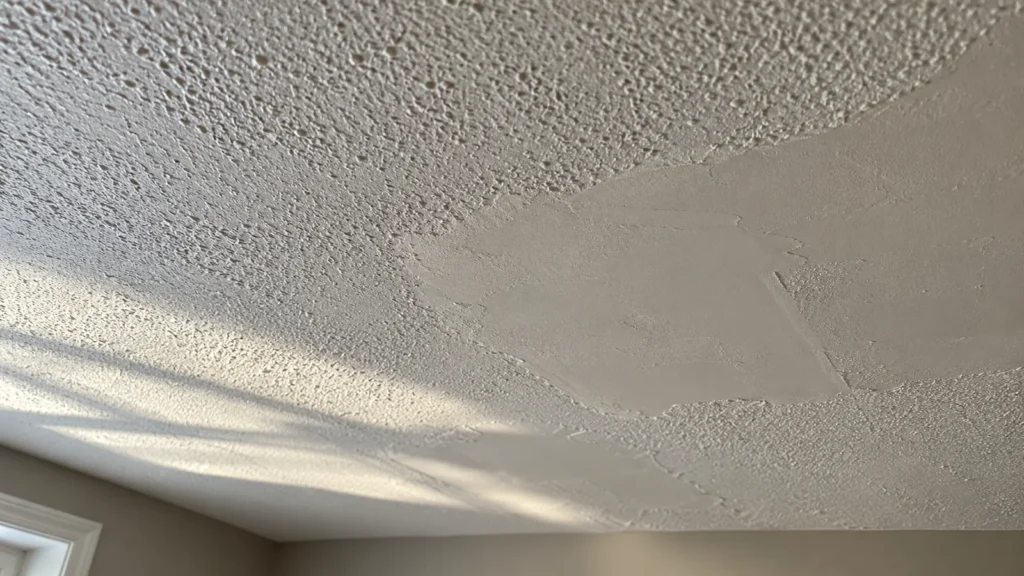
DIY ceiling texturing is realistic for some brush and roller patterns on a sound, dry, modern surface. Spray finishes need suitable equipment and practice; premium smooth and decorative plaster finishes are harder than they look. Do not sand or scrape an old unidentified coating before checking for asbestos or lead-paint hazards.
- Inspect the ceiling. Look for loose paint, water stains, cracks, failing tape, and sagging drywall. Repair the cause, not just the visible mark.
- Protect the room. Remove furnishings, cover floors, protect light fixtures, and arrange safe overhead access. Follow the product’s protective-equipment and ventilation instructions.
- Prepare the substrate. Repair joints, remove only materials confirmed safe to disturb, and prime when specified by the texture manufacturer.
- Test on spare drywall. Adjust pattern density and material thickness. Hold the sample under the same light conditions as the room.
- Apply consistent sections. Spray fine droplets for orange peel; form splatter and flatten the peaks for knockdown; stamp wet compound for slap brush; make thin irregular passes for skip trowel.
- Dry and finish. Follow specified drying and recoat times. Apply compatible primer or paint, then inspect the result from several angles.
For knockdown, the crucial judgment is when the sprayed material has firmed up enough to flatten without smearing. This varies with product, temperature, humidity, and thickness; there is no dependable universal waiting period. Use consistent hand speed and overlapping passes.
DIY decision rule: Try a small, accessible ceiling only when the surface is safe and the tool technique feels repeatable. Hire experienced help for high ceilings, extensive repairs, decorative mineral plaster, or hazardous old materials.
How Much Does Ceiling Texture Cost?
The total cost depends more on preparation and labor than on the pattern name alone. In the United States, a HomeGuide cost reference places sprayed drywall textures around $0.80–$1.50 per square foot and hand-applied textures around $1.50–$2.00 per square foot, including labor and materials under the stated assumptions. These figures are estimates, not fixed worldwide rates.
A 12 × 12-foot ceiling has 144 square feet. At $0.80–$1.50 per square foot, simple sprayed-texture application would be approximately $115–$216 before possible minimum charges and exclusions. Patching, priming, painting, scaffolding, existing-coating removal, and difficult access can increase the final bill significantly.
Ask contractors to itemize surface repair, the agreed texture sample, materials, primer and painting, equipment, cleanup, and any workmanship warranty. Compare complete local estimates rather than treating US cost guides as international prices. A basic brush technique may save equipment expense for DIY work, whereas decorative plaster usually requires specialist labor. A flawlessly smooth ceiling can also cost more than light texture if the drywall needs extensive preparation.
How Can You Cover a Bumpy Ceiling Cheaply?
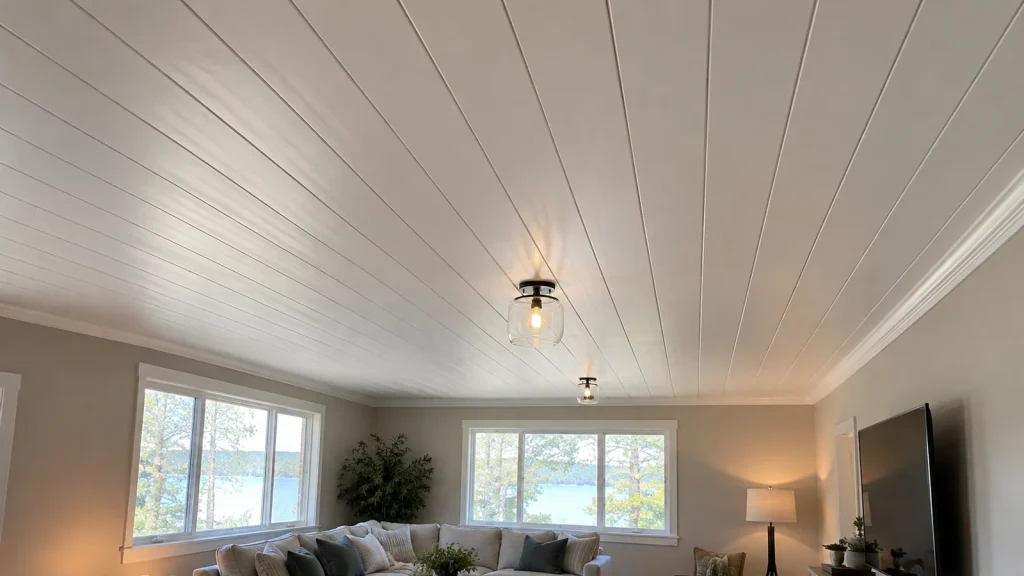
Repainting a stable, safe ceiling is often the least disruptive cosmetic improvement, although paint will not flatten bumps. If texture irregularities are minor, repair and retexturing may be practical. Where the existing finish is unattractive but intact, a suitable surface-mounted plank or tile system offers a new appearance without extensive plaster finishing.
Armstrong, for example, describes track-and-clip systems for installing particular ceiling planks over existing surfaces, including popcorn ceilings. This does not mean every old coating can be drilled safely: investigate suspect asbestos-containing materials before installing fixings. Adhesive systems also require manufacturer-approved substrates and cannot be assumed secure on crumbly texture.
For a sensible low-budget decision, proceed in order: inspect for moisture or structural problems; assess possible hazardous materials; repaint if sound; patch and retexture small defects; consider approved panels for a new look; replace damaged materials when necessary. Suspended ceilings preserve access but reduce height. The cheapest quote is not the best choice if it hides leaks or makes future repairs difficult.
What Are the Main Ceiling Types and Materials?
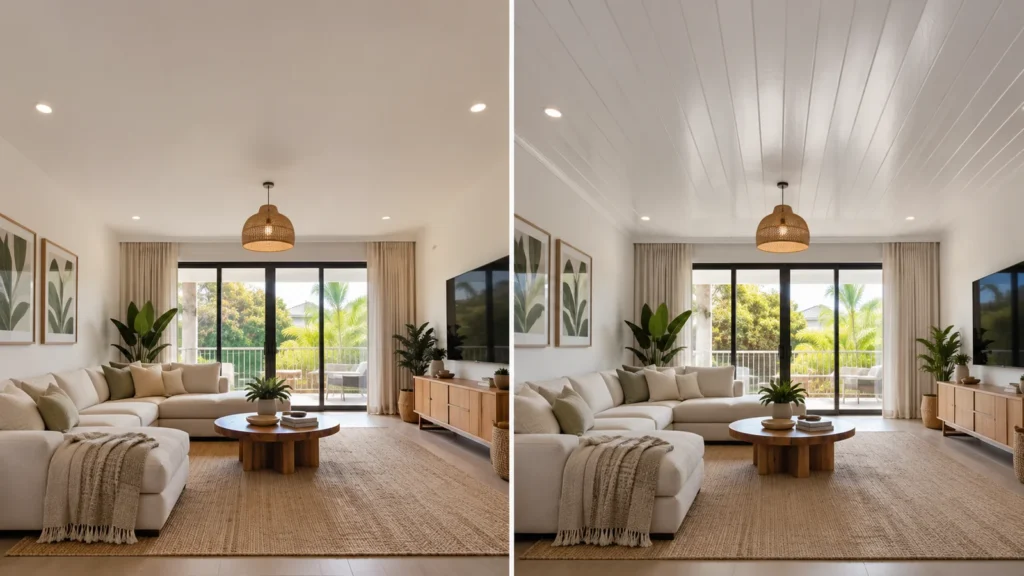
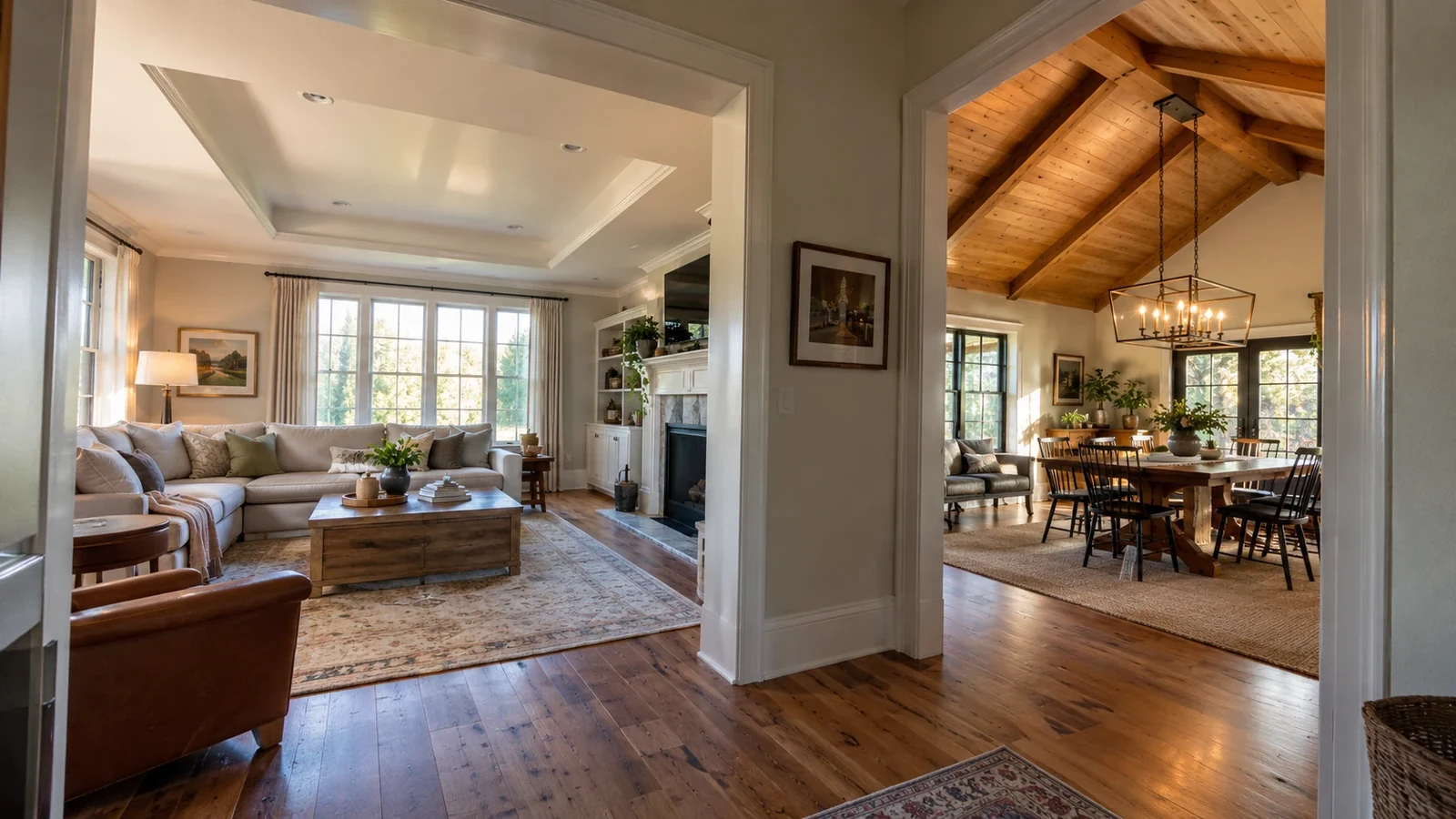
Ceiling texture is not the same as ceiling style or material. Four widely recognized forms are flat, vaulted, tray, and suspended ceilings. A flat or tray ceiling can have a smooth, orange peel, or knockdown surface. A suspended ceiling usually comprises a support system and panels. There is no universal rule that limits ceiling architecture to only three or four designs.
Common materials include gypsum drywall, plaster, wood, PVC panels, metal panels, and mineral-fiber acoustic tiles. Gypsum is versatile for seamless painted and textured finishes. Wood provides warmth and visible grain. Mineral-fiber products may offer specified acoustic performance. PVC panels can be easy to wipe clean, but their heat and fire characteristics depend on the exact certified product and assembly.
PVC or gypsum? Choose gypsum when you want a continuous painted appearance or a tested system that meets specific construction requirements. Consider suitable PVC panels where a cleanable panel finish is useful and local codes permit it. Neither is automatically cheaper or safer. Compare the full system: framing, fittings, labor, moisture suitability, fire performance, and maintenance. Brands such as USG, Knauf, Gyproc, and Armstrong should be evaluated by product specifications rather than name recognition alone.
How Do You Repair and Maintain Ceiling Texture?
A convincing repair matches pattern scale, relief, coverage, and paint sheen, not merely color. Orange peel may be easier to blend than a repetitive swirl, but even small patch edges become noticeable under angled light. First resolve the cause of damage, prepare a safe patch area, test the technique, and feather the new finish into the old surface.
After the patch dries, inspect it with daylight and artificial lighting before repainting. If the old paint has faded, coating the entire ceiling plane may provide a more consistent result than touching up one spot. Record the product for future repairs.
For routine care, gently dust sound painted texture with an appropriate soft tool. Avoid harsh rubbing or soaking fragile finishes. Recurrent stains should trigger a moisture inspection, not simply another coat of paint. Deeper ridges collect more dust, so cleaning effort is a meaningful part of choosing a ceiling texture.
What Ceiling Texture Safety Risks Matter?
Older popcorn and decorative coatings may contain asbestos, and appearance cannot confirm whether they are safe. The US Environmental Protection Agency recommends qualified testing when suspect material is damaged or will be disturbed. The UK’s Health and Safety Executive also identifies historical Artex-type textured coatings as potential asbestos-containing materials. Do not scrape, sand, or drill suspect surfaces before professional assessment.
Lead paint can also be an issue in older housing. In the United States, paid renovation work disturbing paint in many pre-1978 homes falls under EPA lead-safe requirements; other countries use different rules. These concerns apply to covering as well as removal because screws and other fixings can disturb an existing coating.
Avoid heavy compound on unsupported drywall, unsafe access, and premature painting. Keep compound away from electrical fixtures and required ventilation clearances. When in doubt, use qualified professionals: a decorative finish should never mask a structural or health hazard.
FAQs About Types of Ceiling Texture
Is ceiling texture outdated in 2026?
No. Fine orange peel, knockdown, and decorative plaster remain relevant. Heavy popcorn can look dated in some interiors, but condition and architectural context matter more than age.
Which ceiling texture is easiest for beginners?
Slap brush is approachable because it uses simple hand tools. Practice on scrap drywall first; consistent pressure and thickness are essential.
Which ceiling texture hides imperfections best?
Pronounced knockdown, slap brush, and popcorn may disguise small cosmetic flaws. None should conceal damaged drywall, leaks, or structural movement.
What is the cheapest ceiling texture?
A simple DIY brush texture can have low equipment costs. Professional prices depend on preparation, labor, area, and local market rates.
Can I paint over textured ceilings?
Yes, if the coating is sound and safe to disturb. Use compatible paint and gentle application; old fragile textures may break away under a roller.
Does ceiling texture reduce noise?
Not necessarily. Acoustic performance requires an appropriately tested product or ceiling assembly; ordinary decorative texture does not guarantee soundproofing.
Which is better, PVC or gypsum ceiling?
Gypsum suits continuous painted finishes; PVC offers an alternative panel surface in suitable locations. Compare certified performance, installation requirements, and total cost.
How long does ceiling texture take to dry?
It depends on the product, thickness, humidity, and temperature. Follow the manufacturer’s drying and painting instructions instead of assuming a fixed number of hours.
Where can I find ceiling texture pictures or a PDF?
Use accurately labeled manufacturer samples and this guide’s image comparisons. To keep a copy offline, use your browser’s Print → Save as PDF option.
Which Ceiling Texture Should You Choose?
For most homes, start with smooth, fine orange peel, or light knockdown and compare real samples in the room. Use handcrafted finishes when decorative character is the priority, and consider ceiling panels when covering a suitable existing surface is easier than refinishing it. Check moisture, material safety, installation quality, and complete cost before deciding. The best ceiling is one that remains attractive, serviceable, and safe long after the initial renovation.

Hi! I’m Myra Sheikh, the creative voice behind Homeaholic. I love sharing cozy home decor inspiration, simple DIY projects, smart organizing ideas, and practical tips to make everyday spaces feel beautiful, comfortable, and personal.
Different Types of Ceilings: Styles, Materials, Costs, and Designs
Different types of ceilings include flat, tray, coffered, vaulted, cathedral, coved, and suspended designs. Popular materials include gypsum board, plaster of Paris (POP), PVC, wood, metal, and acoustic tiles. The best ceiling depends on room height, moisture, budget, maintenance needs,...