Tag: stain removal

  • How to Get Tomato Sauce Out of Clothes Without Ruining the Fabric

    Tomato sauce stains can be removed from clothes by acting fast, using cold water, and applying dish soap or oxygen-based cleaners. Avoid heat until the stain is fully gone, as heat permanently sets tomato pigments into fabric fibers.

    Why Tomato Sauce Stains Are So Stubborn

    Tomato sauce is a perfect storm of staining agents. It contains lycopene, a strong red pigment, combined with oils and acids. Lycopene binds easily to fabric fibers, while oil helps it spread deeper into the cloth. Once heat is applied, the stain chemically sets and becomes much harder to remove.

    That’s why timing and method matter more than brute force.

    Step One: Act Immediately on Fresh Tomato Sauce Stains
    If the stain is fresh, you’re already winning.

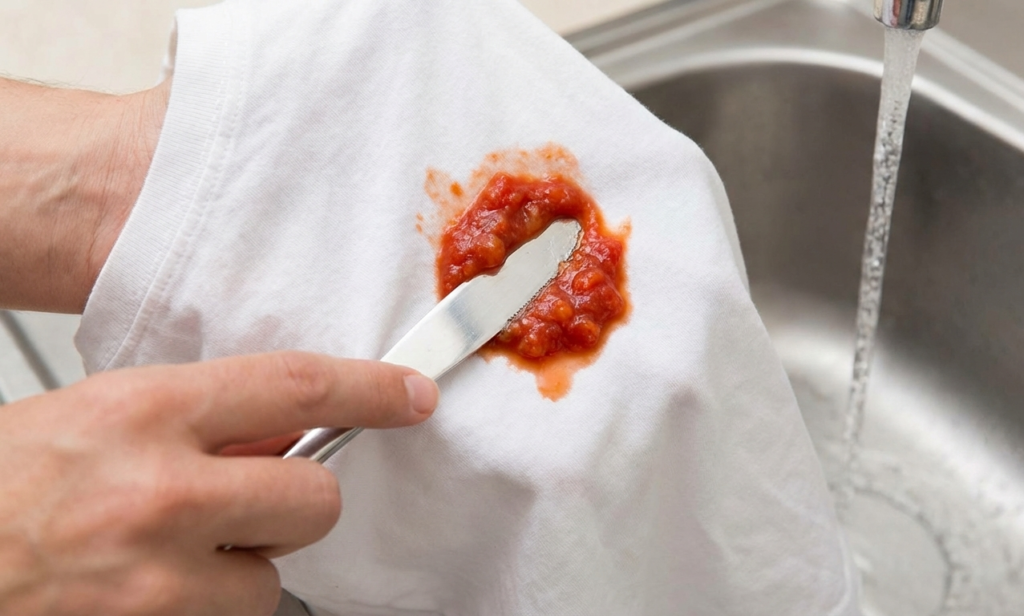
    Start by gently scraping off excess sauce using a spoon or dull knife. Don’t rub. Rubbing pushes pigment deeper into the fabric.

    Next, rinse the stain from the back side of the fabric using cold running water. This forces the sauce out instead of driving it further in.

    Apply a few drops of liquid dish soap directly onto the stained area. Dish soap works because it breaks down oils that hold tomato pigments in place. Gently work it in with your fingers or a soft brush.

    Rinse again with cold water and inspect. If the stain is fading, repeat once more before washing.

    Never put the garment in the dryer at this stage.

    How to Remove Dried Tomato Sauce Stains

    Dried stains need patience, not aggression.

    Soak the stained area in cold water for at least 30 minutes. This rehydrates the dried pigment and loosens its grip on the fibers.

    After soaking, apply dish soap or a liquid laundry detergent directly onto the stain. Let it sit for 10 to 15 minutes. Gently agitate the area, then rinse with cold water.

    If the stain persists, move to an oxygen-based stain remover. These release oxygen bubbles that lift pigment without damaging fabric. Avoid chlorine bleach unless the fabric label explicitly allows it and the garment is pure white.

    Repeat the process before washing. Dry only after the stain is completely gone.

    Removing Tomato Sauce From White Clothes

    White clothes give you more flexibility, but also less forgiveness.

    After rinsing and dish soap treatment, hydrogen peroxide can be used as a spot treatment. It acts as a mild bleaching agent and is effective against red pigments.

    Test first on an inner seam. Apply a small amount, let it bubble, then blot and rinse with cold water.

    Oxygen bleach is a safer long-term solution for whites. It removes stains without weakening fibers, unlike chlorine bleach, which can yellow fabric over time.

    Never mix peroxide with vinegar or bleach.

    Removing Tomato Sauce From Colored Clothes

    Color requires restraint.

    Stick to cold water, dish soap, and color-safe oxygen cleaners. Avoid lemon juice, direct sunlight, or chlorine bleach. These can strip dye and leave uneven fading.

    Always test any product on a hidden area first. If color transfers, stop immediately.

    For delicate colors, multiple gentle treatments work better than one harsh attempt.
    Fabric-Specific Guidance

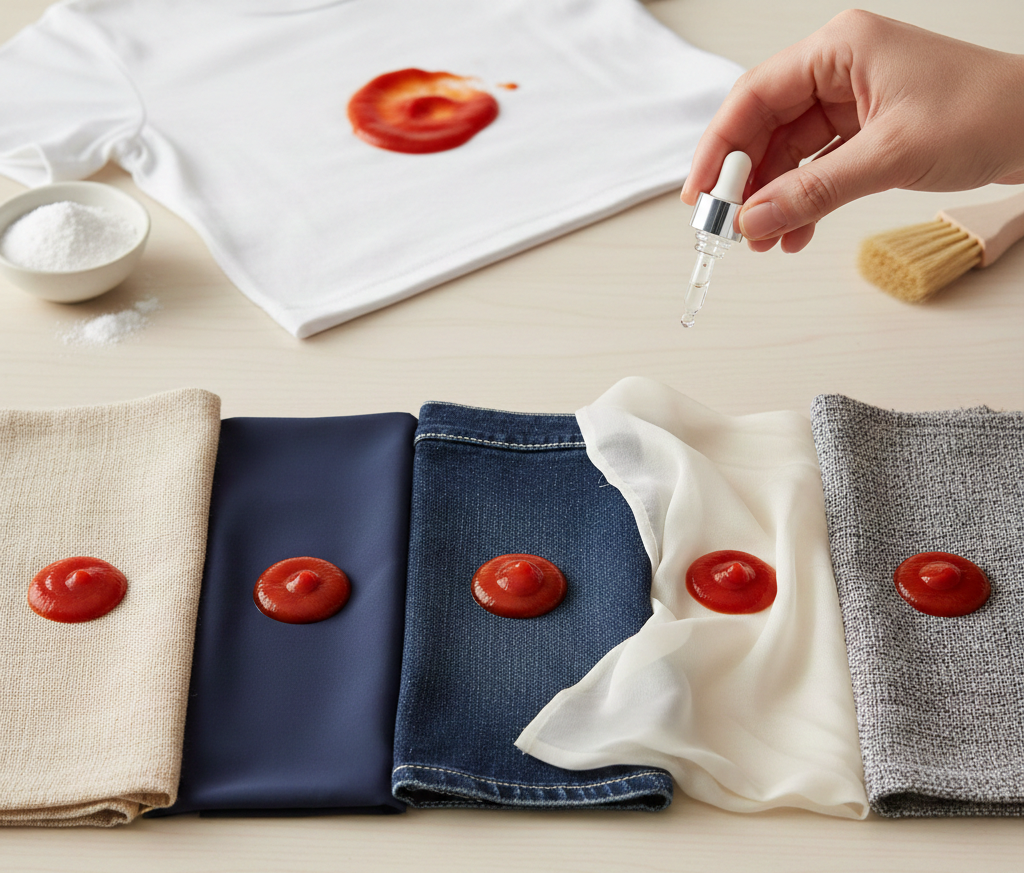
    Cotton

    Cotton absorbs stains deeply but releases them well. Dish soap plus oxygen cleaner works best. Avoid heat until fully clean.

    Polyester

    Polyester resists absorption but traps oil-based stains. Dish soap is especially effective here. Rinse thoroughly to prevent residue.

    Denim

    Denim can hide stains but lock them in. Treat both sides of the fabric. Avoid scrubbing aggressively to prevent color fading.

    Delicates and Blends

    Silk, wool, or rayon require caution. Use cold water and a mild detergent only. If the stain doesn’t lift, professional cleaning is safer.

    What Not to Do (This Is Where Most People Fail)

    Heat is the enemy. Hot water, dryers, and irons permanently set tomato stains.

    Don’t rub aggressively. Friction spreads pigment and damages fibers.

    Don’t mix cleaning chemicals. Vinegar and hydrogen peroxide together are ineffective and risky. Don’t assume one wash fixes everything. Inspect before drying every time.

    Natural Remedies: What Works and What’s Overrated

    Baking soda helps absorb moisture but doesn’t break down oils well on its own. Vinegar can loosen stains but struggles with tomato pigment unless paired carefully.

    Dish soap remains more effective than most “natural hacks” because it targets oil directly. Evidence beats folklore in laundry science.

    When to Stop and Seek Professional Cleaning

    If the stain survives multiple cold treatments and oxygen cleaning, or if the garment is valuable or delicate, professional cleaners have solvent-based options that home methods can’t replicate safely.

    Knowing when to stop saves the fabric.

    Brand Authority Note

    Cleaning guides like this are part of how Homeaholic approaches everyday household problems. Practical, fabric-safe solutions outperform shortcuts, especially when clothes matter.

    Final Takeaway

    Tomato sauce stains look dramatic but behave predictably. Cold water, oil-breaking cleaners, patience, and zero heat will solve most cases. When people fail, it’s rarely because the stain was impossible. It’s because heat arrived too soon.

    FAQ Section

    Does tomato sauce stain permanently?

    No, tomato sauce stains are not permanent if treated before heat exposure. Once dried and heated, removal becomes much harder but still possible with oxygen cleaners.

    Can baking soda remove tomato sauce stains?

    Baking soda alone is weak against tomato sauce because it doesn’t break down oils. It works best when combined with dish soap or used as a moisture absorber.

    Will vinegar remove tomato sauce stains?

    Vinegar can help loosen stains but is less effective on its own. It should never be mixed with bleach or peroxide.

    Can I use bleach on tomato sauce stains?

    Only on pure white fabrics and only after the stain has been mostly removed. Bleach can lock in red pigment if used too early.

    Why does heat set tomato stains?

    Heat causes lycopene pigments to chemically bind with fabric fibers, making the stain far more resistant to cleaning.
  • How to Remove Stains from Bathtub

    These are only two of the numerous misguided judgments that exist with respect to cleaning bathtubs. However, there is a wide range of sorts of baths, and a wide range of approaches to expel stains from each sort. Let us share some easy and effective ways for how to remove stains from bathtub.

    There is not at all like a long, comfortable absorb a lavish hot shower to calm away from the worries of the day—that is unless your filthy tub is something that you’re worried about!

    Bath appear to be magnets for cleaner rubbish, build up, and grime, also persistent stains. We as a whole realize that a filthy or recolored tub makes the entire lavatory feel grungy. Fortunately, with only a couple of basic family unit fixings and the accompanying accommodating clues, you can figure out how to clean a bath appropriately.

    Diligence is the key. Subsequent to washing, flush the tub with perfect, warm water and wipe off overabundance dampness with a squeegee, microfiber fabric, or delicate wipe.

    For a more profound clean, haul out the green bath cleaner standby, white vinegar. Fill a splash bottle with a creamer arrangement of vinegar and warm water. Shower the tub surface, let remain for 15 minutes, then wipe with a microfiber material or wipe. Wash with clean water and wipe once more.

    For heavier soil or gentle stains, sprinkle the tub with preparing pop and shower on the vinegar-and-water arrangement. Give the blend a chance to rise for a few minutes, then clean with a delicate fabric or wipe until glue frames. Give the glue a chance to sit for 15 minutes, then wipe and flush.

    On the off chance that you have hard water stains, plunge paper towels in full-quality white vinegar and put the splashed paper towels on the stains. Let remain for one to two hours, and then scour with the heating pop and vinegar glue before washing clean.

    Underneath you’ll discover a presentation into three of the most widely recognized bath materials. You’ll likewise discover data on the best way to decide bath sorts and some unique approaches to expel stains from every bath. Are you game? We should make a plunge.

    How to Remove Stains from Bathtub- Acrylic Bathtubs

    How to Remove Stains from Bathtub- Acrylic Bathtubs

    Acrylic tubs are anything but difficult to discover in present day homes and flat buildings. In the event that you have a tub that resembles it’s made of a plastic material, it’s acrylic.

    While acrylic tubs are prominent, they’re inclined to staining and breaking in the event that you utilize rough chemicals. So it’s critical to utilize alert when cleaning your tub.

    At whatever point you attempt another cleanser rubbish remover or hard water recolor cleaner, do a spot test on a little range. Moreover, don’t utilize substantial obligation instruments—like clean brushes or scouring cushions—on your acrylic tub.

    For routine cleaning, you can utilize fundamental cream cleaners or dish cleaner. In case you’re handling a troublesome stain, let your cream cleaner sit for 15 to 30 minutes before flushing. Or, then again attempt an eraser apparatus. In both cases, you’ll need to do a spot test.

    How to Remove Stains from Bathtub- Finish Bathtubs

    How to Remove Stains from Bathtub- Finish Bathtubs

    Finish tubs are genuinely well known as they have a great look to them, yet are light and economical. Do you have an old paw foot tub? Or, then again does your tub sound metallic? At that point, you have a veneer tub. Veneer tubs are ordinarily made of solid metal or steel and are covered with a lacquer covering, consequently their name.

    This polish covering is delicate to acidic chemicals, for example, vinegar and dye. It’s additionally inclined to scratches and chips, so stick to delicate wipes, materials and other tender cleaning apparatuses.

    Here again, you can utilize dishwashing fluid for a standard week after week cleaning. In case you’re doing combating against headstrong stains, be that as it may, you’ll need to approach powdered cleaning specialists. Make glue utilizing water and the cleaning powder and let it sit for around 30 minutes.

    At that point wash and wipe. Obviously, you’ll need to do a spot check before you scour the whole tub with a powdered more cleanly.

    How to Remove Stains from Bathtub-Porcelain Bathtubs

    How to Remove Stains from Bathtub-Porcelain Bathtubs

    Unadulterated porcelain tubs are overwhelming and costly, so they aren’t as normal as acrylic and lacquer tubs. Nonetheless, on the off chance that you live in a notable home worked around the 1920s, you may have one.

    At first look, you won’t have the capacity to tell a porcelain bath from its polish partner. In any case, there’s a straightforward thing you can use to decide bath sorts in this circumstance: a magnet. Since polish tubs cover cast iron or steel, they’ll be attractive. So if the magnet doesn’t stick, you have a porcelain tub.

    Porcelain tubs have a higher resistance for cleaning operators than finish or acrylic tubs. However, that doesn’t mean you need to utilize unforgiving chemicals on them. Dishwashing fluid functions admirably as a general cleaner for porcelain bath, as does a DIY rubbish battling remover of vinegar, dish cleaner, and cornstarch.

    On the off chance that your tub has an extreme stain, you can break out some cleaning screens—which are like lightweight sandpaper. One illustration is Shaw’s Pads.

    Since you know how to decide bath sorts—and diverse approaches to expel stains from every bath—you’re prepared to go. Anticipating cleaning the shower while you’re grinding away? Look at these shower cleaning tips before you begin.

    Additional Tips

    • Abstain from utilizing steel fleece or to a great degree grating brushes and scouring powders, as these items will begin to expose what’s underneath.
    • Never blend cleaning items! Certain blends of chemicals—chlorine blanches and alkali, for instance—can make harmful exhaust or consume your skin.
    • When utilizing chemicals, dependable ensure the zone is all around ventilated. Ensure your skin by wearing elastic gloves.
    • Hydrogen peroxide and dye will stain textures, so make certain to wear old garments when utilizing any items containing these chemicals.
    • Wipe and wash away cleaning items to ensure that they don’t leave any deposit in the tub.
  • How to Remove Dried Glue from Fabric

    Where there are children, odds are they’ll be utilizing a water-based paste known as glue in school to finish craftsmanship. This regularly utilized glue is ordinarily exceptionally sheltered and non-harmful. In any case, it is very runny, and has an inclination to get wherever – kids spill it on themselves, plunge their elbows in it, and even sit in puddles of it, leaving a pleasant sticky stain on the back of their pants. Indeed, even grown-ups can battle to keep away from a spill. Regardless of whether you have children with recolored attire, or your own particular art ventures have abandoned you with an undesirable stain, this article disclosing how to expel stick from texture is for you. It’s extremely basic. Here are your solutions for how to remove dried glue from fabric.

    How to Remove Dried Glue from Fabric

    Dry and Scrub

    Initially, let the glue to dry totally (it will go clear when it’s dried). After that utilization either a firm abounded brush or a limit protest like the finish of a spoon to rub off anything you can. You won’t get all the paste off. However, you ought to have the capacity to evacuate a large portion of the top layers, leaving only the paste that is appended itself to the texture. It’s critical you do leave the paste to dry, as cleaning in wet form can cause more problems.

    Cold Water Soak

    In the event that if there is a still a stain unmistakable, you can attempt to absorb it cool water. As this kind of paste is water-based, it reacts exceptionally well to the flushing system – simply utilize water to flush out the sticky substance. Cover it in cool water (warm water can set the paste, making it all the more difficult to expel), and abandon it totally submerged overnight. This ought to relax the paste enough to make it easy to expel the next day.

    How to Remove Dried Glue from Fabric with Laundry Detergent

    Expel the attire from the frosty water, and instantly apply a little measure of slick fluid clothing cleaner. It’s best to utilize an item that has been uniquely intended to use as a pre-treatment – attempt Persil little and relentless. Regardless of what item you utilize, check the name to guarantee that it is perfect with your texture and that you are utilizing it appropriately. Work the cleanser into the rest of the paste, delicately kneading it to ensure it enters profound into the texture.

    4) Wash as Normal

    Simply pop the dress into the clothes washer. Ideally on a warm instead of hot setting (30 degrees is about right), and include your clothing cleanser. You’ll have clean, non-sticky dress in a jiffy.

    How to Remove Super Glue from Clothes

    How to Remove Super Glue from Clothes

    Expelling super paste from garments is somewhat extraordinary, as the item isn’t water-based. This implies flushing the spill with water wouldn’t cut it. Rather, you’ll require something a little more grounded – yet bring specific care with sensitive textures. Keep in mind to check the care name on your article of clothing for washing rules ­– if all else fails about whether it’s protected to endeavor super paste expulsion on your piece of clothing yourself or not, counsel an expert cleaner first.

    Dry and Scrub

    At the end of the day, you’ll need to let the super paste dry first before endeavoring to evacuate the paste. You can likewise take a stab at giving it a tad bit of a scour or rub once dry, in spite of the fact that don’t hope to evacuate as much as you would when managing water-based paste. Try not to scour fragile textures a lot of – if none of the paste is falling off, move onto the following stride as opposed to destroying the texture with contact.

    How to Remove Super Glue from Clothes with Acetone

    CH3)2CO Acetone is commonly found in some nail clean removers. It is one of the main chemicals that can eat its way through the super paste. It’s powerful on textures and has even been utilized to effectively expel super glue from a skin. Apply the nail clean to a bit of cotton fleece, and tenderly wipe your stain. This isn’t a brisk procedure, as the CH3)2CO will just evacuate one layer of the paste at any given moment, so you’ll have to continue onward. The drawback of CH3)2CO is that it’s not especially tender, which implies some sensitive textures may progress toward becoming stained. Continuously test on an inside crease first. On the off chance that the CH3)2CO affects the texture, you might need to consider cleaning.

    Wash as Normal

    The last phase of removing any stain ought to dependably be a cycle in the clothes washer with a decent quality clothing cleanser (or cleaning for dry-clean-just textures). It will guarantee that any outstanding build up is expelled, abandoning you with new and clean garments. It’s dependably a smart thought to check the stain has been expelled before drying. If any paste stays, simply pop it back in the clothes washer.

    With the correct technique, removing super glue from clothes is no longer a difficulty. Such water based pastes turn out to be unbelievably easy to move. So whenever the children get back home with paste secured garments, simply try these tips out. You can easily use these methods for how to remove dried glue from fabric.