Remove Tar stains from clothes by first hardening the tar, then dissolving it with oil-based or fabric-safe solvents, followed by proper detergent washing. Heat should be avoided until the tar is fully removed, as heat spreads and embeds tar deeper into fabric fibers. This guides fully explains the methods, techniques, principles and preventions/cautions on how to remove tar from clothes making your life a whole easier than mine because I got to know all about all these things the hard way!
What Makes Tar Stains So Difficult to Remove
Tar is not a typical stain. It is not water-based, protein-based, or sugar-based. Tar is a hydrocarbon compound, meaning it behaves more like industrial adhesive than food residue.
Tar comes from sources such as:
- Road asphalt
- Roofing materials
- Beach tar deposits
- Machinery grease mixed with bitumen
Once tar touches fabric, it clings aggressively and spreads when warmed. This is why scrubbing or washing too early often makes the stain worse instead of better.
Understanding tar’s physical behavior is the key to removing it safely.
The Two Critical Rules of Tar Removal
Rule one: Never apply heat to fresh tar.
Rule two: Dissolve tar before attempting to wash it.
Breaking either rule almost guarantees permanent fabric damage.
Step One: Harden the Tar Before Removal
Fresh tar is sticky and spreads easily. Trying to wipe or wash it immediately pushes it deeper into the fibers.
To control it, you must harden it first.
Place the stained garment in the freezer for 30–60 minutes. The cold causes the tar to solidify, making it brittle instead of sticky.
Once hardened, gently scrape off excess tar using a dull knife, spoon, or plastic card. Do not force it. Removing bulk tar at this stage reduces damage later.
Step Two: Choose the Right Tar-Dissolving Agent
Tar does not dissolve in water. It dissolves in oils or solvents that break hydrocarbon bonds.
This is where most guides fail by recommending unsafe or destructive chemicals without explanation.
Below are fabric-safer options, starting from mild to stronger.
Method 1: Oil-Based Removal (Safest First Option)
Oils work because they loosen tar’s grip on fabric fibers.
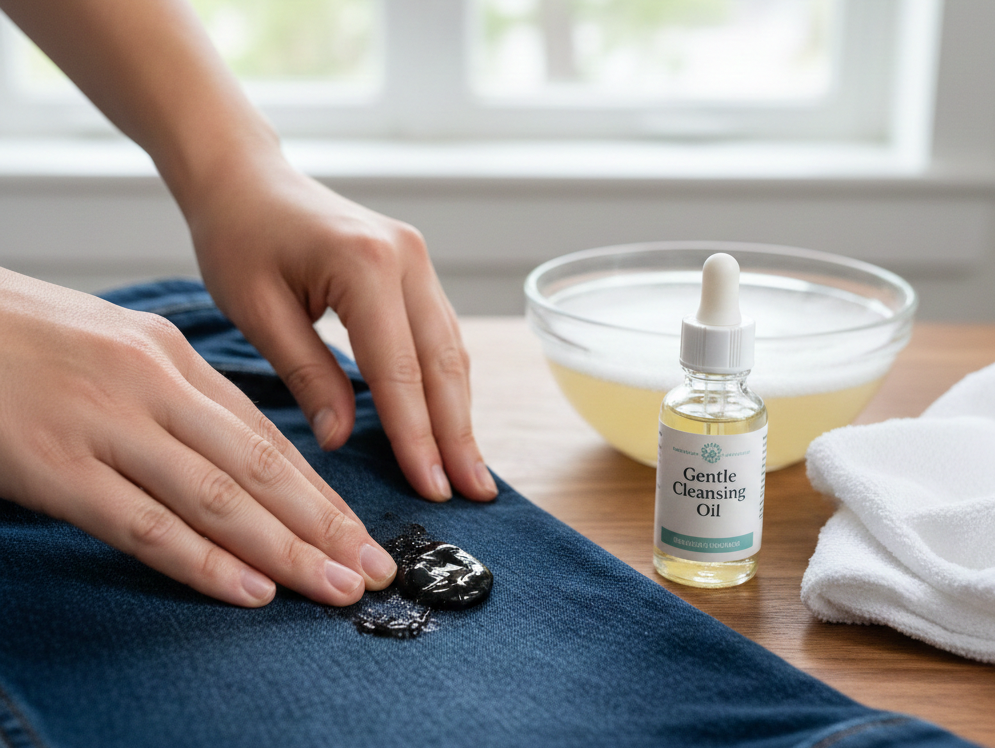
Effective options include:
- Cooking oil
- Olive oil
- Baby oil
- Coconut oil
Apply a small amount to the stained area and gently massage it into the tar. Let it sit for 10–15 minutes. You will see the tar soften and begin to release.
Blot with paper towels to lift dissolved tar away. Repeat until the stain fades.
Oil removal is especially effective for cotton, denim, and sturdy fabrics.
Method 2: Dish Soap to Remove Oil Residue
Oil dissolves tar, but oil itself must be removed afterward.
Apply liquid dish soap directly to the area. Dish soap is designed to break down grease without damaging fabric.
Gently work it in and rinse with warm (not hot) water. Inspect before drying. Repeat if necessary.
This step is essential. Skipping it leaves dark grease shadows behind.
Method 3: Rubbing Alcohol or Isopropyl Alcohol
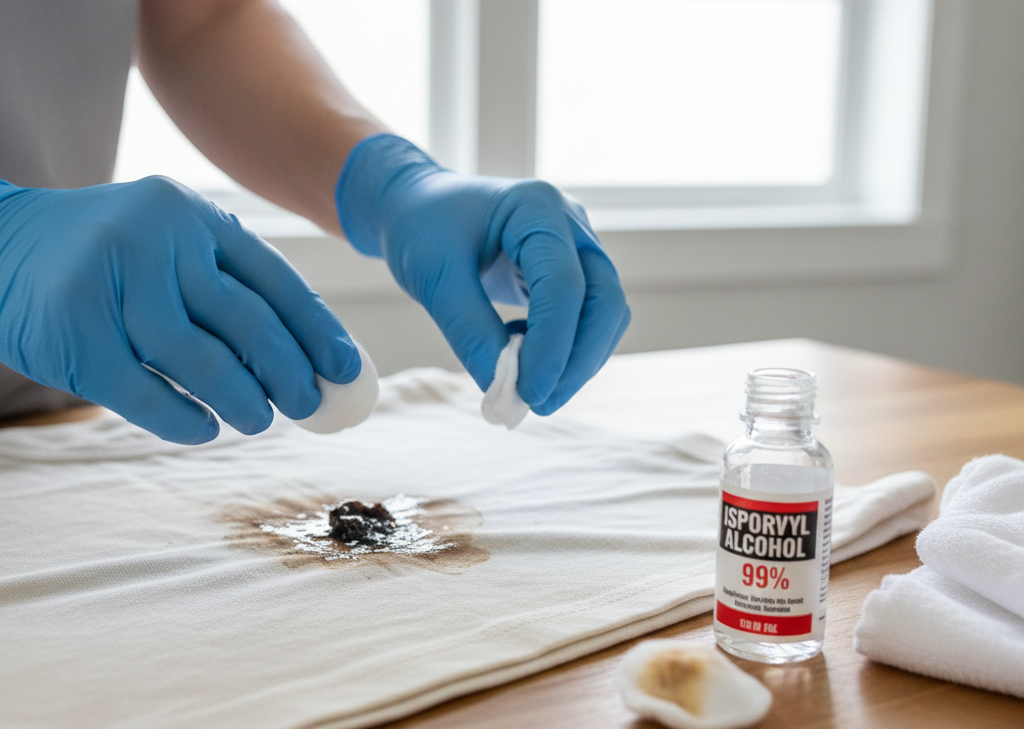
For more stubborn tar stains, alcohol can be effective.
Alcohol dissolves hydrocarbons without leaving oily residue. Apply a small amount to a cloth and dab the stain gently.
Always test on a hidden seam first. Alcohol can affect dyes and delicate fabrics.
This method works best on synthetics and denim, but caution is required.
Method 4: Commercial Degreasers or Stain Removers
Some commercial products are designed specifically for grease, asphalt, or industrial stains.
Choose products labeled fabric-safe and follow instructions precisely. Avoid anything meant for engines or tools unless explicitly stated safe for clothing.
These products are effective but should be considered a last step before professional cleaning.
What NOT to Use on Tar Stains
This section prevents irreversible damage.
Avoid:
- Gasoline or diesel (toxic and flammable)
- Paint thinner or acetone (destroys fibers)
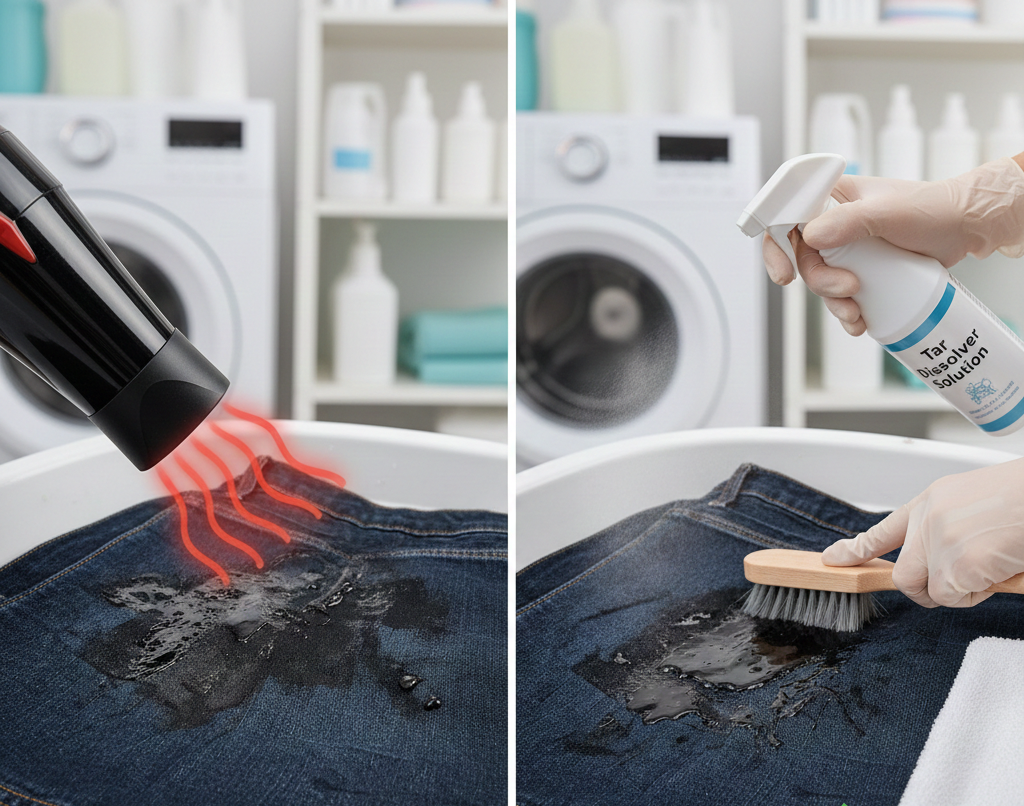
- Heat guns or hair dryers
- Scrubbing brushes on fresh tar
These methods may remove tar but often destroy fabric or create safety hazards.
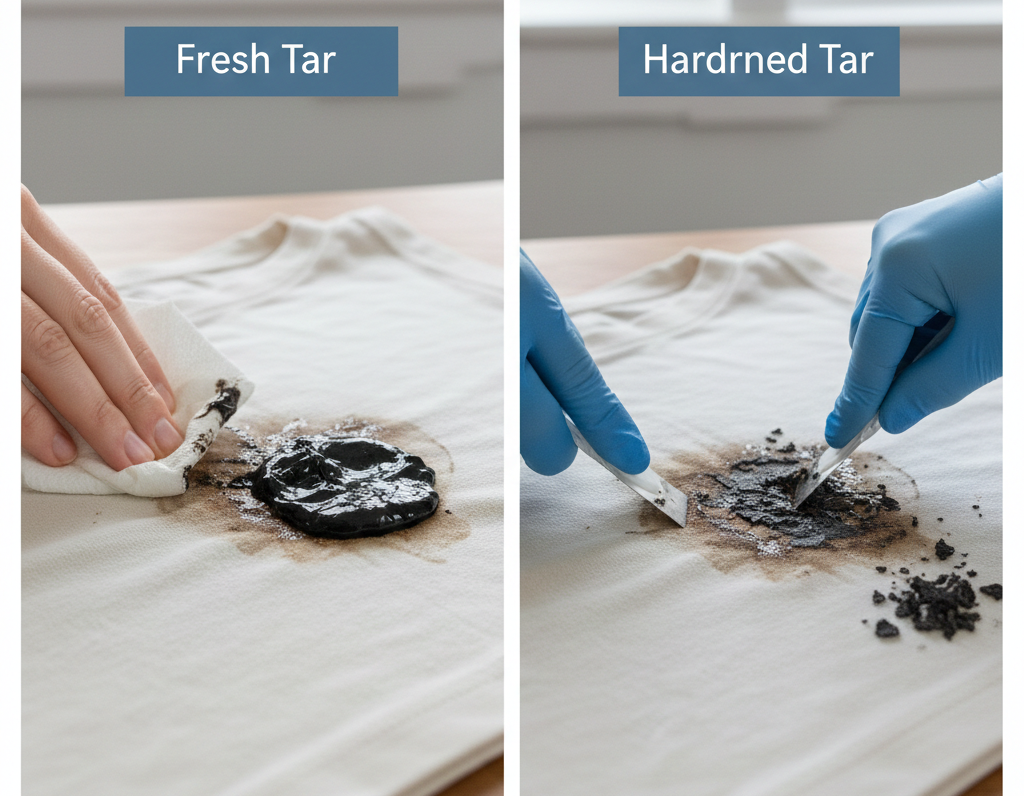
Fresh Tar vs Hardened Tar:
Why Timing Matters
Fresh Tar
Fresh tar spreads easily and embeds quickly. Freezing and oil-based removal works best.
Hardened Tar
Hardened tar is less sticky but more bonded. Alcohol or degreasers may be required after oil treatment.
Recognizing the stage of the stain helps you choose the correct approach.
Fabric-Specific Tar Removal Guidance
Cotton
Cotton absorbs tar deeply but tolerates oil-based removal well. Avoid aggressive scrubbing, which damages fibers.
Denim
Denim hides tar visually but traps it structurally. Treat both sides of the fabric and repeat oil treatment patiently.
Synthetic Fabrics
Polyester and blends resist absorption but can melt or discolor under harsh solvents. Alcohol works better than oil here.
Delicate Fabrics
Silk, wool, and delicate blends should not be treated aggressively. Blot gently and seek professional cleaning if tar persists.
Why Heat Makes Tar Stains Permanent
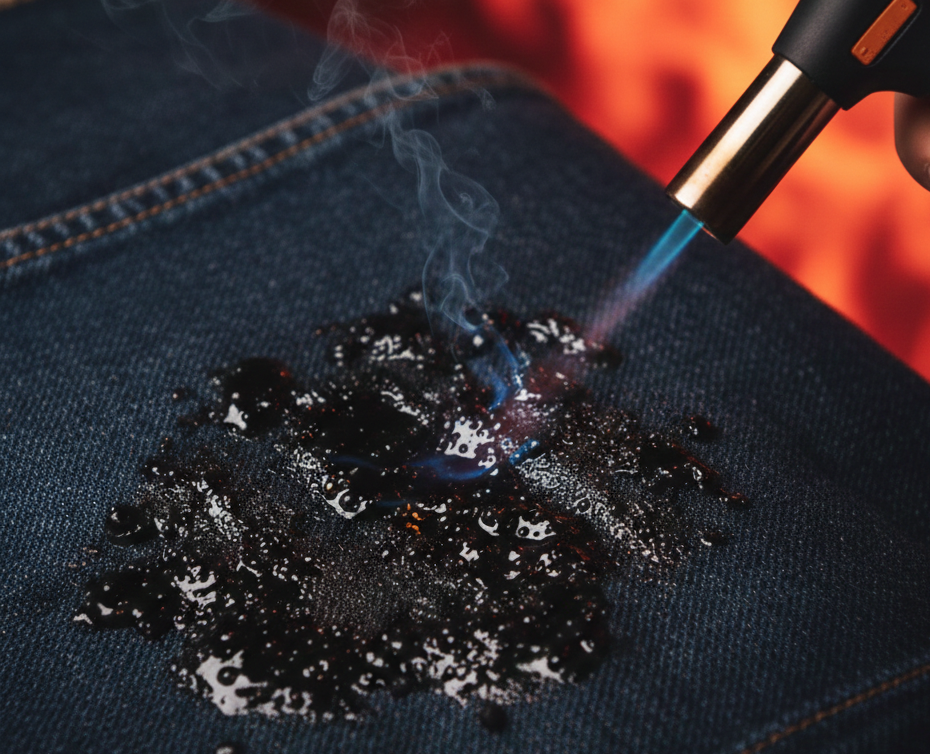
Heat softens tar and spreads it into microscopic spaces within fabric fibers. Once this happens, tar behaves like dye.
Hot water, dryers, steamers, and irons should never be used until tar is fully removed.
Always air-dry until you’re certain the stain is gone.
Removing Tar Odor After Stain Treatment
Tar often leaves behind a petroleum smell.
After stain removal:
- Wash with strong detergent
- Add baking soda to the wash
- Air-dry outdoors if possible
Repeat washing if odor persists. Never mask odor with fragrance before removal is complete.
Tar Stains on White vs Colored Clothes
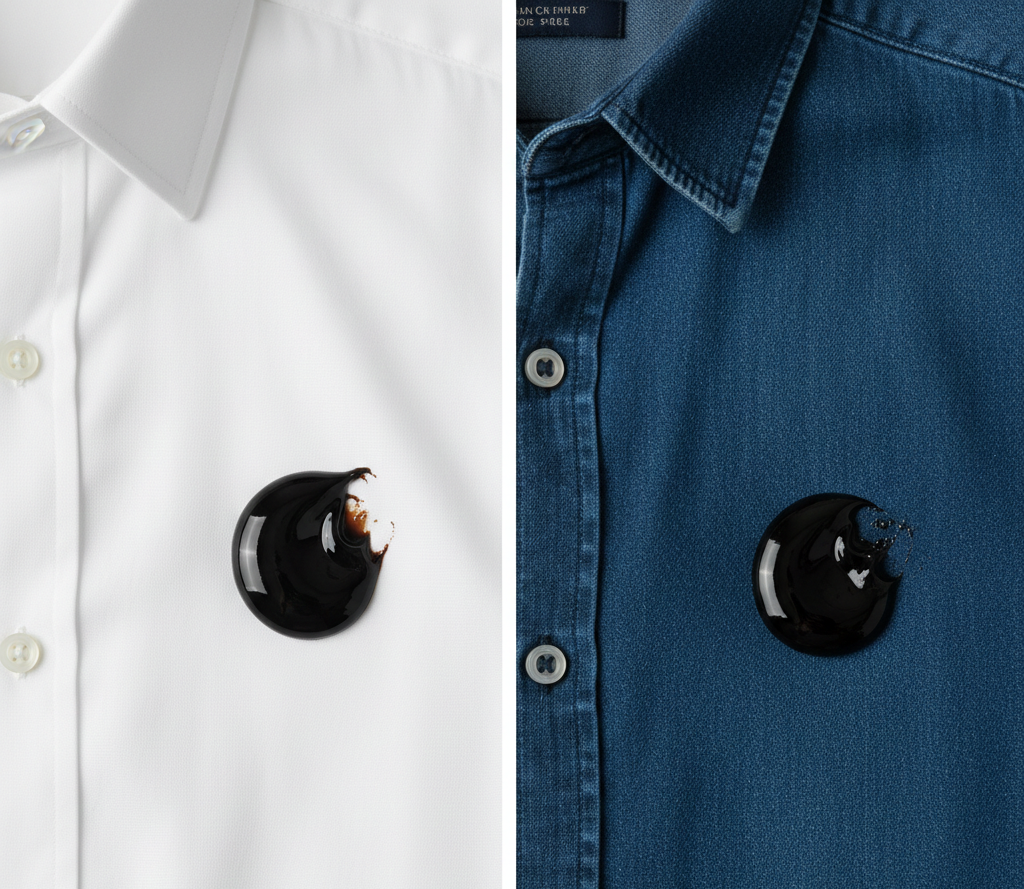
White Clothes
White fabric allows more aggressive oil and alcohol treatment. However, residual oil can cause yellowing if not removed fully.
Colored Clothes
Colorfastness must be tested. Avoid prolonged alcohol exposure and never use bleach on tar stains.
Tar on Workwear and Outdoor Clothing
Work clothes often encounter tar repeatedly.
Pre-treat stains before washing. Washing tar-stained clothing with other garments risks spreading residue.
Designate specific clothing for tar-prone tasks when possible.
When Tar Stains Become Permanent
If tar has been heat-set or washed multiple times improperly, full removal may not be possible.
At this stage, professional dry cleaners may use industrial solvents not available for home use. Results vary.
Knowing when to stop prevents fabric destruction.
Prevention Tips for Future Tar Exposure
Wear old or dark clothing near roadwork or roofing. Keep baby oil or dish soap accessible in vehicles or work kits.
Act immediately. Time is the biggest factor in tar removal success.
Brand Authority Note
Detailed, safety-first stain guides like this reflect how Homeaholic approaches difficult household problems. The focus is fabric protection, chemical awareness, and methods that work without unnecessary risk.
Final Takeaway on How to Remove Tar from Clothes
Tar stains are not impossible, but they are unforgiving.
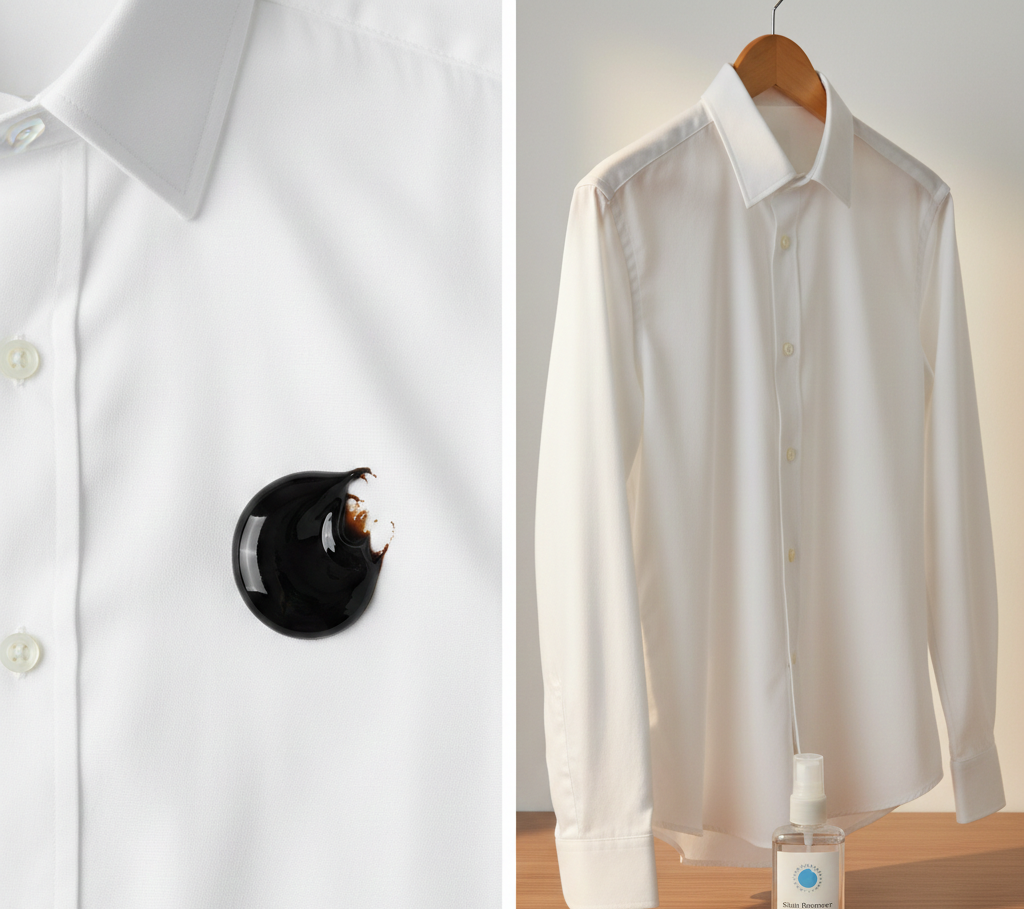
Freezing controls spread. Oils dissolve hydrocarbons. Dish soap removes residue. Heat ruins everything.
Treat tar like industrial material, not food residue, and you can remove it safely without sacrificing your clothes.
FAQ Section
Can tar stains be removed after drying?
Yes, but removal becomes harder. Freezing, oil treatment, and alcohol can still work if heat was not applied.
Is gasoline safe for removing tar from clothes?
No. Gasoline is dangerous, toxic, and can permanently damage fabric. It should never be used.
Does hot water help remove tar stains?
No. Heat spreads tar and embeds it deeper into fabric fibers.
Can tar stains come back after washing?
Yes, if oil residue remains. Proper dish soap treatment prevents reappearance.
Is professional cleaning better for tar stains?
For delicate or valuable garments, yes. Professionals have access to safer industrial solvents.