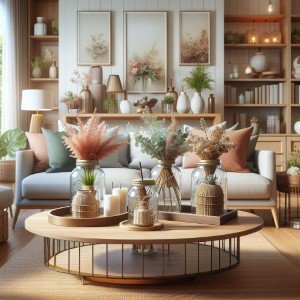
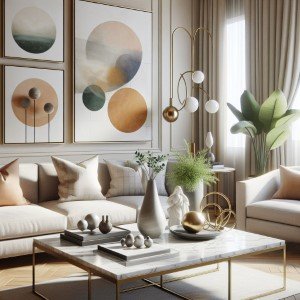
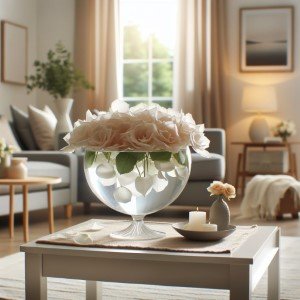
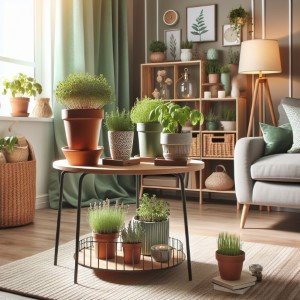
Category: home decor

  • Mini Pendant Lights: The Complete Practical Guide for Kitchens and Beyond

    Short answer: Mini pendant lights are compact hanging fixtures designed to deliver focused, controlled lighting without visually overwhelming a space. When selected, spaced, and installed correctly, they outperform larger pendants and many ceiling fixtures in kitchens, dining areas, and task-focused zones by combining function, balance, and long-term flexibility.

    Mini pendant lights are not a trend item. They are a response to how modern homes are used. Kitchens have become workspaces, social zones, and visual focal points. Lighting in these areas must work harder, not louder. This guide explains how mini pendant lights actually work, when they succeed, when they fail, and how to use them without regret.

    What Are Mini Pendant Lights and How Do They Differ From Standard Pendants?

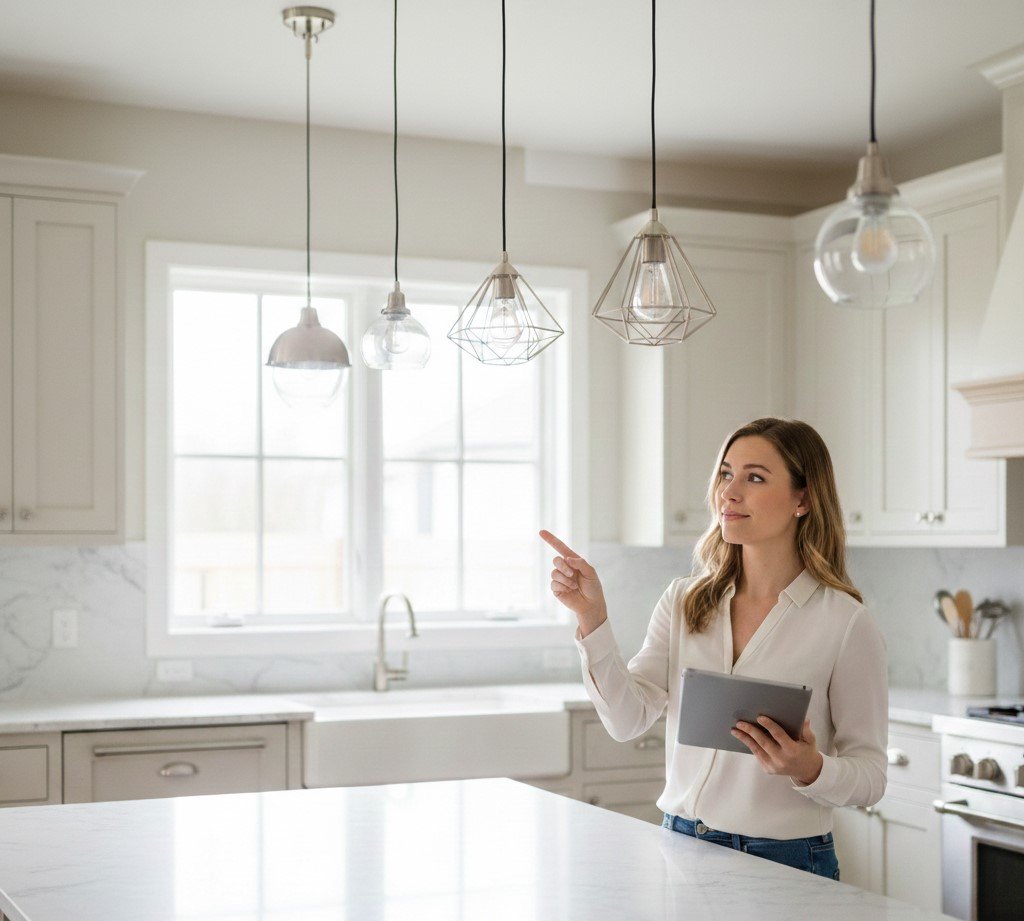
    Mini pendant lights are scaled-down pendant fixtures, typically featuring smaller shades, narrower profiles, and lighter visual weight than standard or oversized pendants. Their purpose is not decoration first. Their purpose is precision lighting.

    Standard pendants are often chosen as statement pieces. They draw attention and visually anchor a room. Mini pendant lights behave differently. They are designed to be used in multiples, spaced deliberately, and aligned with work surfaces rather than dominating them.

    The most important differences are scale and intent. A standard pendant might be 12 to 20 inches wide and intended to stand alone. A mini pendant is usually under 10 inches wide and intended to work as part of a system. Because of this, mini pendants offer more control over spacing, brightness distribution, and visual balance.

    Another key difference is adaptability. Mini pendant lights can be rearranged, replaced, or updated without redesigning an entire room. That makes them safer long-term choices in kitchens and multi-use spaces where layouts evolve.


    Why Mini Pendant Lights for Kitchen Are Best?
    Mini Pendant Lights

    Mini pendant lights are best for kitchens because kitchens demand task accuracy, visual clarity, and balance, not just brightness.

    Kitchens are where chopping, reading, pouring, and serving happen. Overhead lighting alone often creates shadows on countertops because the light source is behind the person working. Mini pendant lights solve this by positioning light directly above the work surface, reducing shadowing and improving visibility exactly where it is needed.

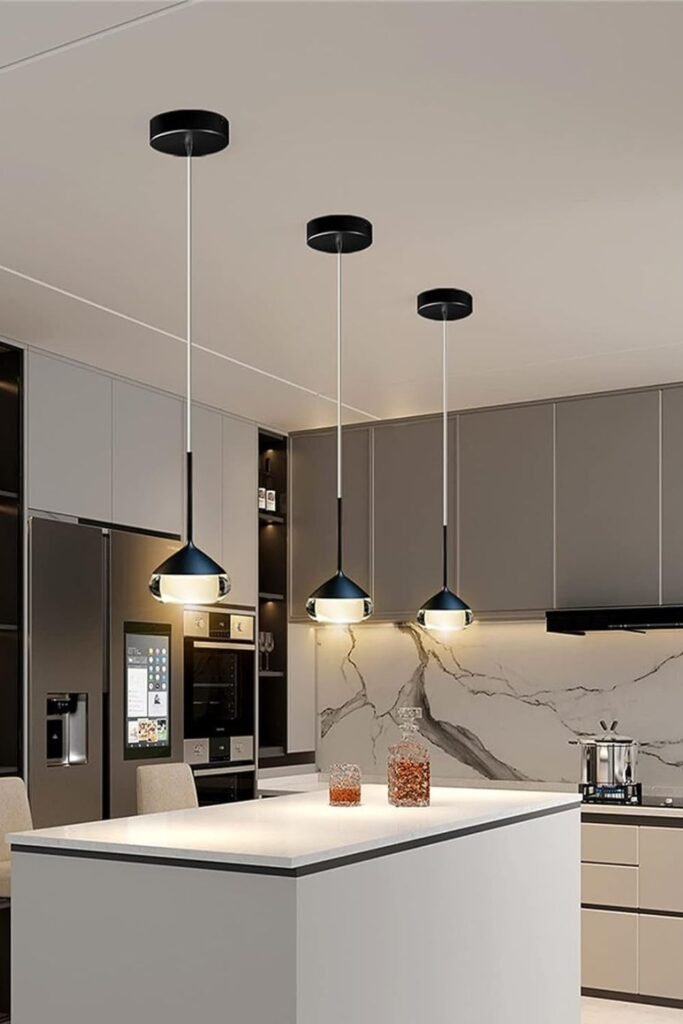
    Scale is another reason mini pendants work better than large fixtures in kitchens. Kitchen islands are long and horizontal. A single large pendant often looks heavy and creates uneven lighting. Multiple mini pendant lights distribute light evenly across the island while maintaining visual openness. Sightlines remain clear, which is especially important in open-plan kitchens.

    Mini pendants also allow layout flexibility. They can be spaced to match island length, cabinet alignment, or seating placement. This control is not possible with one oversized fixture.

    Equally important, mini pendant lights layer well with other kitchen lighting. They complement recessed lights, under-cabinet lighting, and ambient ceiling fixtures rather than competing with them. This layered approach is what creates kitchens that feel bright without being harsh.

    Finally, mini pendants add style without locking the kitchen into a single aesthetic. Because they are smaller and easier to replace, they allow future updates without major renovation.

    How Many Mini Pendant Lights Should You Use Over a Kitchen Island?

    The correct number of mini pendant lights depends on island length, pendant width, and the visual balance you want to achieve.

    As a practical rule, most kitchen islands work best with two to four mini pendant lights. Short islands often look best with two. Longer islands typically require three. Very long islands may support four, but only if spacing and scale are handled carefully.

    The mistake most people make is assuming more pendants equal better lighting. Overcrowding pendants creates visual clutter and can actually reduce usable light by overlapping light pools.

    Island length should guide the decision. A 5- to 6-foot island usually supports two mini pendants. A 7- to 8-foot island often needs three. Islands longer than 9 feet may support four, but only if the pendants are very slim.

    Visual balance matters as much as math. Sometimes fewer pendants look better and function just as well when paired with strong recessed or under-cabinet lighting. The goal is even illumination without visual noise.


    How Far Apart Should Mini Pendant Lights Be Spaced?
    Mini Pendant Lights

    Spacing determines whether mini pendant lights look intentional or awkward.

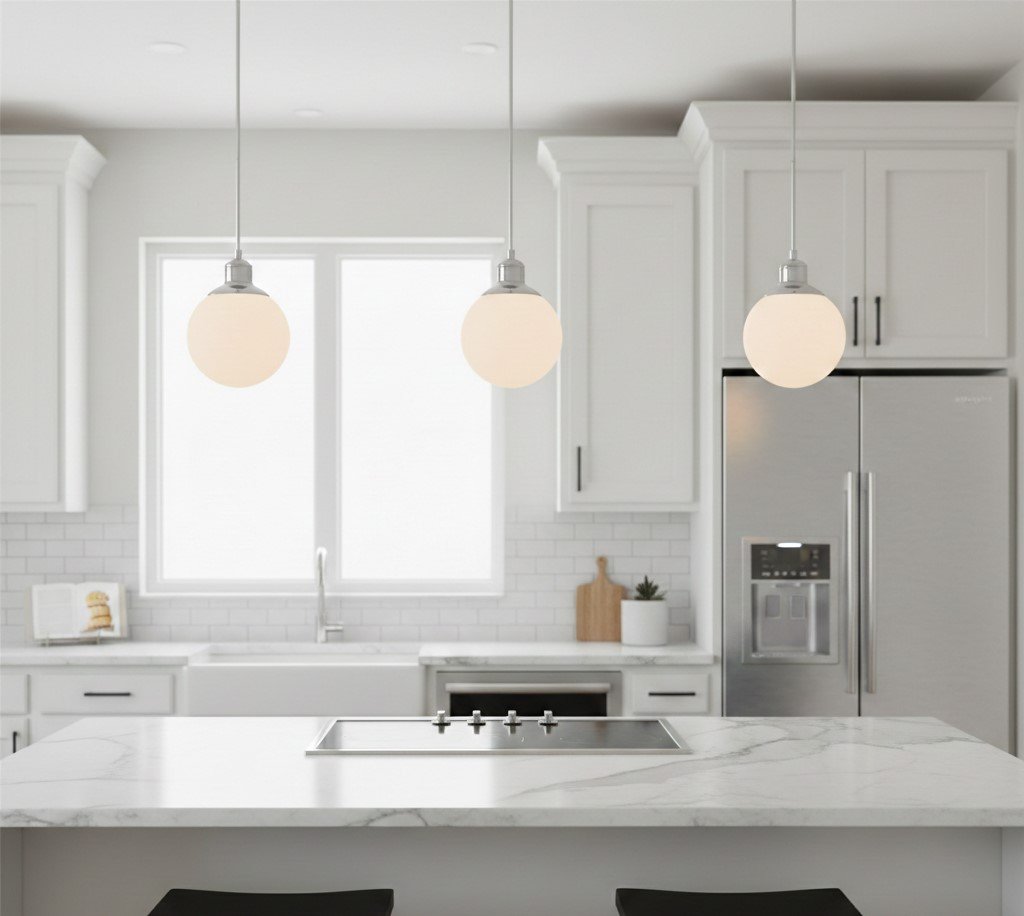
    Spacing is measured center to center, not edge to edge. In most kitchens, mini pendants are spaced 24 to 30 inches apart. However, this is not a fixed rule. Shade width, island length, and ceiling height all affect ideal spacing.

    Wider shades need more space to breathe. Narrow, cylindrical pendants can be spaced closer together. The key is visual rhythm. The gaps between pendants should feel equal and proportional to the island below.

    Another common mistake is centering pendants strictly on the island length without considering seating or cabinet alignment. In many kitchens, aligning pendants with bar stools or cabinet panels creates a more cohesive look.

    Spacing should also prevent light overlap. When pendants are too close, light pools merge and create glare rather than clarity.

    How High Should Mini Pendant Lights Hang Above Counters and Tables?

    Height errors are one of the most common reasons pendant lighting fails.

    Over kitchen counters and islands, mini pendant lights usually hang 30 to 36 inches above the countertop. This height provides sufficient task lighting while keeping sightlines open.

    Over dining tables, pendants typically hang slightly lower, around 28 to 34 inches above the table surface, because diners are seated and glare risk is lower.

    Ceiling height matters. In rooms with higher ceilings, pendants may hang slightly higher to maintain proportion. In lower ceilings, adjustable cords or shorter drops are essential to avoid head clearance issues. The purpose of correct height is comfort. Pendants that hang too low block views and cause glare. Pendants that hang too high lose their task-lighting advantage and behave like weak ceiling lights.


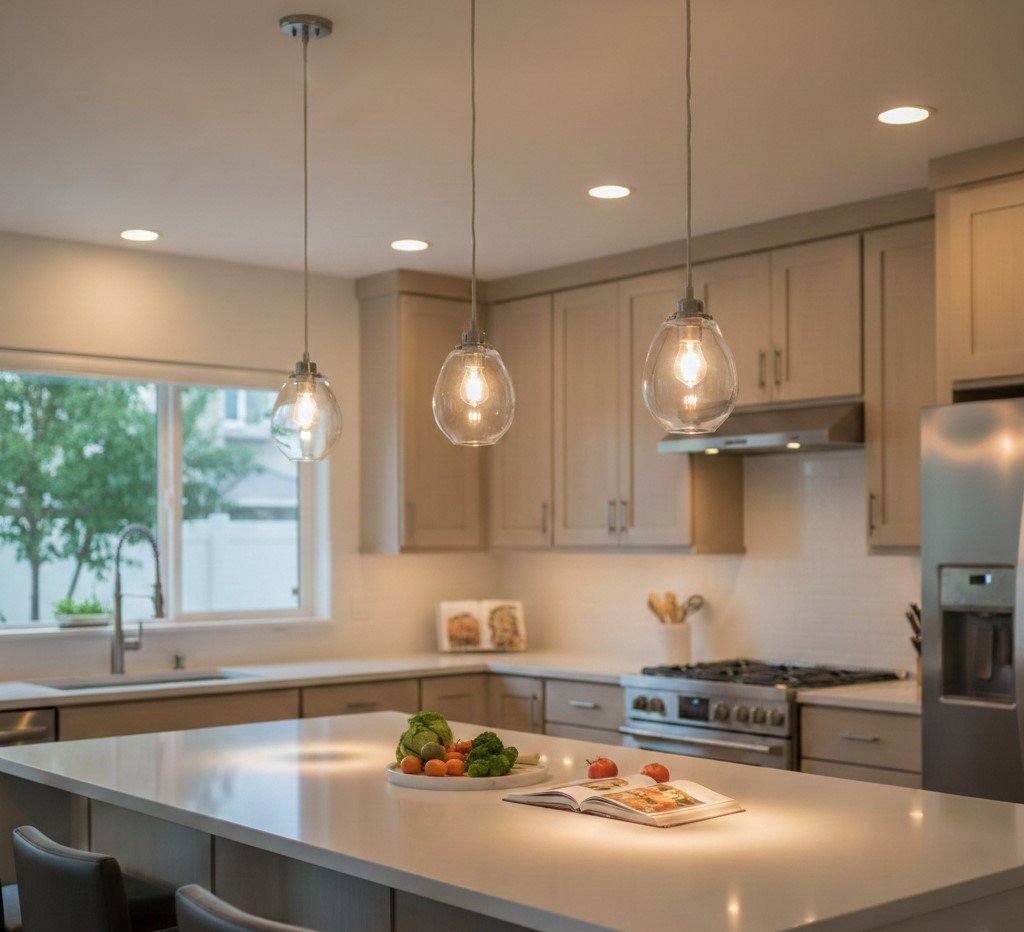
    Are Mini Pendant Lights Bright Enough for Kitchens?
    Mini Pendant Lights

    Mini pendant lights can be bright enough, but they are rarely sufficient on their own.

    Each mini pendant typically produces localized brightness. This is excellent for task zones but does not always fill the entire room evenly. For this reason, mini pendants work best as part of a layered lighting system.

    In kitchens, mini pendants are usually paired with recessed ceiling lights and under-cabinet lighting. Together, these layers provide both general illumination and focused task lighting.

    Trying to compensate by using extremely bright bulbs in mini pendants often creates glare and discomfort. It is better to use moderate brightness and rely on supporting lights for overall coverage.

    What Bulbs and Color Temperature Work Best in Mini Pendant Lights?

    Bulb choice dramatically affects comfort and appearance.

    For kitchens, bulbs between 2700K and 3000K provide warm but clear light. Cooler temperatures can feel harsh and uninviting, especially in the evening.

    Brightness should usually fall between 400 and 800 lumens per pendant, depending on shade opacity and number of pendants used.

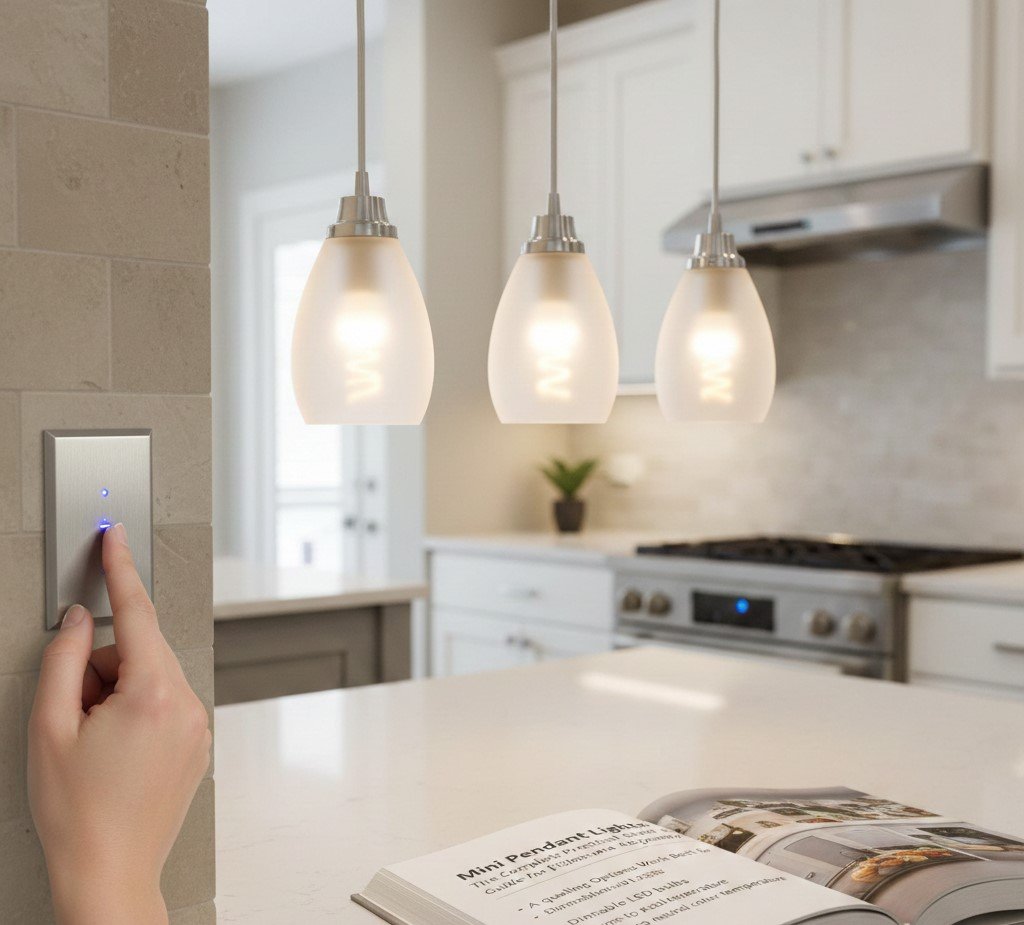
    Dimmable bulbs are strongly recommended. They allow the same fixture to serve both task and ambient roles at different times of day.


    What Dimming Options Work Best for Mini Pendant Lights?
    Mini Pendant Lights

    Short answer: Dimmable mini pendants are worth it because kitchens shift from task lighting to ambient lighting throughout the day.

    A kitchen is not one lighting scenario. Cooking needs clarity, but evenings often need softer light. Dimming is what makes mini pendant lights feel premium and adaptable.

    There are three common dimming approaches:

    • Wall dimmers (most common)
    • Smart dimming via smart bulbs or smart switches
    • Integrated dimming controls built into the fixture

    Compatibility matters. Not all LED bulbs dim smoothly, and not all dimmers work well with modern LED drivers. Poor dimming creates flicker or buzzing, which instantly lowers perceived quality.

    The safest approach for most households is:

    • A quality wall dimmer rated for LED
    • Dimmable LED bulbs
    • Warm to neutral color temperature

    This also improves energy efficiency without sacrificing function.

    How Do You Choose the Right Size Mini Pendant Lights?

    Short answer: Choose mini pendants based on shade diameter, ceiling height, and the surface size below, not just style.

    Mini pendant size is usually defined by shade diameter and visual bulk. In most homes, “mini” pendants fall in the 4–8 inch diameter range, but the right size depends on what they hang over.

    Over a kitchen island, size must match the island’s length and depth. A shade that is too wide makes the island feel crowded. A shade that is too small looks underpowered and may not distribute light well.

    A practical way to avoid proportion mistakes is to balance three factors:

    • Surface size (island or table width and length)
    • Fixture count (two, three, or four pendants)
    • Visual openness (open-plan kitchens need lighter visual weight)

    If the kitchen already has strong visual elements such as bold cabinetry or thick range hoods, smaller and simpler mini pendants tend to look more intentional. If the kitchen is minimalist, slightly larger mini pendants can add needed presence without becoming heavy.

    Mini Pendant Lights

    What Mini Pendant Light Styles and Materials Work Best?

    Short answer: The best style is the one that matches your kitchen’s finishes and controls glare through shade material.

    Materials affect both appearance and performance.

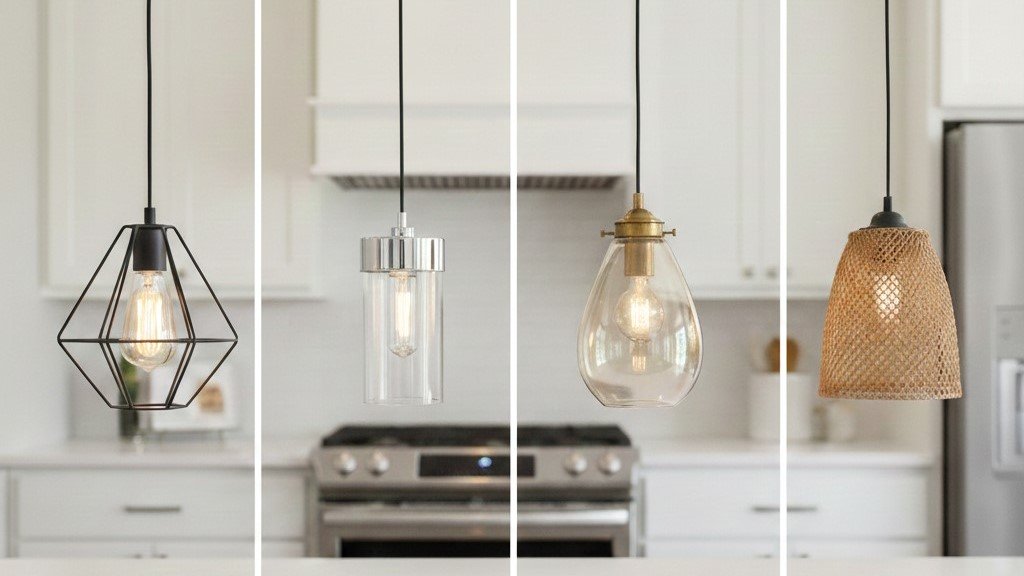
    • Clear glass looks airy but can cause glare unless paired with frosted bulbs or filament-style bulbs that are not harsh.
    • Frosted or opal glass diffuses light and is usually the safest choice for comfort.
    • Metal shades direct light downward and are excellent for task lighting, but they can create strong shadows if used alone.
    • Fabric shades soften light but are less common in kitchens due to grease and dust maintenance.
    • Mixed materials (metal plus glass, wood accents) work well in transitional kitchens.

    Style alignment should be intentional. Matte black, brushed nickel, and warm brass are common finishes because they integrate easily with faucets and cabinet hardware. The goal is not matching every element perfectly. The goal is coherent repetition of finishes.

    This is also where long-term flexibility matters. Choosing a neutral finish with a classic shape helps the fixture survive future kitchen updates.

    Should You Use Clear Glass Mini Pendant Lights or Frosted Glass?

    Short answer: Frosted glass is usually better for comfort, while clear glass is better for visual lightness but needs glare control.

    Clear glass mini pendants are popular because they feel lightweight and don’t visually block space. The tradeoff is glare. If the bulb is exposed, you’ll see bright points of light at eye level, especially when seated at an island.

    Frosted or opal glass diffuses the bulb and spreads light more evenly. This typically creates a calmer kitchen atmosphere and reduces eye strain.

    If you prefer clear glass, you can reduce glare by:

    • Using lower-lumen bulbs and adding support lighting
    • Choosing bulbs with a frosted finish
    • Using dimmers to control brightness at night
    • Avoiding ultra-cool color temperatures

    This section matters because clear-glass glare is one of the biggest hidden sources of buyer regret.


    Where Else Can Mini Pendant Lights Be Used Besides Kitchens?
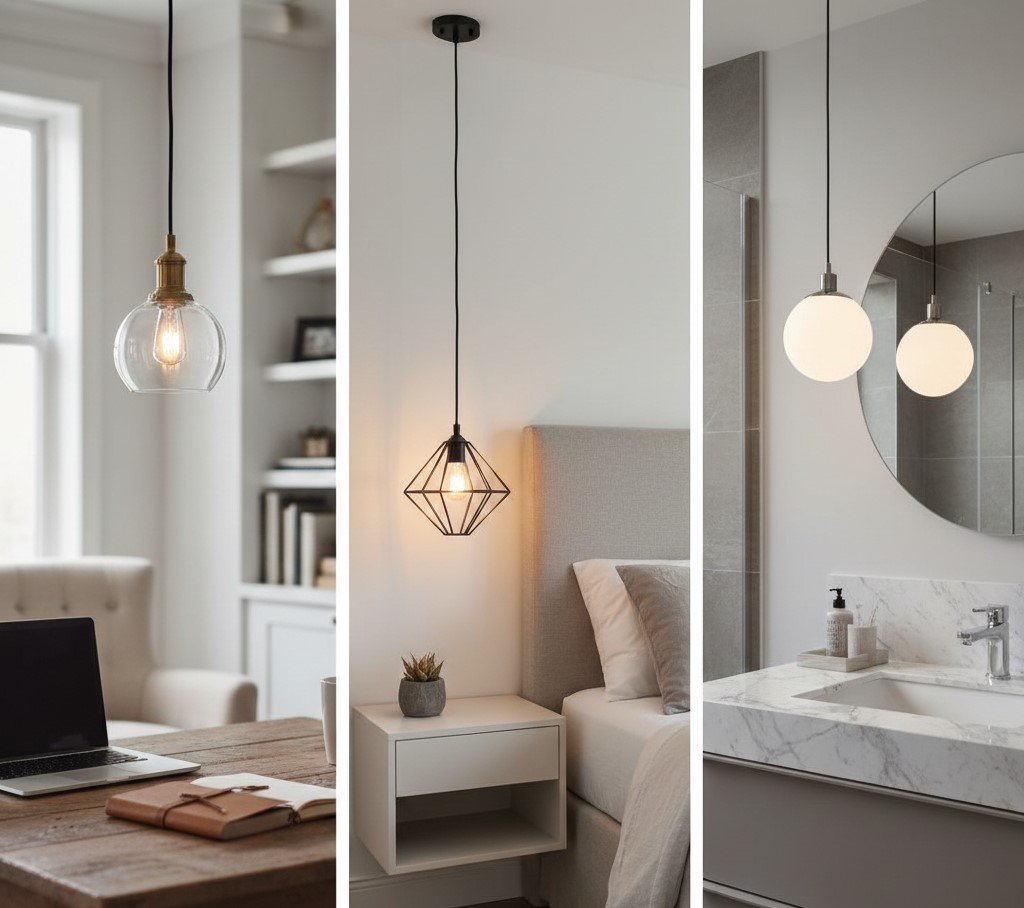
    Mini pendant lights are often associated with kitchen islands, but limiting them to kitchens leaves significant functional and design potential unused. Their compact scale and directional light make them suitable for several other areas where traditional fixtures underperform.

    In dining areas, mini pendant lights work especially well over rectangular or narrow tables. Instead of a single chandelier that can feel oversized or cast uneven light, two or three mini pendants provide balanced illumination while keeping the visual focus on the table. This approach also makes dining spaces feel more intimate without sacrificing brightness.

    In bedrooms, mini pendant lights are increasingly used as bedside lighting. Hanging pendants on either side of the bed frees up nightstand space and provides focused reading light without glare. This is particularly effective in smaller bedrooms where table lamps consume valuable surface area.

    Bathrooms are another strong use case. Mini pendants installed over vanity areas can replace or supplement wall sconces, especially in modern or minimalist bathrooms. When placed correctly, they provide direct task lighting for grooming while adding vertical interest to the space.

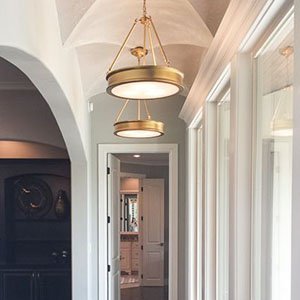
    Mini pendant lights also work well in hallways and entryways, where they offer visual guidance and soft illumination without overwhelming narrow spaces. In these areas, scale matters more than brightness, and mini pendants strike the right balance.

    Finally, home bars, breakfast nooks, and stair landings benefit from mini pendant lighting because these areas often need accent lighting rather than full-room illumination. Mini pendants help define these zones without introducing bulky fixtures.

    Are Mini Pendant Lights Good for Dining Tables?

    Short answer: Yes, mini pendants work very well over dining tables, especially in sets of two or three for longer tables.

    For dining tables, the goal is even table illumination without harsh downward glare. Mini pendants excel when:

    • The table is long or rectangular
    • You want a lighter visual look than a chandelier
    • You want adjustable brightness for mood settings

    Mini pendants can also be used to create symmetry in dining areas, especially when the table is centered under a ceiling junction box that would otherwise force a single large fixture.

    The key difference versus kitchens is comfort. Dining light should feel warm and flattering. Warmer bulbs and diffused shades usually perform better here than metal shades designed for task light.


    Mini Pendant Lights vs One Large Pendant: Which Is Better?
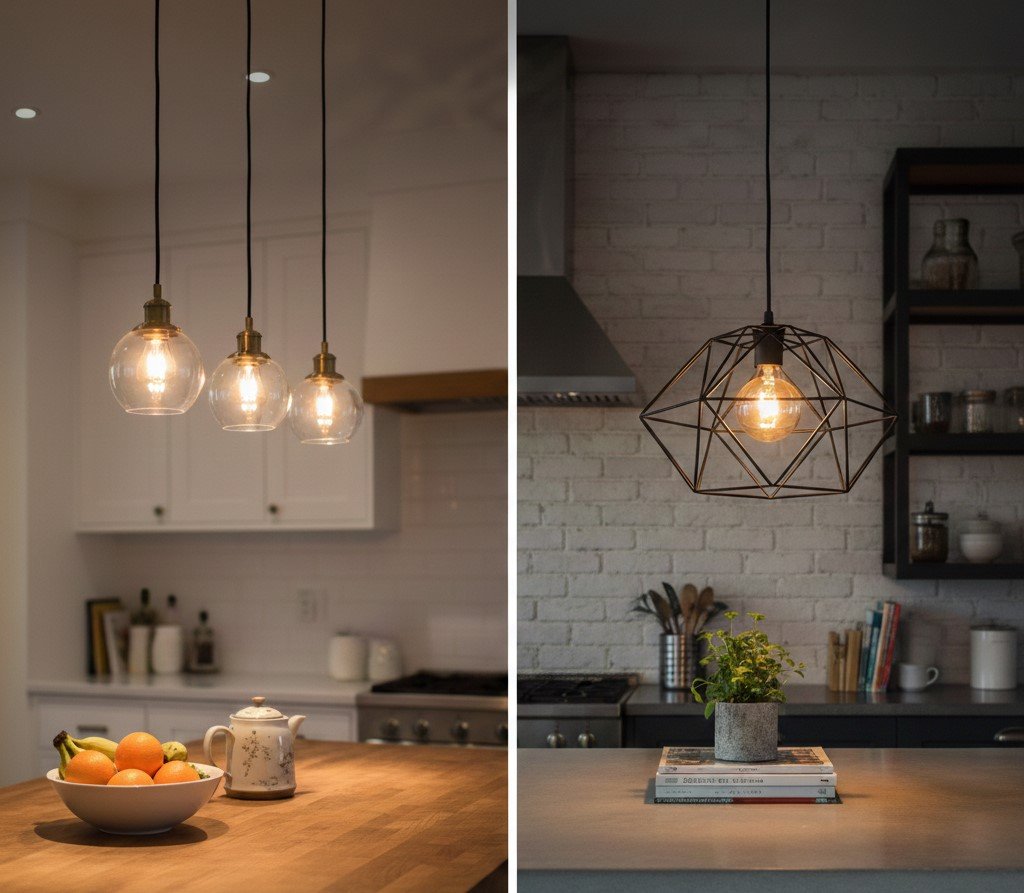
    Choosing between multiple mini pendant lights and a single large pendant is less about style preference and more about function, proportion, and flexibility.

    A single large pendant acts as a focal point. This works well in spaces where the fixture itself is meant to draw attention, such as a formal dining room or a high-ceiling entryway. However, in most functional areas, large pendants create uneven lighting. Brightness concentrates in one spot, leaving surrounding areas dim.

    Mini pendant lights distribute light more evenly across a surface. This makes them better suited for islands, long tables, and work zones where consistent illumination matters. They also allow better alignment with furniture, seating, or architectural elements.

    Another advantage of mini pendants is adaptability. If one pendant fails or needs replacement, it can be addressed individually. With a large pendant, any change affects the entire lighting scheme. From a visual standpoint, mini pendants maintain openness. Large pendants can block sightlines, especially in open-plan homes. Mini pendants preserve flow and make spaces feel less crowded.


    Do Mini Pendant Lights Work With Low or Sloped Ceilings?
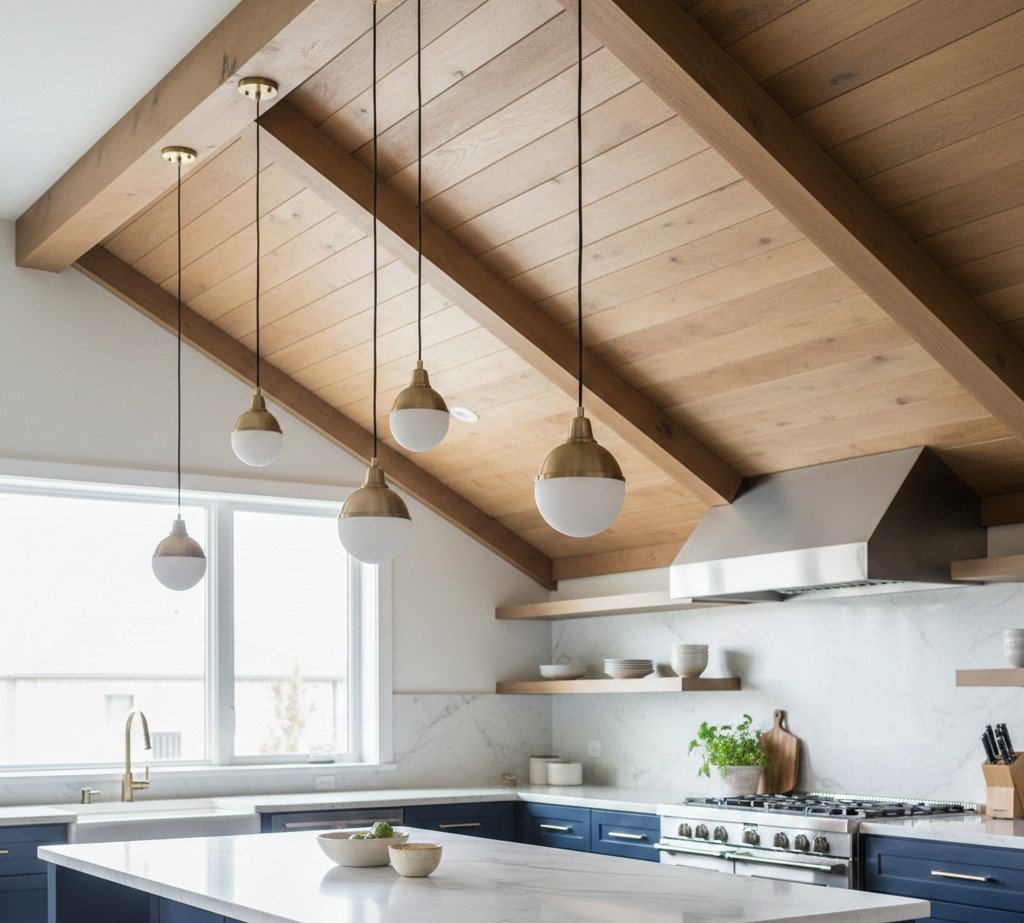
    Mini pendant lights can work in low or sloped ceilings, but only when selected with precision.

    For low ceilings, the key is minimizing drop length and shade size. Short-stem or cord-adjustable mini pendants prevent head clearance issues and reduce visual clutter. Flush or semi-flush alternatives should be considered if ceiling height is extremely limited.

    In sloped ceilings, compatibility depends on the mounting system. Some mini pendants are designed with swivel canopies that allow vertical hanging even when the ceiling is angled. Without this feature, pendants may hang awkwardly or direct light incorrectly.

    Shade design also matters. Narrow or cylindrical shades perform better in constrained spaces because they focus light downward without expanding visually outward. Wide shades can exaggerate ceiling limitations.

    When low or sloped ceilings are ignored during selection, mini pendants become liabilities rather than assets. When accounted for correctly, they remain highly effective.

    Do Mini Pendant Lights Need Support Lighting or Can They Stand Alone?

    Mini pendant lights rarely function well as the sole light source in a room. Their strength lies in focused illumination, not broad coverage.

    In kitchens, they pair best with recessed ceiling lights and under-cabinet lighting for balanced illumination. For dining areas, ambient wall or ceiling lighting helps prevent harsh contrast between lit and unlit spaces. When used in bedrooms, mini pendants work best alongside ceiling fixtures or wall sconces.

    The mistake many people make is assuming brightness equals coverage. A mini pendant can feel bright directly beneath it while leaving surrounding areas dim. This creates visual imbalance and eye strain. Layered lighting solves this problem. Mini pendants handle task and accent lighting, while other fixtures provide ambient coverage. Together, they create comfort and flexibility.

    Can You Install Mini Pendant Lights Yourself or Should You Hire a Professional?

    Short answer: If you’re replacing an existing fixture with the same wiring, DIY may be possible, but multiple pendants, new wiring, and sloped ceilings usually require a professional.

    Mini pendant installations vary in complexity.

    DIY is often reasonable when:

    • There is already a ceiling junction box
    • You are replacing one fixture with one fixture
    • No new electrical work is needed

    Professional installation is strongly recommended when:

    • Installing multiple pendants across an island
    • Moving junction boxes or adding new ones
    • Working with sloped ceilings or complex canopies
    • Kitchens require precise alignment and spacing

    This is not just about safety. It’s also about visual precision. Poor alignment makes even expensive mini pendants look cheap.

    How Much Do Mini Pendant Lights Cost and What Affects the Price?

    Short answer: Cost depends on materials, finish quality, brand, and whether the pendant uses integrated LED or standard bulbs.

    Mini pendant lights range widely in price. The most important price drivers are:

    • Glass quality and thickness
    • Finish durability (cheap finishes scratch and fade)
    • Canopy and wiring quality
    • Bulb type and dimming compatibility
    • Integrated LED design and warranty support

    Instead of shopping by price alone, evaluate value through:

    • Comfort (glare control)
    • Durability (finish and build)
    • Flexibility (bulb replacement, dimming, adjustability)

    A mid-range pendant with good diffusion and reliable dimming often outperforms a cheaper pendant that looks good in photos but fails in daily use.


    How Do You Plan Mini Pendant Lighting With Other Kitchen Lights?
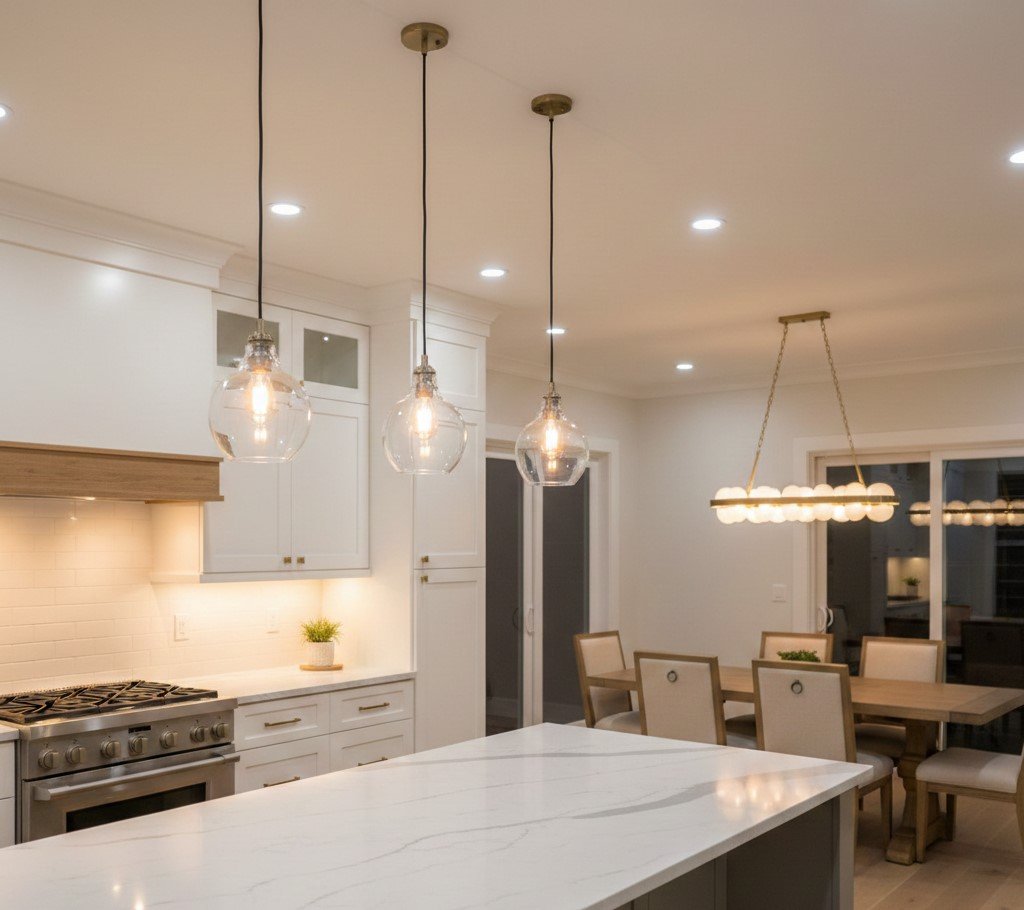
    Short answer: Plan mini pendants as task and visual anchors, then use recessed and under-cabinet lighting for coverage.

    Mini pendant lights should not be treated as the only lighting layer in a kitchen. A complete plan typically looks like this:

    • Mini pendants over islands for focused task light
    • Under-cabinet lighting for countertops
    • Recessed lights for general coverage and navigation
    • Optional accent lighting for depth

    This prevents the “spotlight island” problem where the island is bright but the rest of the kitchen feels dim.

    The simplest rule is distribution. Many small, controlled light sources create a better kitchen than one overly bright source.

    How Mini Pendant Lights Affect Visual Balance and Room Proportion

    Lighting is not just about illumination. It affects how a room feels and how its proportions are perceived.

    Mini pendant lights emphasize vertical lines. This can make ceilings feel taller when used correctly. In contrast, oversized fixtures can compress vertical space, especially in rooms with standard ceiling heights.

    Using multiple small pendants instead of one large fixture helps distribute visual weight evenly. This is especially important in open spaces where lighting is visible from multiple angles.

    In minimalist or modern interiors, mini pendants reinforce clean lines and intentional spacing. In traditional interiors, they can provide contrast without overpowering decorative elements.

    Maintenance, Cleaning, and Long-Term Care of Mini Pendant Lights

    Mini pendant lights are generally low-maintenance, but neglecting upkeep affects both appearance and performance.

    Dust accumulation on shades reduces light output and dulls finishes. Regular light cleaning with a microfiber cloth keeps fixtures performing as intended. In kitchens, grease buildup may require gentle cleaning solutions.

    Bulb accessibility should also be considered. Fixtures that make bulb changes difficult become frustrating over time. Choosing pendants with easy access reduces maintenance friction.

    Finish durability matters long-term. Painted finishes may chip in high-use areas, while metal and glass finishes typically age better.


    Safety and Installation Considerations You Should Not Ignore
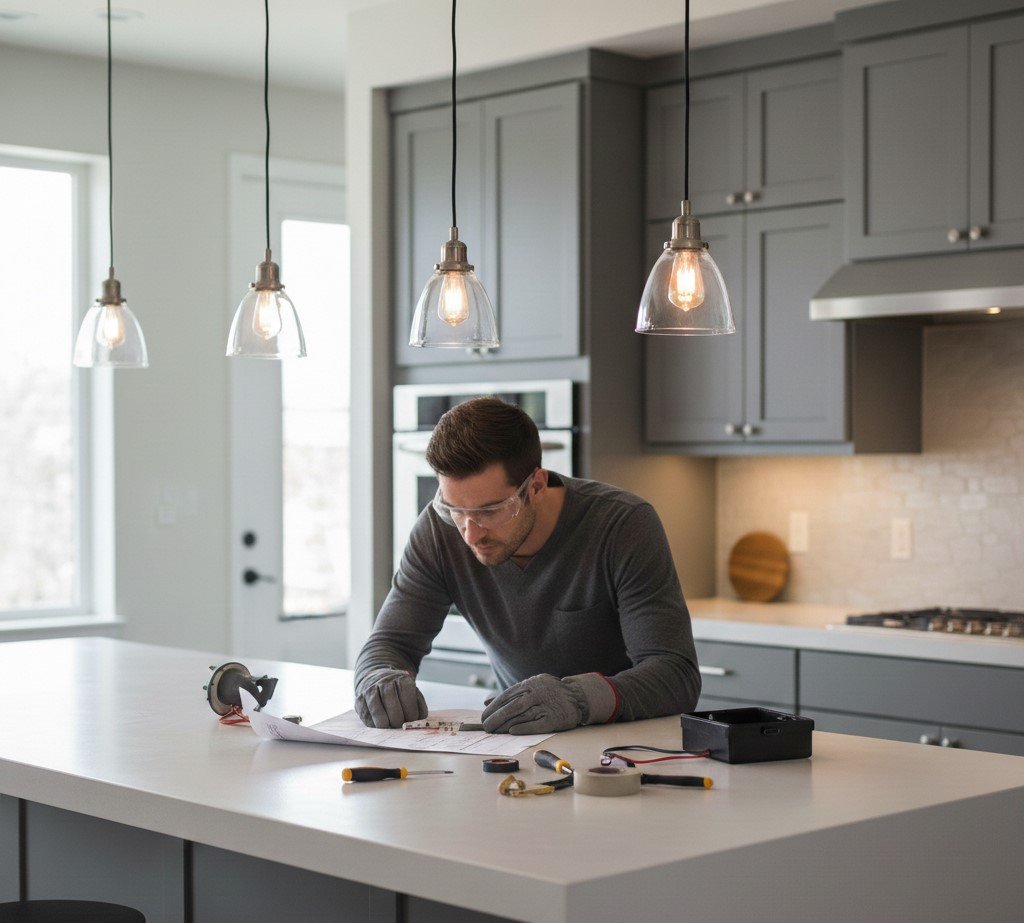
    Installation quality directly affects safety and performance.

    Mini pendant lights must be securely mounted and properly wired. Loose fixtures create vibration, noise, and potential hazards. In kitchens and bathrooms, moisture-rated fixtures are essential.

    Weight limits matter, especially when installing multiple pendants on shared mounting systems. Exceeding these limits risks ceiling damage.

    Professional installation is often recommended when adjusting ceiling wiring, installing multiple pendants, or working with sloped ceilings.

    Are Mini Pendant Lights a Good Long-Term Investment?

    Mini pendant lights are a strong long-term choice because they balance durability, adaptability, and timeless design.

    Unlike trend-driven fixtures, their simple forms age well. They can be updated with new bulbs or shades without replacing the entire fixture. This makes them cost-effective over time.

    Their ability to adapt to layout changes also adds value. When kitchens or dining areas are remodeled, mini pendants often remain usable with minor adjustments.

    When Mini Pendant Lights Are the Wrong Choice

    Despite their versatility, mini pendant lights are not always appropriate.

    They are poor choices in rooms requiring uniform overhead illumination without layering. They may also feel unnecessary in spaces where wall or recessed lighting already performs well.

    Recognizing when not to use mini pendants is part of making smart lighting decisions.


    Final Guidance Before You Choose Mini Pendant Lights
    Mini pendant lights succeed when function leads design. They fail when selected purely for appearance.

    If you define the task, respect proportions, layer lighting properly, and account for ceiling conditions, mini pendants deliver clarity, balance, and longevity.

    Used thoughtfully, they are not just fixtures. They are tools.

    FAQs

    1) What are mini pendant lights?

    Mini pendant lights are small hanging ceiling fixtures, usually under 10 inches wide, designed to provide focused light over a specific area like a kitchen island, bar, or table.

    2) How many mini pendant lights should you use over a kitchen island?

    Most kitchen islands look best with 2–3 mini pendant lights. Use 2 for shorter islands, 3 for longer islands, and only use 4 when the island is very long and the pendants are slim.

    3) How far apart should mini pendant lights be spaced?

    A common spacing range is 24–30 inches center-to-center. Wider shades need more spacing, while narrow cylinder pendants can be spaced slightly closer.

    4) How high should mini pendant lights hang above a countertop?

    Mini pendant lights typically hang 30–36 inches above the countertop. This keeps sightlines open and delivers usable task light without glare.

    5) Are mini pendant lights bright enough for a kitchen?

    Mini pendants provide strong task lighting over the island but usually do not replace full kitchen lighting. They work best with recessed lights and under-cabinet lights for complete coverage.

    6) What size mini pendant light should you choose?

    Choose size based on the surface below and visual balance. In most kitchens, mini pendants with a 4–8 inch diameter work well, especially when used in pairs or sets of three.

    7) Is clear glass or frosted glass better for mini pendant lights?

    Frosted glass is better for comfort because it diffuses light and reduces glare. Clear glass looks lighter but often needs careful bulb selection and dimming to avoid harsh brightness.

    8) What bulbs and color temperature are best for mini pendant lights?

    For kitchens, use LED bulbs around 2700K–3000K for warm-clean light. Aim for a high CRI (90+) to keep food and finishes looking natural.

    9) Do mini pendant lights work with low ceilings or sloped ceilings?

    Yes, but you need the right hardware. For low ceilings, choose short drops or compact shades. For sloped ceilings, use pendants with a sloped-ceiling canopy or adjustable hanging system.

    10) Can you install mini pendant lights yourself?

    DIY is possible when replacing an existing fixture with the same wiring. If you’re installing multiple pendants, moving junction boxes, or working with sloped ceilings, hiring a professional is safer and usually looks cleaner.
  • Floor Lamps Explained: Types, Placement, Brightness, and How to Choose the Right One

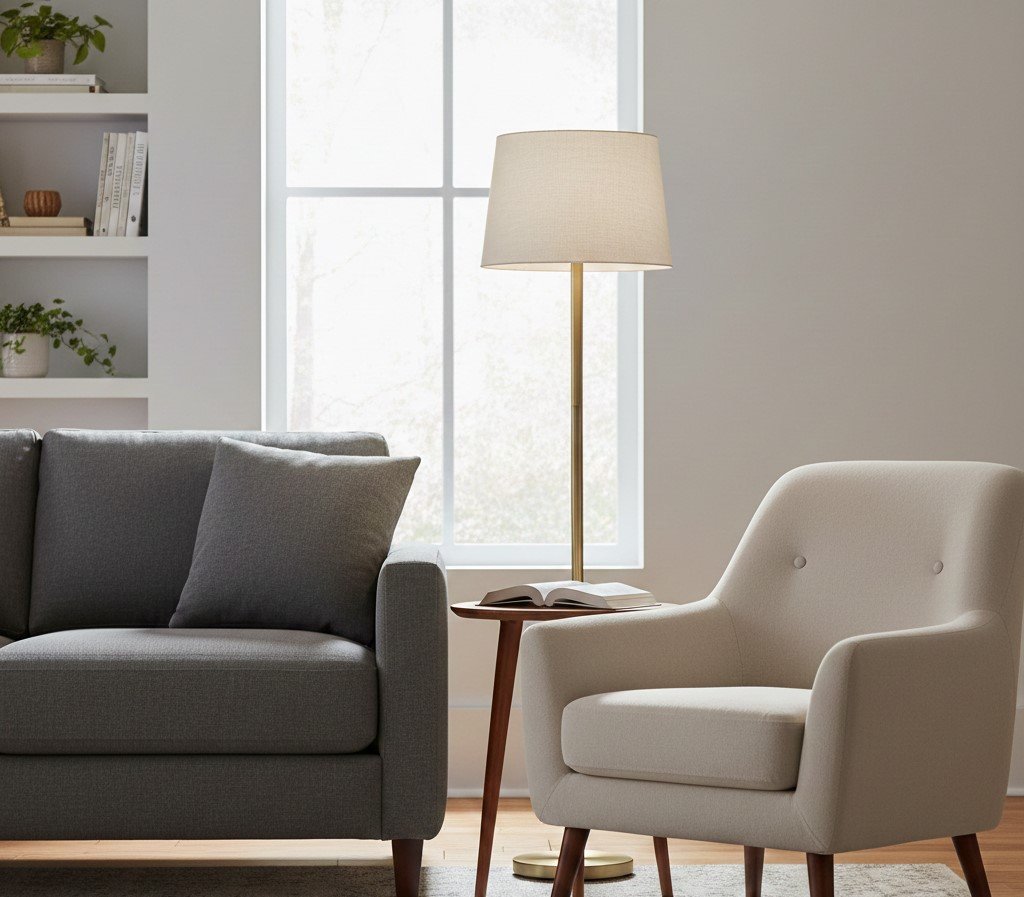
    Floor lamps are one of the most flexible and underrated lighting solutions in a home. They add light exactly where it’s needed, shape the mood of a room, and often eliminate the need for harsh overhead lighting. The right floor lamp depends on its purpose, brightness in lumens, height, shade design, and placement. When chosen correctly, a floor lamp improves comfort, visibility, and visual balance without permanent installation.

    This guide breaks down everything you need to know about floor lamps, from types and measurements to glare control, safety, and smart features, so you can choose with confidence rather than guesswork.

    What Are Floor Lamps and How Do They Work?

    Short answer: Floor lamps are free-standing light fixtures designed to provide ambient, task, or accent lighting without ceiling installation.

    A floor lamp works by positioning a light source at standing height, allowing it to distribute light horizontally or upward instead of straight down like ceiling fixtures. This changes how light interacts with walls, furniture, and people in the room.

    Unlike table lamps, floor lamps can:

    • Light larger areas
    • Reach above furniture lines
    • Be moved easily as layouts change

    Most floor lamps consist of four core parts: a base for stability, a vertical pole or arm, a light source, and a shade or diffuser. How these elements are combined determines the lamp’s function, brightness spread, and visual style.

    Floor lamps are often used as part of layered lighting, where ambient, task, and accent lighting work together to create comfort and depth.


    What Are the Main Types of Floor Lamps?

    Floor Lamps

    Short answer: Different floor lamp types are designed for different lighting purposes and room layouts.

    Understanding floor lamp types prevents buying a lamp that looks good but performs poorly. Below are the most common types and what they are best used for.

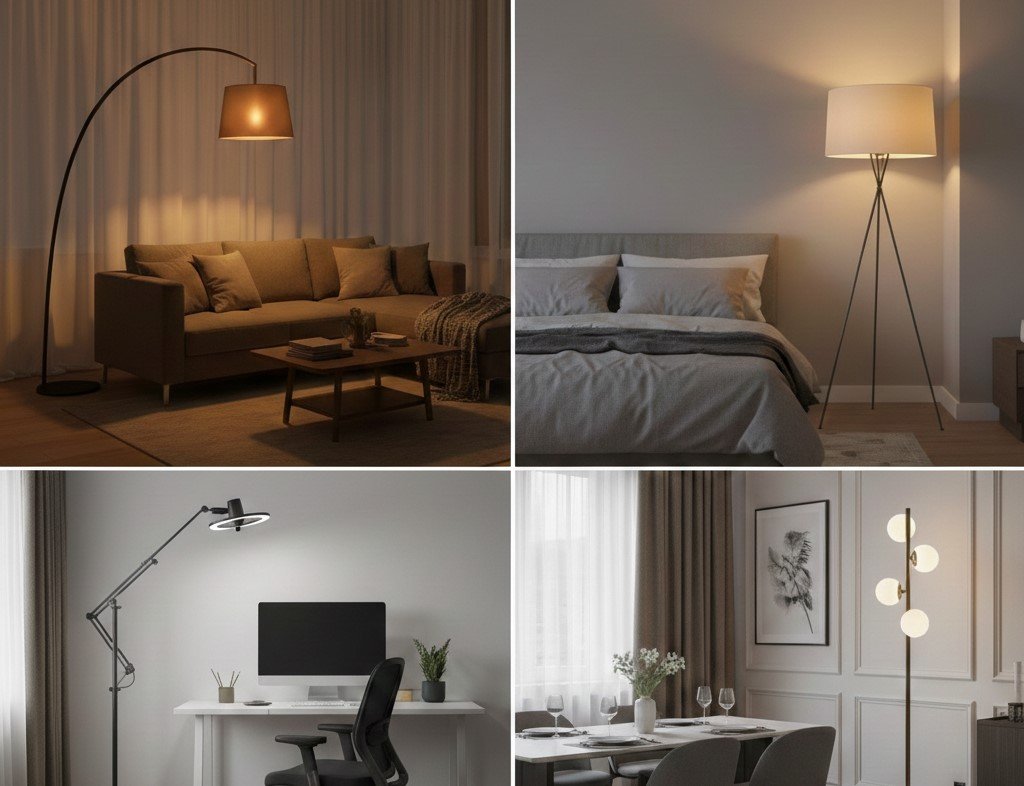
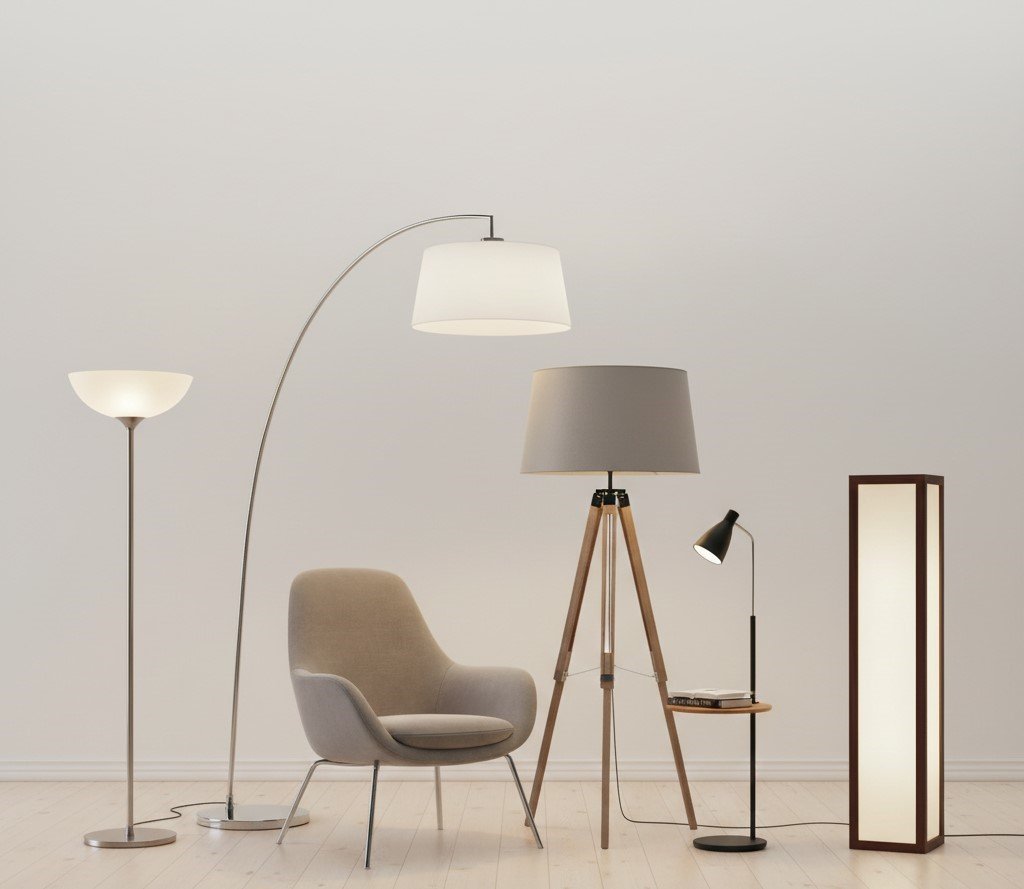
    Arc Floor Lamps

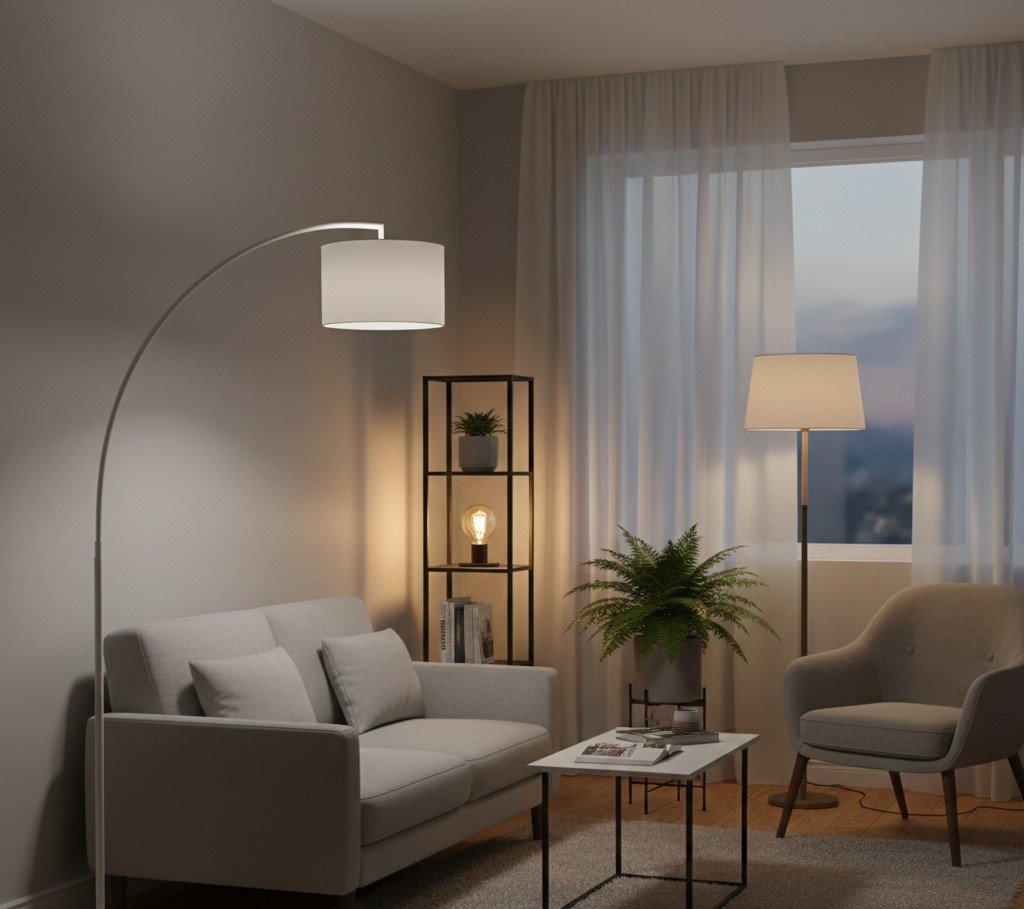
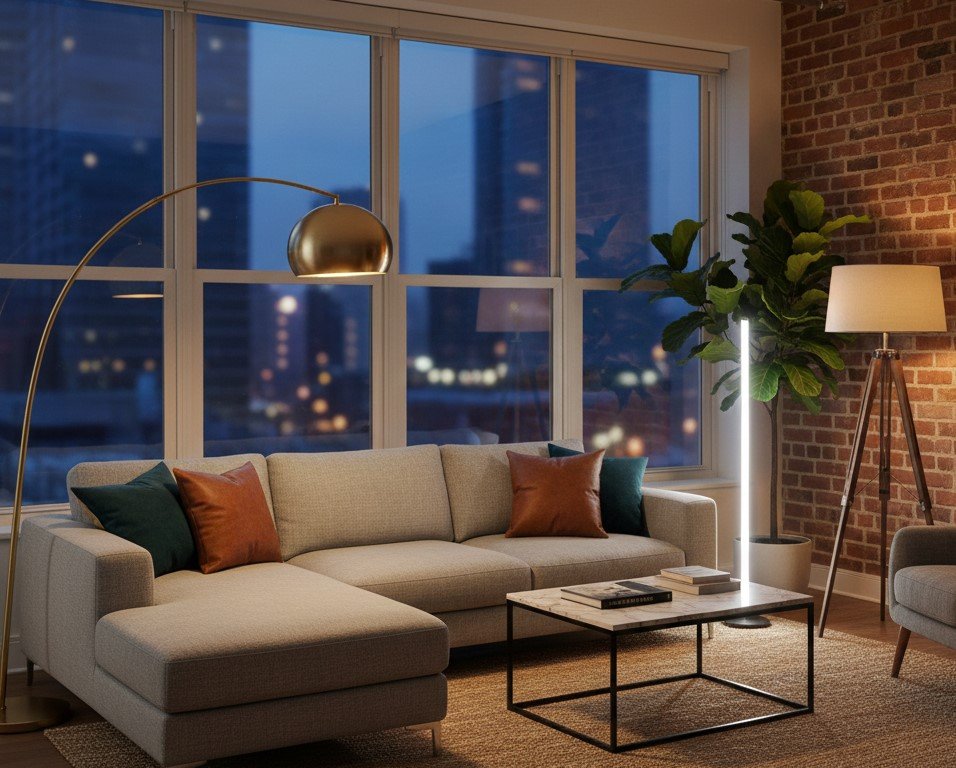
    Arc lamps feature a curved arm that extends outward, allowing the light to hover over seating areas or tables. They are ideal when you want overhead-style lighting without ceiling fixtures. Arc lamps work best in living rooms beside sofas or sectionals.

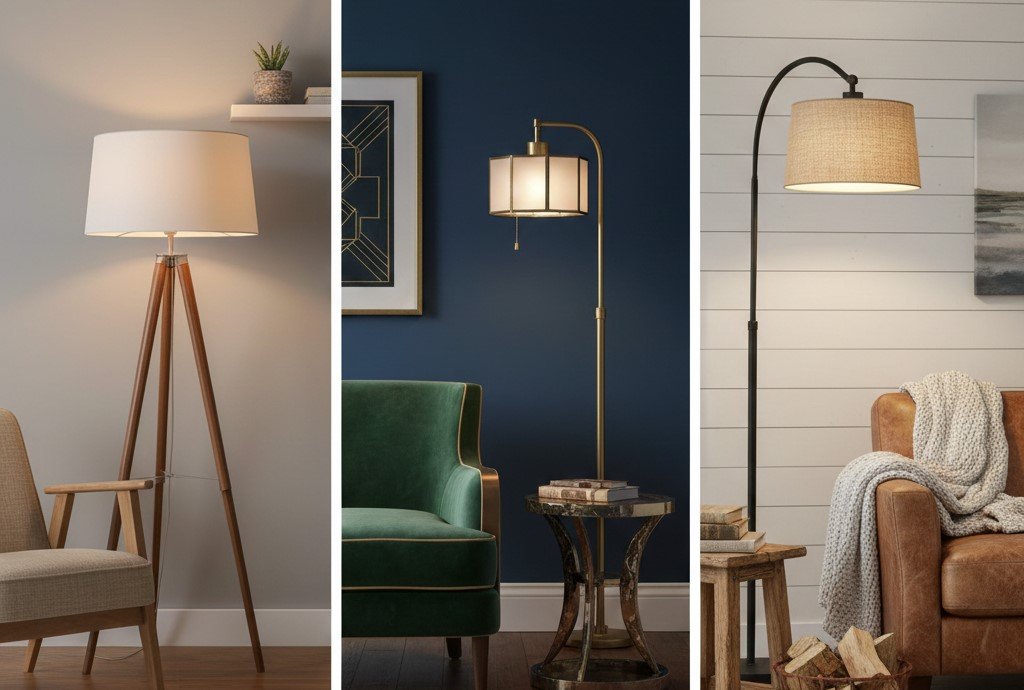
    Tripod Floor Lamps

    Tripod lamps use three legs for support and often feature decorative shades. They balance style and function and work well as ambient lighting in living rooms and bedrooms.

    Torchiere (Uplighter) Lamps

    Torchiere lamps direct light upward toward the ceiling. This creates soft, indirect ambient light. They are excellent for rooms that feel dark or cramped but are not ideal for reading tasks on their own.

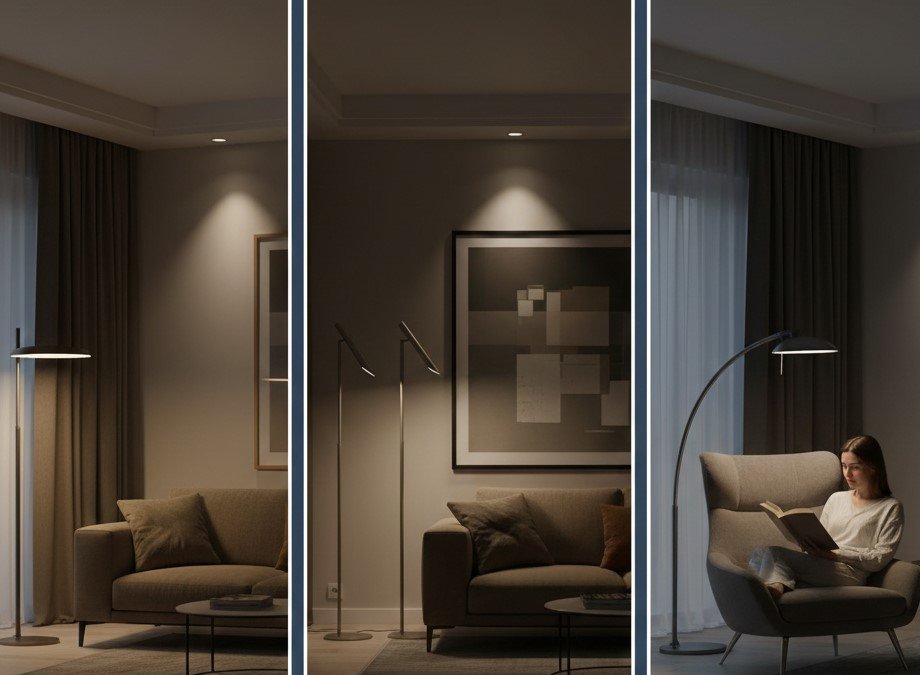
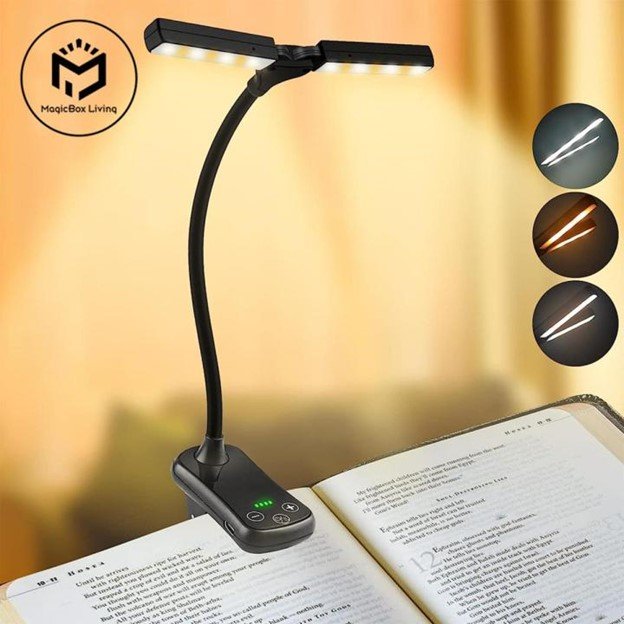
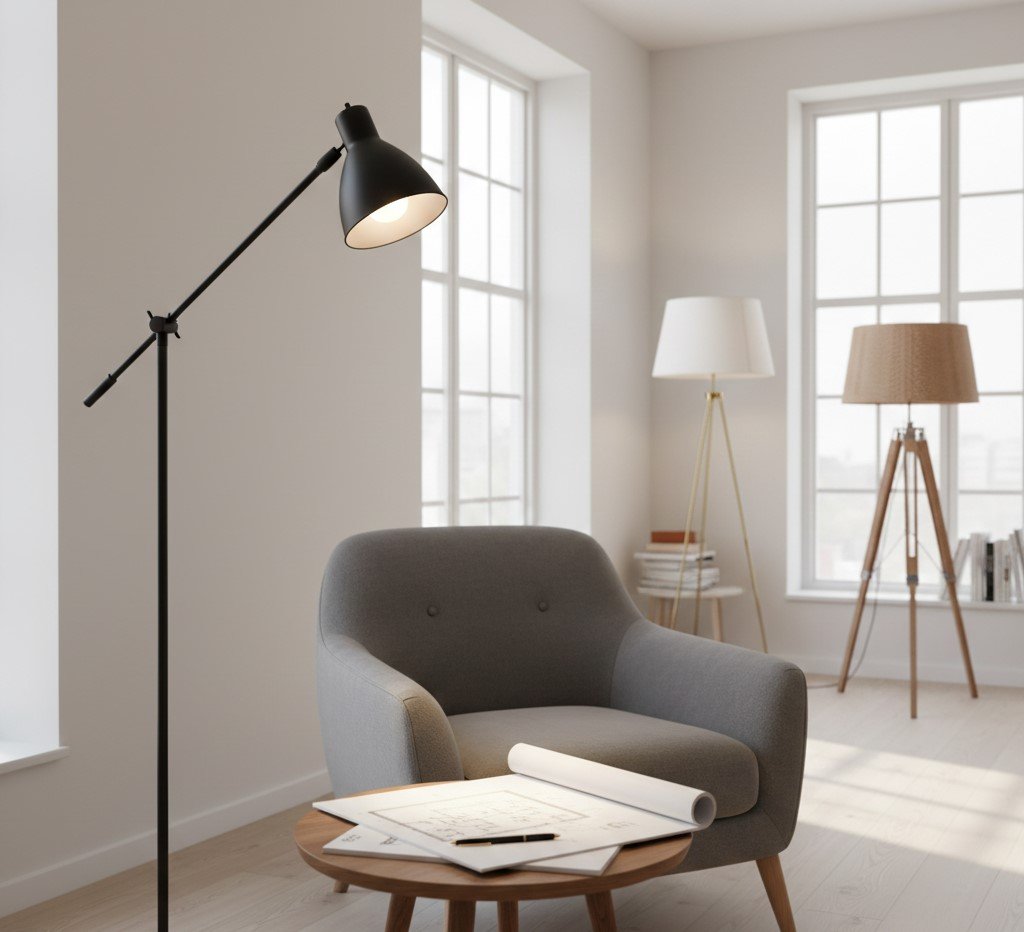
    Task or Reading Floor Lamps

    These lamps provide focused, directional light and are designed for reading or close work. They usually have adjustable arms or heads and higher brightness.

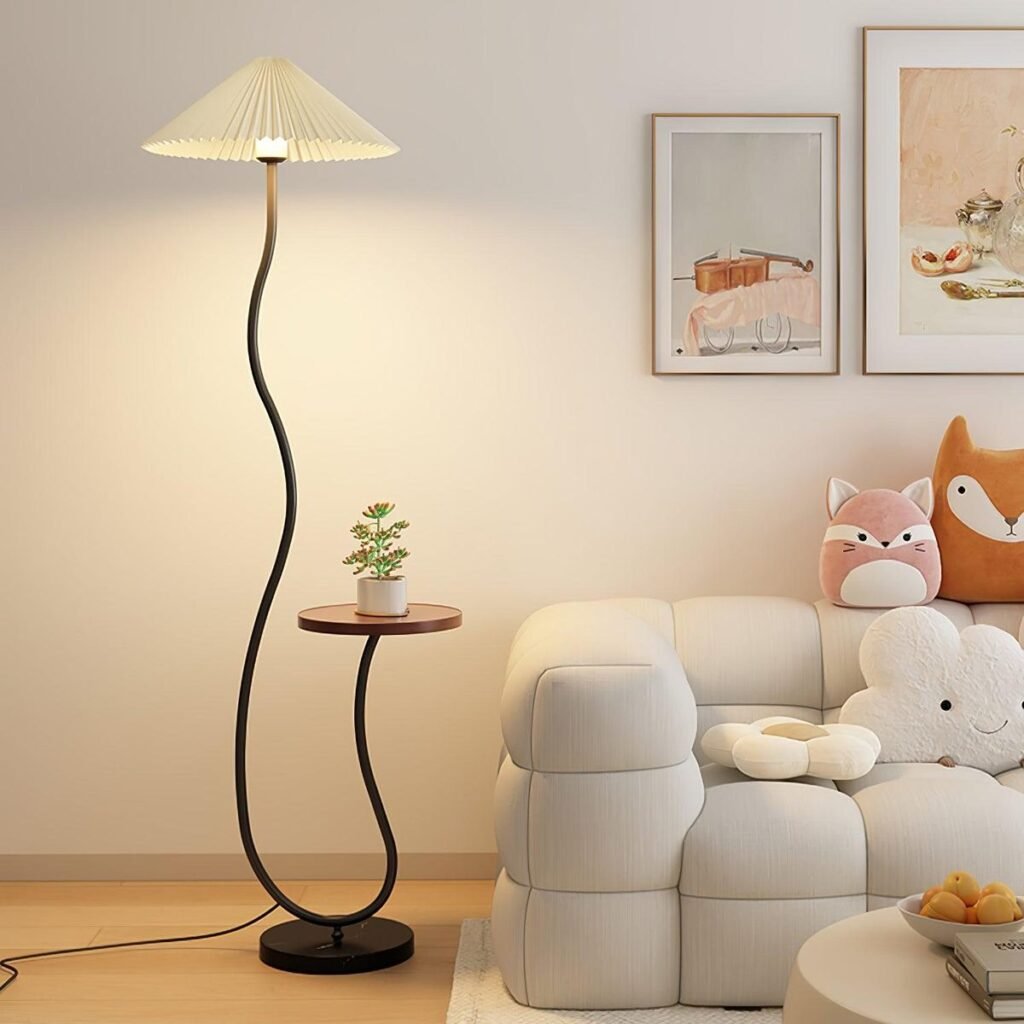
    Column and Shelf Floor Lamps

    Column lamps distribute light evenly along a vertical structure, while shelf lamps combine lighting with storage. These are best for ambient lighting and decorative purposes.

    Each type solves a different problem. Choosing based on use is more important than choosing based on appearance alone.


    How Do You Choose the Right Floor Lamp for Your Room?

    Floor Lamps

    Short answer: Choose based on purpose first, then size, brightness, and style.

    Before looking at styles or finishes, answer one question: What do you want the lamp to do?

    • If the goal is reading, you need focused light with sufficient lumens.
    • If the goal is mood or ambiance, indirect or shaded lamps work better.
    • If the goal is filling a dark corner, height and light spread matter most.

    Next, consider room size and furniture scale. A tall lamp with a wide shade can overwhelm a small room, while a short lamp may disappear next to a large sectional.

    Finally, style should support the room rather than compete with it. Floor lamps act as visual anchors, so they should echo materials, finishes, or shapes already present.

    How Many Lumens Should a Floor Lamp Have?

    Short answer: Most floor lamps need between 800 and 1,600 lumens, depending on use.

    Lumens measure brightness, not wattage. Choosing the wrong lumen level is one of the most common floor lamp mistakes.

    Floor Lamp Brightness Guide

    Use CaseRecommended Lumens
    Soft ambient lighting400–800 lm
    General room lighting800–1,200 lm
    Reading or task lighting1,000–1,600 lm
    Dark corners or large rooms1,600+ lm

    Reading lamps should deliver enough light directly onto the task area without lighting the entire room. Ambient lamps should spread light gently without harsh shadows.

    Always consider whether the lamp is dimmable. Dimming allows flexibility and prevents over-lighting.


    What Height Should a Floor Lamp Be Next to a Sofa or Chair?

    Floor Lamps

    Short answer: The bottom of the shade should sit at or slightly below eye level when seated.

    Height determines comfort. A lamp that is too tall causes glare, while one that is too short creates shadows.

    General height guidelines:

    • Overall lamp height: 58–64 inches for seating areas
    • Shade bottom: at seated eye level or lower
    • Adjustable lamps: allow fine-tuning for reading

    Arc lamps often need extra height to clear furniture, while reading lamps benefit from lower, adjustable heads.

    Measuring before buying avoids awkward proportions.

    Where Should You Place a Floor Lamp in a Room?

    Short answer: Place floor lamps where they support seating, corners, or pathways without blocking movement.

    Common placements include:

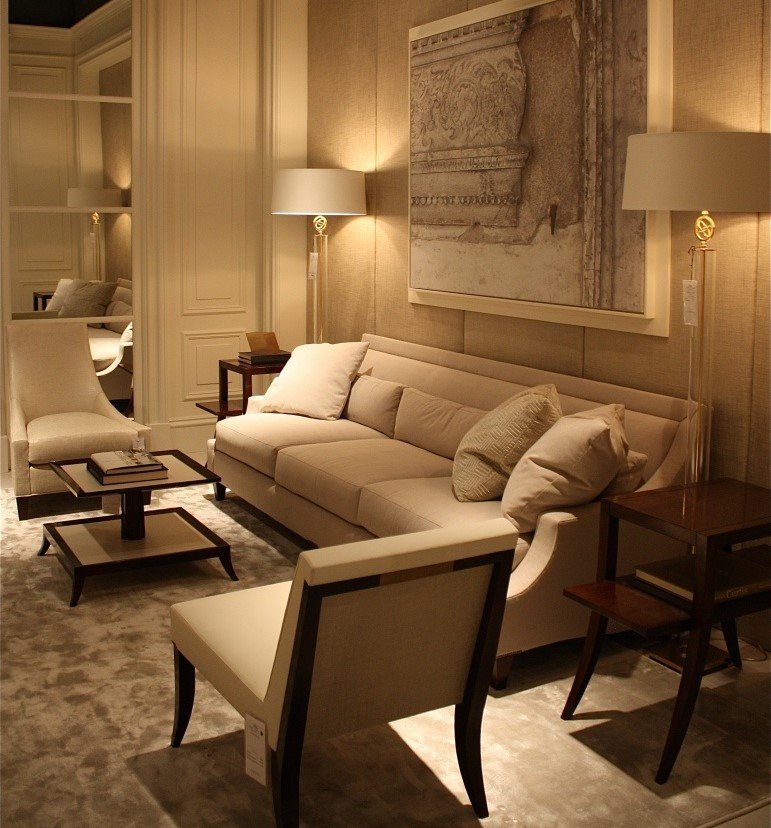
    • Beside sofas or armchairs
    • In dark corners to visually expand space
    • Near walls to bounce light indirectly
    • Behind or beside sectionals

    Avoid placing lamps where cords cross walkways or where the base can be easily knocked over. Good placement improves both safety and lighting effectiveness.


    Floor Lamps

    Warm vs Cool Light: Which Color Temperature Is Best for Floor Lamps?

    Short answer: Warm light works best for living spaces, neutral light for tasks.

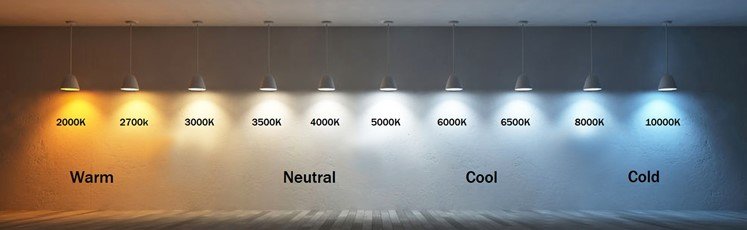
    Color temperature is measured in Kelvin (K). It affects how comfortable or energizing a room feels.

    • 2700–3000K: Warm, cozy, ideal for living rooms and bedrooms
    • 3500–4000K: Neutral, suitable for reading and work
    • 5000K+: Cool, rarely suitable for homes

    For most homes, warm or neutral light creates the best balance. Cooler light can feel harsh when used at eye level.

    What Is CRI and Why Does It Matter for Floor Lamps?

    Short answer: CRI measures how accurately light shows colors.

    CRI (Color Rendering Index) ranges from 0 to 100. Higher CRI means colors appear more natural.

    • CRI 80: Acceptable for general use
    • CRI 90+: Ideal for living spaces and reading

    A high CRI floor lamp makes rooms feel warmer and more comfortable, especially in the evening.


    How Do You Avoid Glare and Harsh Light From Floor Lamps?

    Floor Lamps

    Short answer: Control shade height, bulb type, and light direction.

    Glare occurs when light hits your eyes directly. To avoid it:

    • Choose opaque or fabric shades
    • Keep bulbs hidden below eye level
    • Use diffused or frosted bulbs
    • Avoid clear bulbs in open shades

    Indirect lighting, such as torchiere lamps or wall-bouncing light, reduces glare and eye strain.

    Are Smart Floor Lamps and Integrated LED Lamps Worth It?

    Short answer: They’re worth it for convenience, but not always flexibility.

    Smart floor lamps allow app control, scheduling, and voice commands. They are useful in modern smart homes but often cost more.

    Integrated LED lamps offer efficiency and slim designs but limit bulb replacement. If the LED fails, the entire lamp may need replacing. A flexible alternative is a standard floor lamp paired with a smart bulb. This approach offers control without long-term risk.

    Are Floor Lamps Safe Around Kids and Pets?

    Short answer: Yes, when stability and cord management are considered.

    Safety tips:

    • Choose lamps with heavy, wide bases
    • Avoid thin, top-heavy designs
    • Secure or hide cords
    • Avoid glass shades in active areas

    In homes with pets or children, stability matters as much as brightness.


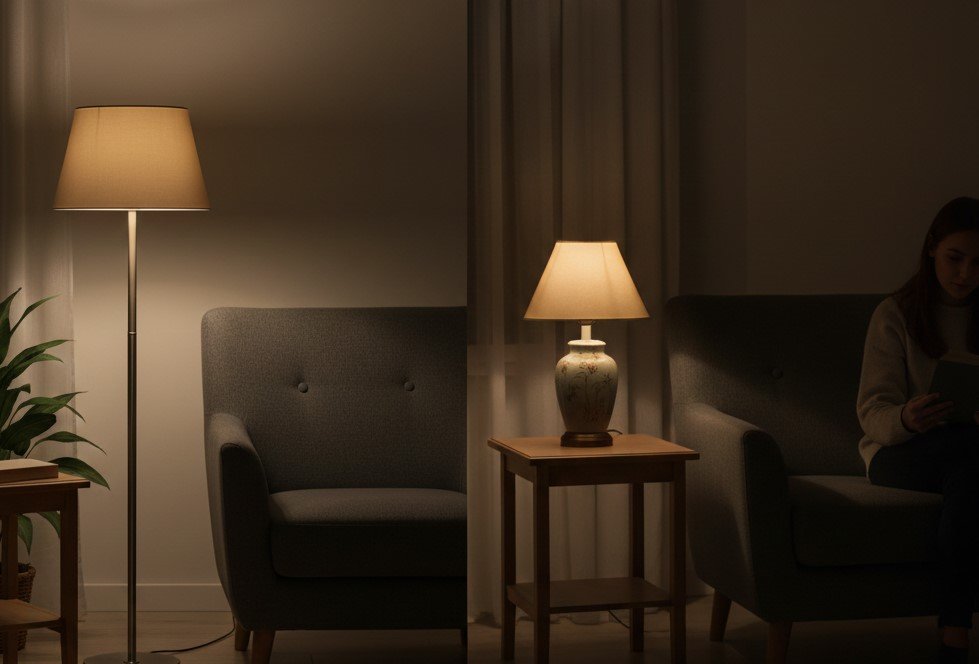
    Floor Lamp vs Table Lamp: Which One Should You Choose?

    Short answer: Floor lamps light larger areas, table lamps offer localized light.

    Floor lamps:

    • Cover more space
    • Work well in corners and beside seating
    • Don’t require furniture surfaces

    Table lamps:

    • Offer focused light
    • Require tables or shelves
    • Are better for bedside use

    Many rooms benefit from using both together.

    What Are the Most Common Floor Lamp Buying Mistakes?

    Short answer: Choosing style over function.

    Common mistakes include:

    • Ignoring lumen output
    • Buying lamps that are too tall or short
    • Choosing clear shades that cause glare
    • Forgetting dimming options
    • Overlooking base stability

    A good-looking lamp that performs poorly quickly becomes frustrating.


    How to Match a Floor Lamp With Your Interior Style

    Short answer: Match materials and proportions, not trends.

    • Modern interiors suit clean lines and metal finishes
    • Scandinavian styles pair well with light wood and fabric shades
    • Industrial spaces favor metal and exposed elements
    • Traditional rooms benefit from warm finishes and classic shades

    The lamp should support the room’s style, not dominate it.

    When Can a Floor Lamp Replace Overhead Lighting?

    Short answer: When used in pairs or combined with wall lighting.

    In smaller rooms or apartments, multiple floor lamps can replace ceiling lights entirely. Using two or three lamps creates layered light without harsh shadows.

    This approach works especially well in living rooms and bedrooms.

    Floor Lamp Types vs Best Use Cases (Comparison Table)

    TypeBest ForLight DirectionTypical HeightKey Advantage
    ArcSofas, sectionalsDownwardTallOverhead reach
    TripodAmbient lightDiffusedMediumDecorative balance
    TorchiereRoom lightingUpwardTallSoft ambiance
    ReadingTask lightingAdjustableMediumFocused light
    ColumnMood lightingDiffusedTallEven glow

    Mini Case: Fixing a Dark Living Room With One Floor Lamp

    A small living room relied on a single ceiling light, creating harsh shadows. By adding a 1,200-lumen arc floor lamp beside the sofa and using a 3000K bulb, the space felt brighter and calmer. The ceiling light was rarely used afterward, reducing glare and improving comfort.

    Floor Lamp Buying Checklist

    • Define purpose (ambient, task, accent)
    • Choose correct lumen range
    • Check height relative to seating
    • Select proper shade type
    • Ensure base stability
    • Decide on dimming or smart features
    • Match materials to room style

    How Do Floor Lamps Fit Into a Layered Lighting Plan?

    Short answer: Floor lamps work best when combined with other light sources instead of acting alone.

    Professional lighting design relies on layered lighting, which combines three elements:

    • Ambient lighting for general brightness
    • Task lighting for focused activities
    • Accent lighting for depth and mood

    Floor lamps often sit between ambient and task lighting. A torchiere floor lamp supports ambient lighting by bouncing light off ceilings and walls. A reading floor lamp provides targeted task lighting without lighting the whole room.

    When floor lamps are layered correctly:

    • Overhead lights are used less often
    • Shadows are reduced
    • Rooms feel larger and calmer

    A common mistake is expecting one floor lamp to replace all lighting. Instead, floor lamps should support other light sources, such as table lamps or wall sconces. This creates balance rather than glare.


    Can Floor Lamps Improve Small Rooms and Apartments?

    Short answer: Yes, floor lamps often perform better than ceiling lights in small spaces.

    In small rooms, ceiling lights can feel harsh because light is concentrated in one spot. Floor lamps distribute light horizontally, which makes walls feel farther apart.

    Best floor lamp strategies for small rooms:

    • Use uplighters or shaded lamps instead of exposed bulbs
    • Place lamps in corners to visually expand space
    • Choose slim bases and vertical designs
    • Avoid wide shades that crowd furniture

    A tall floor lamp with upward light can visually raise the ceiling. This is especially useful in apartments with low ceilings or limited natural light. In studio apartments, floor lamps also help define zones, such as separating living and sleeping areas without physical dividers.

    How Do Floor Lamps Affect Mood and Eye Comfort?

    Short answer: Floor lamps create softer light that reduces eye strain and mental fatigue.

    Eye comfort is affected by:

    • Brightness level
    • Direction of light
    • Contrast between light and dark areas

    Ceiling lights often create high contrast, which forces the eyes to constantly adjust. Floor lamps reduce this by spreading light at eye level and across walls.

    Benefits of floor lamps for comfort:

    • Softer transitions between light and shadow
    • Reduced glare on screens and books
    • Less visual fatigue in the evening

    Warm color temperatures paired with diffused shades signal the body to relax. This is why floor lamps are commonly used in living rooms and bedrooms rather than kitchens or workspaces.

    What Bulb Type Is Best for Floor Lamps?

    Short answer: LED bulbs are the best choice for most floor lamps.

    Modern LED bulbs outperform older bulb types in almost every way:

    • Lower energy use
    • Less heat
    • Longer lifespan
    • Better dimming options

    When choosing an LED bulb for a floor lamp, focus on:

    • Lumens, not watts
    • Color temperature (2700–3000K for living spaces)
    • CRI rating (90+ preferred)

    Avoid ultra-cheap LEDs. Poor-quality bulbs flicker, hum, or fail early, especially in dimmable lamps.

    If your floor lamp uses an integrated LED module, check:

    • Expected lifespan in hours
    • Whether the LED is replaceable
    • Warranty coverage

    Integrated LEDs look sleek but reduce long-term flexibility.

    What Base Weight and Stability Should a Floor Lamp Have?

    Short answer: Heavier bases equal safer lamps.

    Stability is one of the most overlooked buying factors. A tall lamp with a narrow base is a tipping hazard, especially in homes with pets or children.

    General stability guidelines:

    • Base diameter should increase with lamp height
    • Marble or metal bases offer better weight distribution
    • Tripod lamps offer natural stability
    • Thin pole lamps need extra base weight

    Before buying, consider foot traffic and cord placement. A stable lamp not only prevents accidents but also feels more premium and intentional.


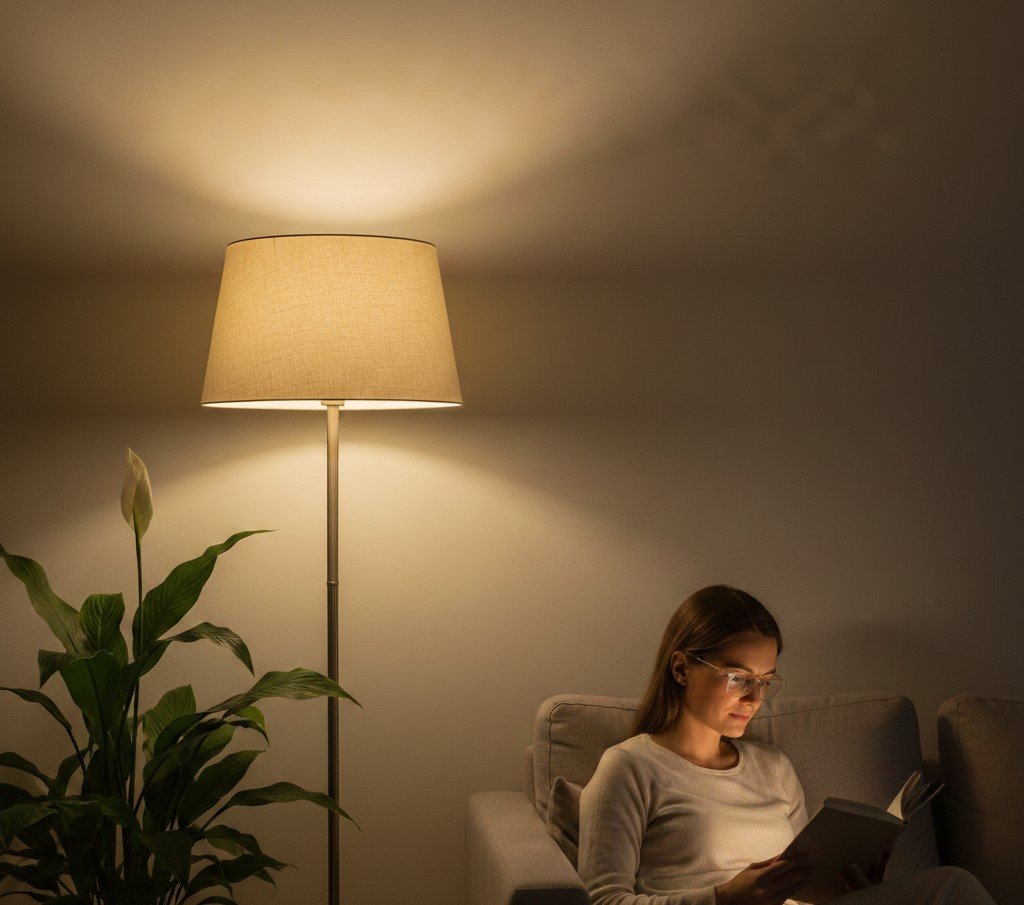
    How Do You Choose a Floor Lamp for Reading Without Eye Strain?

    Short answer: Choose focused light with correct height and angle.

    Reading floor lamps should:

    • Deliver 1,000–1,600 lumens
    • Have adjustable heads or arms
    • Aim light downward onto the page
    • Sit slightly behind or beside the reader

    Avoid lamps that shine directly into the eyes or reflect off glossy pages. A warm-neutral color temperature around 3000–3500K provides clarity without harshness.

    Adjustability matters more than brightness. The ability to fine-tune direction prevents shadows and glare.

    Are Floor Lamps Energy Efficient?

    Short answer: Yes, when paired with LED technology.

    A modern LED floor lamp typically uses 8–15 watts, compared to older incandescent lamps that used 60 watts or more.

    Energy efficiency benefits:

    • Lower electricity bills
    • Less heat output
    • Longer bulb life

    Dimmable lamps further reduce energy use by allowing lower brightness during evenings. Over time, LED floor lamps pay for themselves through reduced power consumption.

    How Do You Maintain and Clean Floor Lamps Properly?

    Short answer: Regular dusting and shade care preserve performance and appearance.

    Dust reduces brightness and dulls finishes. Maintenance tips:

    • Dust shades and bulbs monthly
    • Wipe metal or wood bases with a dry cloth
    • Avoid spraying cleaners directly onto electrical parts
    • Replace bulbs before they dim significantly

    Fabric shades trap dust and odors. Vacuum gently using a brush attachment or spot clean when needed.

    Clean lamps perform better and last longer.


    How Do Floor Lamps Compare Across Different Rooms?

    Short answer: Each room benefits from a different floor lamp role.

    Living Rooms

    • Arc lamps for seating
    • Tripod or column lamps for ambiance
    • Multiple lamps for layered lighting

    Bedrooms

    • Slim reading lamps beside chairs
    • Warm light for relaxation
    • Alternatives to bedside table lamps

    Home Offices

    • Task-focused lamps with neutral light
    • Adjustable heads to reduce screen glare

    Dining Areas

    • Accent lamps near sideboards
    • Soft light for atmosphere

    Matching the lamp’s purpose to the room prevents over- or under-lighting.

    How Many Floor Lamps Does a Room Actually Need?

    Short answer: Most rooms benefit from one to three floor lamps.

    Guidelines:

    • Small rooms: one well-placed lamp
    • Medium living rooms: two lamps for balance
    • Large rooms: two to three lamps with different roles

    Using multiple lamps at lower brightness often feels better than one very bright lamp. This reduces glare and improves visual comfort.

    Why Floor Lamps Often Look “Wrong” Even When They’re Expensive

    Short answer: Proportion, placement, or brightness is usually off.

    A floor lamp can look wrong when:

    • It’s too tall or too short for furniture
    • The shade exposes the bulb
    • The brightness overwhelms the room
    • The base clashes with flooring or furniture

    Lighting mistakes are rarely about price. They’re about ignoring measurements and function.

    A well-chosen modest lamp almost always looks better than a designer lamp used incorrectly.


    Extended Mini Case: Improving a Living Room With Two Floor Lamps Instead of One

    A rectangular living room relied on one bright torchiere lamp, which created uneven lighting and dark corners. The solution was not increasing brightness but adding a second floor lamp.

    Changes made:

    • Replaced the torchiere with a shaded tripod lamp (900 lumens)
    • Added a reading lamp near the sofa (1,200 lumens)
    • Reduced overhead lighting usage

    The result was even illumination, reduced glare, and improved comfort. Total energy use decreased despite using two lamps.

    This demonstrates how distribution beats brightness.

    Expanded Floor Lamp Buying Checklist (Detailed Version)

    Before purchasing, confirm:

    • Primary purpose (reading, ambient, accent)
    • Required lumens for the task
    • Correct lamp height relative to seating
    • Shade design that hides the bulb
    • Stable, weighted base
    • LED compatibility
    • Dimming or smart control needs
    • Cord length and routing
    • Room size and furniture scale

    If any of these feel unclear, the lamp is likely a poor match.

    Why Floor Lamps Are a Long-Term Design Investment

    Floor lamps are reusable across rooms and layouts. Unlike ceiling fixtures, they move with you and adapt to new spaces.

    A good floor lamp:

    • Works in multiple rooms
    • Survives furniture changes
    • Supports evolving lighting needs
    • Reduces reliance on renovations

    This flexibility makes floor lamps one of the most cost-effective lighting upgrades in any home.


    How Do You Choose the Right Floor Lamp? (Step-by-Step Decision Flow)

    This step-by-step flow mirrors how lighting professionals make decisions. It replaces guesswork with logic.

    Step 1: Define the primary purpose

    Ask what the lamp must do most of the time:

    • Reading or focused tasks
    • General room lighting
    • Mood or accent lighting

    If the purpose is unclear, the lamp will underperform.

    Step 2: Choose the correct brightness range

    Match lumens to the task:

    • 400–800 lumens for soft ambient light
    • 800–1,200 lumens for general lighting
    • 1,000–1,600 lumens for reading or task use

    Brightness should support the task without overwhelming the room.

    Step 3: Match lamp height to seating or space

    • Next to sofas or chairs: shade bottom at seated eye level
    • Corner lighting: taller lamps spread light more evenly
    • Adjustable arms add flexibility for task lighting

    Incorrect height is the most common cause of glare.

    Step 4: Select light direction and shade type

    • Opaque or fabric shades for comfort
    • Upward light for ambient glow
    • Adjustable heads for reading

    Avoid exposed bulbs in eye-level lamps.

    Step 5: Confirm placement and stability

    • Place beside seating, not directly in front
    • Avoid blocking walkways
    • Choose a weighted base for safety

    Step 6: Decide on control type

    • Standard switch for simplicity
    • Dimmer for flexibility
    • Smart control for automation and convenience

    If a lamp passes all six steps, it will perform well in almost any home.

    Why this matters:

    This flow reduces buying mistakes by aligning purpose → performance → comfort, which is exactly how AI Overviews and expert guides evaluate lighting decisions.


    Smart Floor Lamps vs Standard Floor Lamps: Which Is Better?

    FeatureSmart Floor LampsStandard Floor Lamps
    Control MethodApp, voice assistant, automationSwitch, foot pedal, or dimmer
    Brightness ControlPrecise digital dimmingManual dimming or fixed output
    Color TemperatureTunable white and RGB optionsFixed by bulb choice
    Ease of SetupRequires app and Wi-FiPlug-and-play
    Long-Term FlexibilityLimited by software supportVery flexible with bulb swaps
    Failure RiskDependent on electronicsMinimal, simpler design
    UpgradabilitySoftware updates requiredUpgrade by changing bulbs
    Best ForSmart homes, automation usersMost households
    Cost Over TimeHigher upfront costLower long-term cost
    ReliabilityHigh but tech-dependentVery high

    Homeaholic Guidance on Choosing

    Smart floor lamps make sense when:

    • The home already uses smart lighting systems
    • Automated schedules matter
    • Color tuning is a priority

    Standard floor lamps are usually better when:

    • You want long-term reliability
    • You prefer easy bulb replacement
    • You don’t want app or network dependence

    A hybrid approach often works best:
    Use a standard floor lamp with a smart bulb. This offers flexibility without locking the lamp into one system.

    Final Word: Why Floor Lamps Matter More Than People Think

    Floor lamps are not decorative extras. They influence comfort, mood, safety, and how a space is experienced day to night.

    When chosen with:

    • Correct lumens
    • Proper height
    • Thoughtful placement
    • Appropriate color temperature

    They transform rooms quietly and consistently.

    That’s why at Homeaholic, floor lamps are treated as functional design tools, not accessories


    Why Homeaholic Treats Floor Lamps as Functional Design

    At Homeaholic, floor lamps are viewed as tools that combine design and comfort. The goal is not just visual appeal but better living through thoughtful lighting choices. When lighting works well, everything else in the room feels easier.


    Frequently Asked Questions About Floor Lamps

    How many lumens does a good floor lamp need?

    Most floor lamps need 800–1,600 lumens depending on use.

    Are floor lamps better than ceiling lights?

    They offer softer, more flexible lighting but work best when layered.

    Can floor lamps be used in bedrooms?

    Yes, especially as alternatives to bedside table lamps.

    Do floor lamps consume a lot of power?

    LED floor lamps are energy-efficient and cost little to run.

    Are arc floor lamps practical?

    Yes, when space allows and placement is planned.

    What color temperature is best for living rooms?

    Warm white, around 2700–3000K, is ideal.


  • Dining Room is Not Just an Eat-up Place

    Dining room is not just an eat-up place but a chance of friends’ or family communication with creation of the memories. Transformation of a dining room in welcoming environment requires wall décor as one of the most important elements. Here in this article, we discuss various options that may be used to decorate the walls of the dinning place starting form conventional one up till the most modern one fitting every stylistic preference.

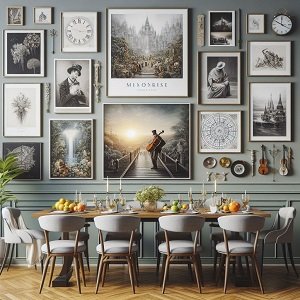
    Gallery Wall: A Symphony of Memories

    Dining Room is Not Just an Eat-up Place

    Gallery walls are a flexible and appealing way of showing oneself and memory. Then you can frame pictures you like and put them with other framed art, photos, decorative plates, etc. Generate excitement in your audience by combining multiple sizes and shapes. Such images may be of photographs featuring your loved ones or vacationing scenes that are dear to your heart. The individual elements must go well together, as if they are all part or whole artistic production.

    Mirror Display: Reflecting Elegance and Light

    Dining Room is Not Just an Eat-up Place

    Mirrors are both practical and exquisite decor items. Place a statement mirror for your dining room or a collection of mirrors as a great element for a focus for your dining room. Light bounces off mirrors, giving off an effect of brightness, adding to the sense of space. Go for interesting mirror-frames which go with your home-style whether it’s antique, contemporary, or jumbo.

    Floating Shelves: A Platform for Expression

    Dining Room is Not Just an Eat-up Place

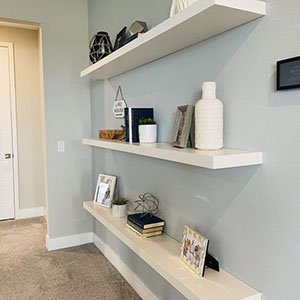
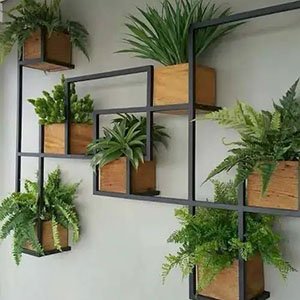
    Floating shelves are a practical as well as a fashionable option of storing your ornamental pieces in the dining area. Install them either in a staggered or symmetric position and mix up with some accessories like vases, plants, and small sculptures. This method offers functional and aesthetic benefits by providing a place to store regularly-used items while at the same time spicing up your dining area.

    Botanical Prints: Bringing Nature Indoors

    Dining Room is Not Just an Eat-up Place

    Bring in nature into your dining room by hanging botanical prints or a wall decal with plants, and so on. Thus, this sort of decor provides a welcome and fresh ambience. You can try frame botanical prints giving a classic appearance or go for reusable wall decals for a seasonal change of scene. Botanical theme fits to all style of interior, starting from classic till modern.

    Accent Wall: Making a Bold Statement

    Dining Room is Not Just an Eat-up Place

    One colourful wall will dramatically alter the atmosphere in the dining room. An accent Wall would serve as a focal point by choosing a vibrant coloured paint or an eye catching wallpaper pattern. This approach creates texture, intrigue, and gives an opportunity to introduce different colours you may have in large quantities to not overwhelm all four walls.

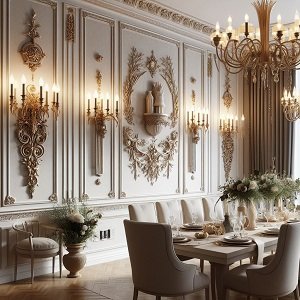
    Wall Sconces: Marriage of form and function

    Dining Room is Not Just an Eat-up Place

    Wall sconces can further improve the atmosphere around your dining room. These decorative wall lights not only serve as source of ambient light but also as decorations for the walls. You should opt for sconces that are in line with whatever your chosen decor style is – rustic, industrial, or sleek contemporary. Useable sconces may provide you with adjustable light that is perfect for different occasions.

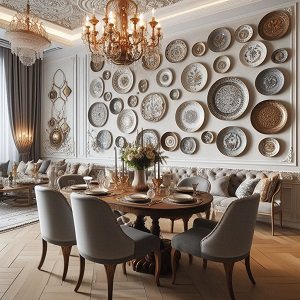
    Plate Wall: Timeless Elegance in Patterns

    Dining Room is Not Just an Eat-up Place

    Use a plate wall display for an old-fashioned style. Make an attractive arrangement of decorative plates. You may choose either a symmetrical grid or a mixture of shapes and sizes. Pick plates that have intricate patterns, strong hues, or a consistent motif to bring the arrangement together. This is a classy decor that gives your dining room a sense of elegance.

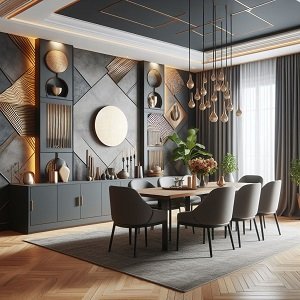
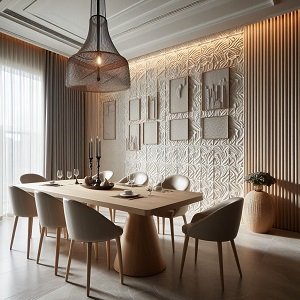
    Textured Wall Panels: Adding Dimension to Space

    Dining Room is Not Just an Eat-up Place

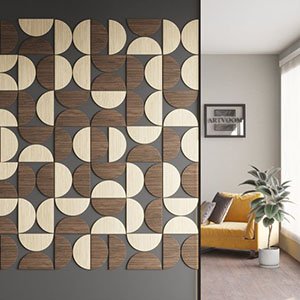
    The textured wall panels and 3d wall art are great for adding depth and dimension to dining room walls for those who want something unique. The panels are available with numerous designs being wood, metals or textured fabrics. Textural panels could give your dining room a modern texture. It can be delicate for minimalist looks or dramatic for a statement wall.

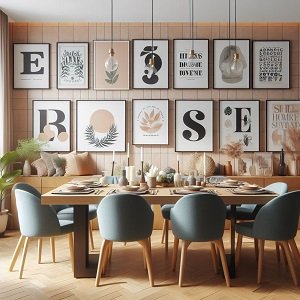
    Typography Art: Expressing with Words

    Dining Room is Not Just an Eat-up Place

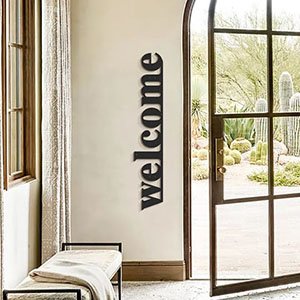
    With typography art, you can add quotations, phrases, and even recipes in your dining room. Ensure you pick a font that reflects your personality and overall theme of your home. Customize the typography to be your family motto or the quote that touches your heart. The wall art not only creates interest in the decor, but it also personalizes your dining area.

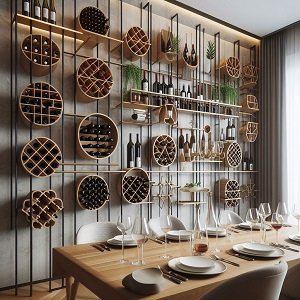
    Wine Rack Wall: A Toast to Functionality

    Dining Room is Not Just an Eat-up Place

    A decorative wall mounted wine rack is perfect for wine connoisseurs. Select a wine rack that matches with the type of the dining room—metal if contemporary and wood if traditional. Firstly, this home decor idea will help you store your wine in style while adding an air of class to your dining space.

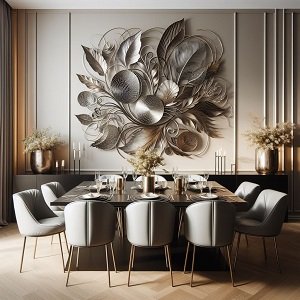
    Metal Wall Art: Contemporary Elegance

    Dining Room is Not Just an Eat-up Place

    Add metal wall art to your dining room and bring it a touch of sophistication and modernity. The focal points of metal sculptures, geometric designs or abstract art pieces can be very appealing. Consider the finish of the metal which could be polished, brushed, or distressed and fits to your dining room aesthetic. These metal wall arts are considered trendy and interesting because of their uniquely textured forms.

    Tapestry or Wall Hanging: Weaving Stories on Walls

    Dining Room is Not Just an Eat-up Place

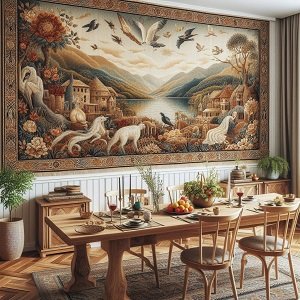
    A warm, textured tapestry or wall hanging will be perfect to compliment your dining room. There are so many types of tapestries from bohemian to eclectic to classical and refined. There are numerous types of tapestry that include the bohemian, eclectic, classic, and refined. You choose one thing which blends well with the colour scheme and general décor mood. Tapestries are not only decorative, but they also improve acoustics to control noise from the hall area into the dining area.

    Clock Gallery: Timeless Decor Accents

    Dining Room is Not Just an Eat-up Place

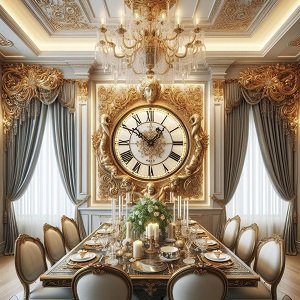
    Unique clocks for the dining room wall can work as functional pieces and also decorative ones at the same time. Opt for unique looking clocks- whether they are old fashioned, trendy or any combination of the two. Place them in an arty manner of the gallery for better outlook. You will also feel obliged to be punctual and the decor will add a timeless classic twist in your living room.

    Chalkboard Wall: Creativity Unleashed

    Dining Room is Not Just an Eat-up Place

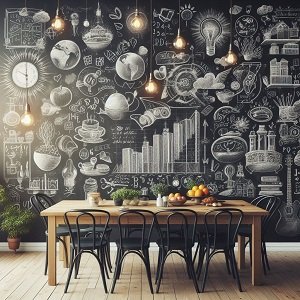
    Transform one part of your dining room wall into a chalkboard for a creative, unique and easily customisable accent piece. It can be used to write down the day’s meals, messages for family members, and also one can draw using chalk. The use of chalk board walls in the dining area is not only functional but adds a little casual, relaxed feel to the space.

    Personalized Photo Wall: Capturing Memories on Display

    Dining Room is Not Just an Eat-up Place

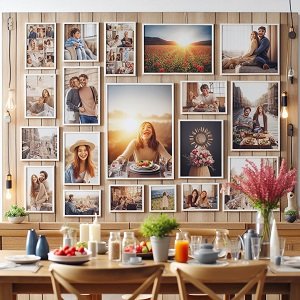
    Turn an ordinary photo wall into one that is uniquely “yours”, and make sure that it features the best moments and memories. Frame family photos, travel pictures, and special moments into your dining room for personalization. Such a decorative thought celebrates your years of existence and talks to you about it as well as your friends and visitors. Mix various frame shapes and positions for an alternative creative exhibition.

    Conclusion

    Choosing wall decorations carefully, you can turn your dining room into a manifestation of your taste. Each of these ideas is unique and will add a different flavour to your dining area — classic gallery walls, modern wallpaper stripes, or a simple contemporary metal art. Mix up your colours, consider the general theme of your home, and allow your creativity to help you turn your walls into canvases of self-expression in the dining room. Be it timeliness elegance or modern trends, what matters the most is the creation of a place which may both be beautiful to look at and feel like the continuation of one’s home and personality.

  • Table Decor Ideas: Inspired by Elegance

    Transforming ordinary life episodes into special occasions is more than creating an appealing environment in our dwelling areas. In particular, table decor gives us an opportunity to enliven our homes by adding some style, personality, and warmth. Table décor is an inexhaustible universe comprising everything from natural seasonal transformations reflecting the cycle of nature to quirky designs mixing up different textures and colours. In exploring design in this regard, we walk through different table decoration suggestions where each one is an expression of space creation according to tastes, conducive for discussions, relaxing and enjoying togetherness. A world where every table is a stage for inspiration and the wonder that happens when function meets shape.

    1. Seasonal Centrepieces:

    Table Decor Ideas: Inspired by Elegance

    Improve your home’s ambience with seasonal centrepieces that reflect different characteristics of every season. Go for pale pastels during the spring in a delicate vase then move to warm tones such as orange, brown with some leaves or little pumpkins during autumn. Silver and blue ornaments or white candles with snow around them can intensify wintry feeling during this season. Make your seasonal centrepieces reflective of the moment, thereby creating a living attraction on the table.

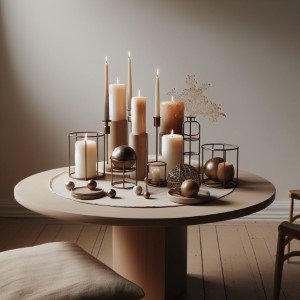
    2. Candle Arrangements:

    Table Decor Ideas: Inspired by Elegance

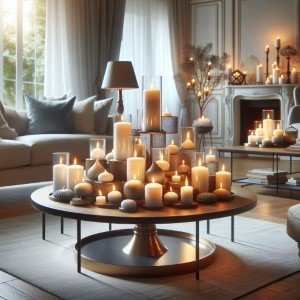
    Arrange different types of candles on top of your dining or coffee table and transform it into a captivating space. Use various sizes, shapes, and styles to achieve a sophisticated atmosphere. Either, put them in similar holders for harmony or randomly in different holders for an odd feel. Candles can create a warm and classy ambience during a romantic dinner, or just while you sit at home.

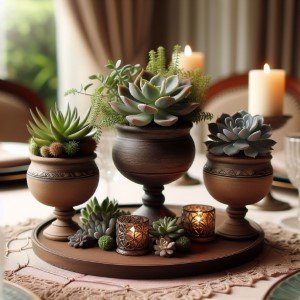
    3. Terrarium Display:

    Table Decor Ideas: Inspired by Elegance

    Captivate with an exciting terrarium show. Place some succulents or other kinds of little plants in glasses. These are small ecosystems that can be put in a table with very little effort and maintenance. Choose containers with various, creative designs that will provide a new look or spice for the inside.

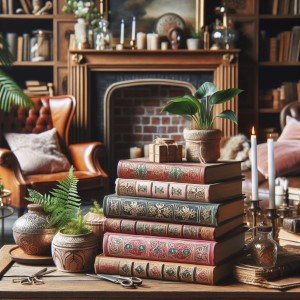
    4. Books as Decor:

    Table Decor Ideas: Inspired by Elegance

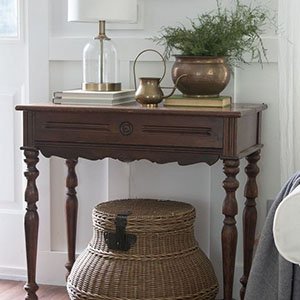
    Introduce the literary world into your house, making use of books as ornamental additions. Place them horizontally and vertically on your table so that you have a unique set up. You can select books with interesting covers or follow uniform colours complementing your décor. Complete the look with some decorative object at the tops of the stacks or even with tiny plants so that you add some intellectually challenging art onto your space.

    5. Artistic Vases:

    Table Decor Ideas: Inspired by Elegance

    You can enhance your table arrangement by putting on display an array of artful vases. Use of various designs, materials and colour will create a visual interest. Regardless of whether you opt for a bold contemporary ceramic piece or a fragile glass vase, make that decision count in becoming a statement for your table. Stuff them full of beautiful flowers, dry stems, or even stand alone as sculptures, making an artful feature for the eyes.

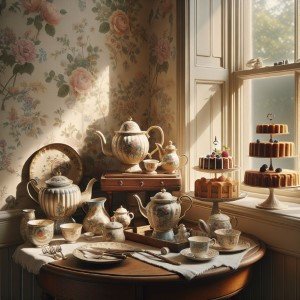
    6. Vintage Tableware:

    Table Decor Ideas: Inspired by Elegance

    Bring an element of nostalgia to your home by using the kind of old crockery as an ingredient in your interior design. Try to go into junkyard for amazing plates, teacups, and saucers. Create a cozy theme by mixing up different patterns or using one unifying style. Put them on your table — either as decorations or functional things but with a touch of style, you know it!

    7. Fruit and Vegetable Bowls:

    Table Decor Ideas: Inspired by Elegance

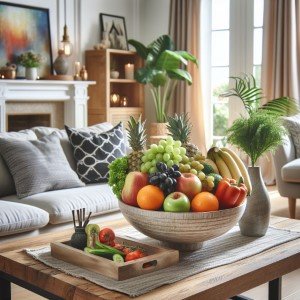
    Brighten up the table with fruits or vegetable-based decorations in colourful bowl. In this case, pick a mix of colourful fruits for an attractive exhibit. This is an interesting addition to such a meal centrepiece besides being useful and healthy to you and your guests. Try out a variety of configurations and match them to your liking as well as the overall theme of the house.

    8. Floating Candles:

    Table Decor Ideas: Inspired by Elegance

    Add float candles to create a soft, magical ambience around your tables. Put them into transparent bowls or vases with water to give it more class. These flames flicker and reflect upon water producing tranquilization effects which are ideal for quite evening or any formal occasion. Try different shapes and sizes of candles in order to create a specific aesthetic effect.

    9. Themed Collections:

    Table Decor Ideas: Inspired by Elegance

    Make table decors more personalized by organising thematic collections that express your personality and interests. Find items that move you whether, they are seashells, vintage keys, or feathers. Arrange these collections in trays or shallow containers on the table to complete a decorative composition. By choosing such statement lamps you get interesting topic for talk and also have an unusual interior where every piece tells about the owners personality.

    10. Mirrored Trays:

    Table Decor Ideas: Inspired by Elegance

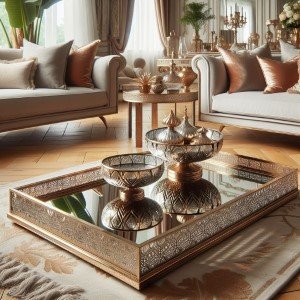
    Spice-up your table with a dose of style with mirrored trays. Apart from displaying your selected decorative objects, these reflective surface make the dining table look larger and spacious. Put candles, vases, or small sculptures onto this tray so that they do not make a scattered look. The combination will play with light and reflect, thereby creating a highlight in your tablescape design.

    11. Metallic Accents:

    Table Decor Ideas: Inspired by Elegance

    Add some luxury flavour to your home in the form of metallic accents. These include silver, gold and bronze no matter what it is luxurious for your table arrangement. You may consider decorating your room with metallic candle holders, trays, and figurines having the same design will add up on the theme. This is important as combining various metallic finishes will add more depth and interest making your table become a glamorous focus piece of any living space.

    12. Mason Jar Displays:

    Table Decor Ideas: Inspired by Elegance

    Go rural-chic and include mason jars among your table settings. However, these jars may be used as vases for wild flowers, candle-holders, or funny glasses for drinks. Paint, twine, and lace are some of custom options you can use to complement the overall theme. Mason jars are simple, but they bring homestyle comfort to your table helping you create a comfortable dining area.

    13. Sculptural Pieces:

    Table Decor Ideas: Inspired by Elegance

    Include sculptural items in table’s designs to make an extravagant declaration. Go for original sculptures or abstract works that match your taste. They can be used individually, just like a centrepiece, or they can complement your overall table decoration. Three dimensions help to bring life on board, transforming your table into a piece of art work.

    14. Layered Textiles:

    Table Decor Ideas: Inspired by Elegance

    Use various fabrics when designing a warm and textured layer for your table setting. Try different types of textured and coloured tablecloths, runners, and placemats. Layers are not just pretty; they also allow for creativity in mixing stuff up. Choose materials that highlight the climate of your residence as well as complement its ambiance resulting in a comfortable, welcoming environment.

    15. Floating Flower Petals:

    Table Decor Ideas: Inspired by Elegance

    Make an elegant presentation of some floating flower petals on your table’s. Place fresh petal into a bowl filled with water to form an airy elegant floral arrangement. This minimalist approach brings a hint of nature into the home in a sophisticated manner. Select petals in matching shades with your interior to achieve a complete unity of style and beauty.
    16. Herb Garden Pots:

    Table Decor Ideas: Inspired by Elegance

    Add some style to your table to make it multi-functional. Include herb garden pots into your table to give out an additional look. Opt for decorative pots and grow your herbs like sweet basil, perilla, rosemary among others. This combination adds some greens and also fresh herbs for the kitchen. When you arrange these fragrant aromas and vibrant colours in an attractive manner on your centre, it makes your table more delightful as well as practical.

    17. Wine Cork Crafts:

    Table Decor Ideas: Inspired by Elegance

    Make a sustainable creative step by turning those wine corks into something special for decorating your table. You can make some cool coasters by gluing together sliced wine corks, or you can assemble little sculptures out of the corks and arrange them into fun shapes. Personalised wine cork place card holders for your table settings. This sustainable method turns recycled corks into fashionable and artistic accessories that can enhance the appeal of a table while protecting the environment.

    Conclusion

    Adapting these extra table embellishment concepts gives you the opportunity to personalize and individualize your surrounding space according to your likes and dislikes and thus making your home attractive. Regardless of whether you choose decorative value of herb garden pots or ecological beauty of wine cork decorations each idea adds personality that makes your home feel like your own place. You can combine these ideas, though, and make something new and individual for your home environment.

    The numerous table decor ideas avail alternative choices that can meet different needs and make your house a unique place of comfort. This is regardless of whether you are going for a simplistic design made up of floating petals or an extravagant one with hints of metallic accents that will make any room look different.

  • A Symphony of Style: Designing Beautiful Dining Room Table Decoration

    The dining room table is the painting pallet for the cuisines and the meeting point for people’s hearts in the world of interior design. This happens amidst a cultural theatre of cuisines or the ‘foodie’ scene in which the dining table comes to fore, and its decor is a canvas upon which one can make artistic statements about self-expression. These choices include everything ranging from the timeless appeal of antique dinnerware to the cutting-edge style of up-to-date industrial chicness. In this article we consider ways in which people decorate their everyday meals that bring some harmony between functionality and design.

    1. Seasonal Tablescapes:

    Dining Room Table Decoration

    Changing your table seasonally is an aesthetic approach of bringing new energy into your dining room. For example, during spring one can envision bright coloured tulips or daffodils arranged in fragile vases, while for fall more warmer shades like orange with touches of brown will work better, maybe rusty red leaves or small pumpkins. Silver candle holders, crystals, and other shiny features will beautifully brighten up winter. In addition, these seasonal tablescapes not only reflect the changing scenery but they keep your living room as a forever evolving highlight.
    2. Mismatched Chair Styles:

    Dining Room Table Decoration

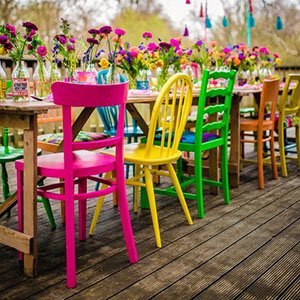
    Enhance the appeal of heterogeneity that involves putting together different kinds of chair designs around a dining table. This blends deliberately gives life and style to the picture. You can mix contemporary seats with vintage discoveries, or you can use several colours, including various materials. This brings about a well-chosen and warm dining area that gives every seat in the room its own distinctive and cozy touch.

    3. Statement Centrepiece:

    Dining Room Table Decoration

    Create a memorable atmosphere for your guests by showcasing an eye-catching centrepiece, such as a large vase of sunflowers. From an oversized vase filled with vibrant flowers to an elaborate sculpture, or candles at various heights, a statement centrepiece is guaranteed to become the eye-catcher of any table. This bold piece of accent does not just give cohesion to the space but even enhances the whole atmosphere of the fine dining experience in a very artful way.

    4. Monochromatic Elegance:

    Dining Room Table Decoration

    Go for monotone elegance to bring out an impressive and coherent look on your tables’ decoration. Pick a major colour and come up with different hues and saturation levels within that range. The choice of one colour for everything like tablecloths, dinner wares, napkins and even floral arrangement results in aesthetically pleasing and harmonised environment, representing good taste.

    5. Natural Elements:

    Dining Room Table Decoration

    Bring a little bit of the outside into your dining area through placing natural items in your table arrangements. Additions such as driftwood centrepieces, pinecone accents, or potted succulents will give off rustic charm but in a calming way. This organic character gives depth, creates texture, and connects this room to nature, anchoring it and warming the space.

    6. Layered Linens:

    Dining Room Table Decoration

    Add depth and texture to a table topper using various layers of linen cloth. Use different patterns, textures, and colours on your tablecloths, placemats, and napkins. The layering of this technique imparts to the table added depth of interest and warmth as desired or for many occasions by combining several fabrics depending on the preference of the host, the occasion or theme intended.

    7. Personalized Place Settings:

    Dining Room Table Decoration

    Personalize every place settings, creating an intimate and considerate dining experience. Consider having personalized name cards, different napkin rings, or other gifts for each guest. Paying attention to details here brings some sophistication to this interior making everyone feel important.

    8. Floating Candle Trio:

    Dining Room Table Decoration

    Three floating candles in clear glass containers containing water creates a peaceful and magical tone. This combination is ideal for quiet dinners and other romantic moments as the candlelit water gently flickers away. The beauty of floating candles adds a touch of simple, stylishness to your table setting.

    9. Mirror Magic:

    Dining Room Table Decoration

    Set the stage for luxury in your dining room, with the addition of a huge mirror as the centre-point. Mirrors help beautify your interiors, they enhance the room’s overall appearance and give you an impression of bigger spaces. It is this beautiful detail that turns an ordinary dining area into something extravagant and enticing.

    10. Herb Garden Runner:

    Dining Room Table Decoration

    Use potted herbal plants as a table runner and transform your dining table into a fragrant herb garden. Apart from the aesthetic sense, this is also an attractive way to make the air fragrant with sweet scents from these fresh herbs used for cooking. With its lushy green leaves, this combination forms a cheerful centrepiece that reminds you of spring and life.

    11. Vintage Dinnerware:

    Dining Room Table Decoration

    Take your dining experience back in time by having some vintage or antique dinnerware on your centrepiece. The beauty of it is in its graceful old items for sale such as soft tea cups, fancy plates and everlasting silverwares that make any dining experience more vintage, nostalgic, and classy looking. Curate an eclectic look using various patterns and styles that tell the story of vintage elegance and timeless craftsmanship by mixing it all.

    12. Industrial Chic:

    Dining Room Table Decoration

    Use robust and simple table associated with metal chairs to have an industrial touch in your dining area. The blend is urban and contemporary, with the metals and distress on woods acting as raw material elements. In industrial chic table decor, we look at the clean lines, utilitarian elements and modern edge which creates the kind of visual experience that is totally different from other areas in your home and your dining area as well.

    13. Fruit-Filled Bowls:

    Dining Room Table Decoration

    Use freshly arranged bowl of fruits to not only add aesthetics but also, to serve purpose. Vibrant colours and different textures of the fruits make a striking centrepiece. This arrangement is an ideal compliment for bowls filled with fresh, succulent berries, an exotic combination of citrus fruits, or even your customary seasonal favourites.

    14. Bold Table Runners:

    Dining Room Table Decoration

    Choose outgoing, loud, and lively table runners that will put a splash of colour and character on your dining table. Try out geometric shapes, textured items, and complex designs that tie in with your general home décor concept. A large bold table runner acts both as a visual magnet and brings all other pieces together.

    15. Artistic Charger Plates:
    Dining Room Table Decoration

    Add a feeling of extra indulgence to your table by using some artistically crafted charger plates. However, you should pick plates that would have complex patterns, colourful shades, or some peculiar textures for an impressive background for your dinnerware setup. Unlike charger plates that can protect your table and give you a chance to bring in artsy elements adding charm and character to your dinner area.

    16. Themed Dinner Parties:

    Dining Room Table Decoration

    Make your dinner as unique as you can by organizing thematic dinners with corresponding table layouts. Themed decor could be beach-theme with seashells, coastal colours or garden theme with floral arrangements and botanical accents. Stimulate your guests not only to eat but also to stay immersed in this topic, as a result of which the memorable experience will be even more intense.

    17. Candle Lanterns:

    Dining Room Table Decoration

    Use candle lanterns to add a little bit of magic and coziness to your dining room. Pick different shaped lanterns and place them appropriately in order to generate a feeling of warmth as well as intimacy. Candle lanterns have a special touch to them. It’s this soft glow of candlelight illuminating the lanterns that creates an attractive allure and draws guests into the table decoration.

    Conclusion:

    While the curtains fall on my study of dining room table decor ideas, one can easily see that this is not only about beautifying the surfaces, but also an expression of style and hospitality. These ensembling of themes, seasons, and art of living well makes a statement about the perfect dining table that is perfectly decorated with thematic intricacies and seasonal flourishes. It could be a combination of the charisma of old dining room chairs or antique elegance depending on different ideas, but every single detail helps to build up harmonious visual ambience that enriches the dining experience. On the issue of table decor, one finds that it is possible to turn a meal into an affair, a house into a place of habitation, a world into a universe, by dressing up a typical table in imaginative ways.

  • Transforming Aquatic Spaces: Innovative Aquarium Decor Ideas

    Designing an ocean in the aquarium is more than mere filling it up with water and fish. Aquarium decor is an art form that gives hobbyists an opportunity to create distinct and magnificent water terrains. All things considered whether it is driftwood arrangements meant to mimic natural landscapes or coloured gravel aimed at lining the aquarium’s substrate, each element contributes significantly towards aesthetics and practicality in keeping an elegant home aquarium alive. This exploration of “aquarium décor ideas” will consider some novel concepts which will improve the look of the tank and also improve the health of the aquatic friends. All in all, the provided ideas cover a wide range of opportunities for bringing a spectacular “aquatic masterpiece” to life whether it’s with an intention to create a soothing and natural ambiance or a more energetic marine-life setting.

    Driftwood Centrepiece:

    Aquarium Decor Ideas

    Adding a large piece of natural tree will bring an aqua forest atmosphere in your home and make it look like you are viewing an attractive underwater environment. The shapes of the drifting woods are organic and complex leading a bit of wilderness into the tank providing the ambient habitat of numerous water species. Besides being visually appealing, driftwood can be used to give fish an interesting thing to focus on and hide out for protection. With its earthy colours and textures, this plant adds to the aesthetics of any aquarium, making it look natural in the confines of the tank.

    Coral Reef Replica:

    Aquarium Decor Ideas

    The artificial replica corals are just windows into the kaleidoscopic nature of the seabed. The beauty of artificial reefs can be realized by the fact that besides making your aquarium look good, artificial reefs can act to make the under world look more alive. Coral reef replicas come in various shapes, sizes, and colours allowing you adjust your aquarium. These realistic replicas bring in a tropical sense for your aquarium. Your aquarium turns into an attractive garden of a coral paradise.

    Submersible LED Lights:

    Aquarium Decor Ideas

    Submersible LED lights are like painting your water canvas and lighting your aquarium using all colours possible. However, these lights are more than just functional in nature since they bring about an element of aestheticism in the underwater surrounding. Depending on whether it’s calm blue to resemble quiet moonlights or dynamic LED lights that change colours, the underwater LED lights will create a pleasant atmosphere and an incredible aquarium performance.

    Underwater Caves:

    Aquarium Decor Ideas

    The addition of underwater caves makes things interesting in the aquarium. These may extend beyond mere beauty in that they provide shelter for fish and a place to hide. These are caves constructed from aquariums safe materials that must be part of the aquatic landscaping, providing safe havens for your fishes creating interesting underwater ambience. Underwater caves are also strategically placed, which makes it possible to create many small territories inside the tank. This contributes towards natural behaviour of aquarium residents.

    Floating Plants:

    Aquarium Decor Ideas

    The water surface comes down to you through floating plants to create a peaceful atmosphere in your aquarium. Floating plants bring in some dynamism that makes the underwater space appear interesting and alive with various components including the delicate root appendages that hang below, as well as the leaves that move delicately in synchronicity with water current. Besides beautifying your home, these plants also serve as natural barriers that offer shade in lowering direct rays of the sun on your aquatic creatures. Light and floating plant shadows, which only serve to further enhance the beauty of your aquatic living room.

    Aquarium Backgrounds:

    Aquarium Decor Ideas

    The aquarium backdrops, as it were, form the wallpaper of our sea garden. In particular, three-dimensional backgrounds enhance the depth of look of your tank in a way that it seems that you are moving across the big ocean. Depending on your choice of decorative elements, they will either take you into the visual beauty of an underwater coral reef, a rocky sea bed or an underwater forest. Apart from the visual attractiveness, backgrounds are used to cover up the equipment and wirings while maintaining the clean look within the aquarium.

    Aquarium Sand Art:

    Aquarium Decor Ideas

    The aquarium sand art is another means of artful creativity turning your aquarium substrata into an astounding canvas. Arrange coloured aquarium sands intricately in such a way that they form complex patterns and attractive designs at the bottom of your aquarium. It makes the tank look good giving one a chance to be artistic. These grains of coloured sand form an uneven environment that makes it possible for you to make a remarkable sea scene.

    Sunken Shipwreck Decor:

    Aquarium Decor Ideas

    A sunken shipwreck replica adds elements of exploration and adventure in your aquarium. The thematic item acts as both an eye-catching centre piece and a story line in the imaginary ocean. The elaborate sunken ship in the tank adds some mysterious feeling and sense of history as it gives the fish some more hidden spots to investigate. The addition of this decorative element into your aquarium helps tell a story within the tank thereby transforming it into a fascinating and interesting underwater world.

    Bonsai Tree Aquascape:

    Aquarium Decor Ideas

    The process of building a small bonsai tree aquascape in your aquarium will give you an impression of peace and nature into under the water area. You use small aquarium-safe plants and rocks to construct a mini landscape that has a resemblance to the artistic bonsai tree. The well composed elements such as delicate leaves and sculptured rocks make your aquarium a living museum, that creates a peaceful ambience for your home. Such an interesting decoration combines horticulture with aqua scaping into a unified underwater tableau with a visual delight and balance.

    Moss Balls:

    Aquarium Decor Ideas

    By bringing in a marimo moss ball from Japan, you can make your aquarium look very interesting and quite weird. Such plump velvety green balls bring some element of fun and have useful benefits for a balanced aqua-ecosystem. The moss balls are absorbers of these impurities providing clearer water while at the same time provide photosynthetic process for oxygen production. The slow, hypnotizing movements that these fish exhibit in the tanks create more colour to the entire environment. Besides, they are attractive and useful for this environment.

    Aquarium Statues:

    Aquarium Decor Ideas

    Sculptured statues make your marine aquarium artful, thus enhancing its beauty. From swimming to moving, the dolphins; and taking about the seals that move slower with their deliberateness, as well as the cute seahorses with the charm of whimsy, all this forms a picturesque scene in the sea itself. Going beyond their beautification value alone, these statues can provide extra surfaces for algal propagation and refuge for other minute fishes. This makes it possible for the choice of statues in order to personalize your aquarium and give the feeling of artistic art in your marine surroundings.

    Colourful Gravel:

    Aquarium Decor Ideas

    The use of bright and coloured gravel converts your aquarium’s substrate into an excitingly colourful terrain field. Colour can also be chosen with creative customization, allowing for patterns or gradients depending on tank character. The coloured pebble does not only function as an ornament but also constitutes an interesting contrast with the other furniture. The interplay of light and colour on the gravel gives movement, as does the overall atmosphere created in this underwater world.

    Hollow Logs and Tubes:

    Aquarium Decor Ideas

    The hollow logs, pipes or tubes do not just add to the beauty of the aquarium, but they also create a conducive environment for your aquatic animals. These characteristics give fish places to hide and burrows to investigate, providing natural activity and lessening anxiety. Aquarium safe material is what hollow logs and tubes are crafted from. They thus become critical elements in the underwater landscape, designing interactive territories that make it more enriched for the fishes’ experience.

    Aqua-Scaping Rocks:

    Aquarium Decor Ideas

    They essentially make use of aquarium-safe rocks which provide a basis for your underwater landscape in order to be aesthetically pleasing (naturalistic). Using varying sizes and forms, you could manufacture rocks that would fit with your tank’s theme. Rocks go beyond their only purpose of beautification of your aquarium. They give the fish a place to hide and create territory. Aquascape rocks are strategically arranged in a way that facilitates movement, adding beauty as well as creating an effective and functional water environment on your fish tank.

    Live Plants Aquascape:

    Aquarium Decor Ideas

    To take the natural beauty of the aquatic world closer home, you need to consider incorporating live aquatic plants in your aquarium decor. From the Java fern’s graceful fronds to Anubias’s broad leaves; to Vallisneria’s swaying stems, a lot of live plants bring colour into the aquarium. Live plants do not only make an aquarium appealing but also help in making an aquarium healthy by generating oxygen and absorbing carbon dioxide and creating naturally-made filters. Therefore, designing an aesthetically pleasing and natural aquascape using live plants makes your aquarium attractive and eco-friendly.

    Shell Collection:

    Aquarium Decor Ideas

    By simply gathering different shells, you can easily create a beach or coastal theme in your aquarium tank. By arranging conch shells, snail shells and other sea like shells in a certain pattern, you can get an illusion of an under-water beach. More so, the uniqueness of different kinds of shell shapes and textures make visual appeal and create an underwater theme. With this decoration idea, you will be able to introduce a bit of sea into your home’s atmosphere, complementing a beautiful image of the underwater world.

    Artificial Seaweed Forest:

    Aquarium Decor Ideas

    An artificial seaweed or kelp will make your aquarium into a living environment just like in real seas, where there are various creatures. The decoration components create visual interest and look like a sea bottom filled with animals. Due to its realistic look, it makes artificial seaweed to give the sea a touch of reality that adds onto the beauty of the tank. In addition to their aesthetic value, these sea weed forests also act as disguises allowing fish to conduct their natural behaviours in a rather complicated environment. Artificial seaweed also plays a crucial role in making the tank look life-like.

    Conclusion:

    Creativity is limitless in regards to aquarium decor. This is the starting point of those who are interested to express themselves through art while swimming underwater. Aquariums are decorated with an array of elements, which serve different functions aimed at promoting both aesthetic pleasure and utility requirements of an aquariums dweller. No matter whether you want an elaborate allure of coral reef replicas or peacefulness of bonsai tree aquascape, it is crucial to create a balanced under-water setting to mimic natural beauty. With every year, as aquarium enthusiasts strive to go further and further, the whole world of aquarium decor grows, and one could turn even an ordinary tank into an unbelievable underwater show with various props.

  • Transform Your Hearth into a Holiday Haven: Christmas Fireplace Decor Ideas

    Nothing captures the essence and spirit of Christmas like the flickering flames of a blazing fireplace. Though, taking it out of the box and using creative spark make it a festive genius. Enhance your holiday spirit, and have your house become a warm place to be through some Christmas fireplace decor ideas. They range from classic greenery, monogrammed stockings, to magical fairy lights with woodlands theme. A variety of magical decoration tips for fireplace are discussed in this article. So, you can set it up like a music which tells everyone about Christmas.

    Traditional Mantel Greenery:

    Fireplace Decor

    Make your fireplace the heart of Christmas nostalgia by bringing in the timeless attractiveness of old-fashioned mantle foliage. You can decorate your mantel in this way by dressing it with lushly arranged green evergreen sprigs. It may include some pine cones but are tied by bright red ribbons or bows. It presents the fresh smell of outdoors as well as conveys the eternal beauty of this holiday season. When combined with deep green tones, rich earthy textures, and splash of celebratory red. It creates a bold statement in terms of aesthetic appeal which welcomes the warmest of seasons filled with joyous celebrations.

    Stocking Display:

    Fireplace Decor

    Make the wait for Christmas even more exciting with an adorable yet unique stocking display on the mantel. Every stocking is hung there, bearing a personalised emblem of kindred-identity, all embroidered or individually drawn out. This has been time-honoured practice that makes it looks cosy and signifies the sentiment of gifts exchange on holiday. The stocking is more than a decorative item. It’s contents are expected to reveal surprises upon opening by the family members which is part sharing of memories and traditions.

    Candle Arrangement:

    Fireplace Decor

    Arrange diverse-sized candles to throw beautiful shadow patterns onto your fire place. These flickering flames emit a soft, calming feel into this space, making it feel welcoming and warm. Holiday themed candle holders and lanterns with cozy flickering candles can also transform the fire place. It helps to make it an inviting source of warmth as well as serenity even during harsh winter season.

    Garland Galore:

    Fireplace Decor

    Create a lovely artistry around your house’s fireplace mantle by draping some beautifully arranged garlands. Whether it is made of green and red holly, sparkling berry or twinkling lights, this garland adds a magic air in the room. Cascade down the mantle and let the trailing ivy frame the fire. It results in an appealing collection that represents the feeling of winter holidays. It creates another kind for decoration for the period.

    Snowy Scene Fireplace Decor:

    Fireplace Decor

    Create an enchanting snow-covered area in your living space by setting a beautiful winter scenery at the fireplace mantel. It is like a painting that has been made using lots of fake snow. You can use some miniature houses, trees, among others, all under lots of fake snow. It is whimsical tableau that recreates the tranquillity of snow scenery with touch of fairytale. A pure white snow juxtaposed next to the fire is aesthetically pleasing and magical. It evokes the charm of a wintry Christmas for everyone.

    Nutcracker Collection:

    Fireplace Decor

    Add a taste of old-style charm to your fireplace by displaying a charming set of nutcrackers. Their vibrant colours, finely crafted features, and old-fashioned costumes make them emblems of the season’s cheerfulness and reminiscence. Arrange them in a row on top of the mantle piece for they will stand as amusing guardians. It will leave no room for laughter by infusing mirth and nostalgia to your Christmas trimmings. Each nutcracker comes with its own story. Reminding us about the ancient Christmas fairy tales while adding up a portion of happiness into the room.

    Festive Wreath:

    Fireplace Decor

    Top your fireplace with a Christmas grace and place a wonderfully well-made Christmas wreath on the top of the mantel. With this blend of elements in the wreath, it transforms into a point of focus in depicting Christmas. It is set up front, at the centre of your house. So, to speak, inviting everyone into its warm glow from the cozy place beside the fireplace. However, the festive wreath is more than just about ornamentation. It serves as a pronouncement of the spirit of merriment in the ambience which celebratory atmosphere fills.

    Gold and Silver Elegance:

    Fireplace Decor

    Take your fireplace decor to a level of splendour and luxury by employing an eye-catching collection of gold and silver finishes. Use ornaments, ribbons, and other accessories in these colours in order to create that spectacular luxury look. Glistening highlights of the fire pick up the soft shimmer that floods the room with warmth. Gold and silver elements mixed up in a harmonious way will make your holiday setting regal. Such a fireplace stands out for its royal, but at the same time, festive character.

    Vintage Christmas Cards:

    Fireplace Decor

    Add an element of retro sentimentality and nostalgia into your fireplace decor by showcasing a selection of vintage Christmas cards. Cut those evergreen greetings into a strip and hang them on string or a ribbon. Every card becomes a door into happy memories that bring emotions of love, happiness, and togetherness associated with Christmastide. You will see these ancient gems turning your fireplace into some sort of gallery showing all about historic Xmas that connects old and new with lasting heat and spirit.

    DIY Paper Crafts Fireplace Decor:

    Fireplace Decor

    Make use of your imaginative abilities in using DIY paper art in decorating your fireplace place. Fold some paper into delicate snowflakes, sophisticated stars, or any other Christmas shape and display them along the mantel. This results in a custom and amusing arrangement, which demonstrates your artistry style. However, these DIY creations will transform your home’s interior into a festive atmosphere with a blend of craftsmanship, coziness, and personality in your living room with your fire place taking shape as a platform exhibit to your creativity.

    Woodland Theme:

    Fireplace Decor

    Wrap yourself in the soft, intimate warmth of a woodland look by decorating your hearth with nature-inspired objects and a hint of roughness. A winter retreat style is created by blending pinecones, wooden ornaments, and faux fur to make one warm atmosphere. The simplicity of nature is elegantly combined with the festive atmosphere of Christmas, making your fireplace become a place for peace and harmony.

    Gingerbread House Display:

    Fireplace Decor

    Add to your fireplace mantel the scrumptious appeal of a gingerbread house vignette. Create some magical tiny gingerbread houses embellished with frost-sprinkles and sugary sweets. It will add a touch of fairy tale not only in a festive interior but will also support the tradition of creating the gingerbread houses. A colourful, delicious sight! Everything here tastes so good – the holiday mood is truly infectious.

    Fairy Lights:

    Fireplace Decor

    Fairy lights can transform your fireplace into a magical haven with the enchanting glow. This delicate lights can be twined together and stringed on the mantle, creating a heavenly ambience that strikes senses. These soft shining lights spread a welcoming radiance around your fireplace making it quite fascinating. Fairy lights have this magical touch that creates an ambience worth sharing and celebrating together.

    Felted Stocking Garland:

    Fireplace Decor

    You can bring in some playfulness and colour via felted mini stockings for a garland. Create a colourful theme that represents the whimsical mood of the summer involving various colours and patterns. The felted stockings provide a comforting warmth and softness which is welcoming to all who approach towards the mantle thus carrying with it the holiday cheer expressed by this merry and happy decoration piece.

    Cozy Blankets and Pillows:

    Fireplace Decor

    To add more comfort and warmth to your fireplace arrangement, consider including a basket of fluffy blankets with some plump pillows. The functional aspect of hearth is further enhanced by providing a warm experience at night, encouraging interaction with guests when they come over for a visit. Its inviting textures and festive patterns will surely turn an ordinary fireplace into an ultimate focus of relaxation and cheeriness throughout the holiday period.

    DIY Advent Calendar:

    Fireplace Decor

    Make a decorative advent calendar that will add some interactivity and festiveness to your fireplace. Every advent calendar made through deliberate choice gives you a reason for making it a fun experience leading to the day of celebrations. A little surprise waits in each compartment making the holidays more enjoyable through delightful surprises. Advent calendar makes the Christmas countdown to be the centre of festivity in the entire family, making it possible to share the joyous atmosphere and the anticipation.

    Starlit Sky:

    Fireplace Decor

    Raise it to cosmic levels by placing massive stars on the mantelshelf. A stunning and otherworldly atmosphere is created through the use of celestial adornments made out of metal, paper, etc. The stars hanging above the fireplace background symbolize the guiding light that will shine down on the magical heaven of stars you create within your room. As such, the starlit scene turns out to be an astronomical hymn that celebrates Christmas mysteries for everyone seated by fireplace.

    Conclusion:

    The embers will glow, and the fragrance of evergreen will fill with the atmosphere as your Christmas fireplace decor turns out to be something beyond an aggregate of trinkets; it will be an illustration of treasured customs, cherished recollections, and eternal fairytales You can select the traditional charm of mantle greenery, the playfulness of the ginger bread house display or the ethereal effect of fairy light for a scene that reflects joy and warmth of the festival. These concepts should turn your fireplace into a centrepiece of celebration that entice your family members to be around for some merry moments as one keeps the memories of Christmas alive in their heart.

  • Elevate Your Home’s First Impression with Stunning Entryway Decor

    The entrance way of the home provides a first look at one’s lifestyle and defines the whole living area. This area is not just a design choice but an opportunity to welcome guests at first glance and make one’s house feel homely. Each decoration, whether it is a statement mirrors that deepen the gallery wall or a storyteller, makes your entry beautiful as well as functional. This is a one-step approach in guiding visitors to an entryway.

    Statement Mirror:

    Entrance Decor

    An entryway statement mirror is a transitional item that acts as a functional decoration. This large reflective surface, besides being useful, functions as the centrepiece that creates a pleasant atmosphere in the house. Consider a mirror with decorated ornate frame that suits the look and feel of your house. The addition provides a sense of sophistication while enhancing daylight and making the room livelier and welcoming. The light reflected by the mirror will make the entry look more spacious than reality. It is an opportunity to give your home that feel of classiness and posh that leaves a lasting impression.

    Console Table:

    Entrance Decor

    You will be surprised if you look at the console table sitting in your entryway because it is not simply an object for laying flowers. Pick a console that matches your overall decor style—be it contemporary, shabby chic, or traditional. When installed, add tastefully selected embellishments. For example, think about adding objects such as tall candles, sculptural vases, and dramatic focal point. Self expression takes place on this console table, the display of taste is highlighted, and it sets the scene for other parts of the house. It also serves as a convenient place to put your keys, mail pieces, and all other important items that you do not want to keep anywhere inside.

    Gallery Wall:

    Entrance Decor

    You can make your entrance way interesting by developing captions of art and pictures on an artwall which narrates the different stories it carries. Such personalised space can express who you are, what you live for and your past, thus transforming an entrance hall into a gallery of life. Choose a varied assortment of mounted objects comprised of paintings, family pictures as well as maybe some favourite quotations. Look at different types of frames, all of which will contribute to a unified yet diverse effect. Besides acting as an icebreaker, the gallery wall creates dramatic visual effects that transform the entrance into a display of snapshots.

    Coat Rack or Hooks:

    Entrance Decor

    Practicality meets style with a coat rack or wall hooks in the foyer/entryway. Be it wall-mounted rack in an understated style or freestanding ornate model—choose whatever fits well into your interior. Addition of such an area offers room for coats, bags, hats, and scarves while keeping your entrance clean and tidy. In addition to its practical value, the coat rack is also decorative with an impression of deliberateness within the space. this is another chance that will allow you to introduce functionality into your décor effortlessly thus improving its function and aesthetics.

    Bench or Ottoman:

    Entrance Decor

    In addition, a bench or an ottoman at the entryway makes it more comfortable and functional. Go for a model that suits well with your overall interior décor and provides a comfortable seat for wearing or removing shoes. Apart from being furniture, the bench presents an invitation for visitors to pause and enjoy the atmosphere. Think about upholstering it in fabric that goes with your colour scheme or choose a wooden bench for a rustic look. Adding a couple of additional things such as throw pillows or a nice blanket makes this bench/ottoman more welcoming, and it blends stylish design with an everyday, functional purpose in your foyer.

    Indoor Plants:

    Entrance Decor

    Indoor plants give life to your entryway and bring freshness through infusion of nature indoors. If you prefer plants that will grow indoors including snake plants, pothos, or any succulent plants depending on the lighting conditions. In addition, potted plants deliberately arranged on a console table or in corners inject an element of freshness and energy. They improve air quality as well as add an aesthetic feature in their surrounding area. Placing the greens in contrast with the wallpaper of your entry way provides a calming touch that makes the space pleasant and serene.

    Rug or Runner:

    Entrance Decor

    The entryway is defined by a well-selected rug or runner which in turn sets the pace for the other design elements to come. The rug should blend well with your overall colour scheme and style. That could be something bright like stripes, a texture of some sort, or simply one shade that pulls everything else together. A carpet has an added advantage besides adding aesthetics; it holds dust and dirt keeping it from spreading all around your house. It is the time to give a feeling of warmth and comfort to the feet through a warm mat so that the doorway gives one a visual appeal and welcome. Make sure that you consider how big, what shape is and where to place the rug for it to blend well within overall décor, because the room size and furniture placement must be considered in accordance with the dimensions and form of the carpet.

    Floating Shelves:

    Entrance Decor

    Adding floating shelves in the entrance hall is now stylish as it solves the dilemma of storing things and also shows them off. It is basically used as a wall shelf, displaying decoration, books, or even smaller baskets, creating an appealing look in your room. Go for floating shelves that fit your general design style, be it modern, rustic or a mixed one. Try to arrange your items differently on the shelves in different heights and clusters. In addition, it utilizes vertical space without compromising on a tidy and aesthetically pleasing entrance hall with perfect marriage of form and function.

    Unique Lighting Fixtures:

    Entrance Decor

    Unique lighting fixtures at the entry can totally change the feel about the space and become a loud decoration of one’s style. The suitable lighting which may be a dramatic chandelier or delicate pendants and artistic wall sconces transforms the whole room. Choose fixtures with a matching class; make them chic, contemporary and even futuristic. In addition, by function they become sculptural objects where they create a pleasant, warm welcome of the whole passage. Lighting provides another opportunity of projecting personal and functional elements to the space.

    Welcome Sign:

    Entrance Decor

    The use of a welcome sign at the entrance serves as a homely gesture which expressly indicates friendliness and welcoming nature. This comes in diverse forms: starting from a handmade wooden sign to picture frame with welcome note. Where possible, maybe place it prominently, probably on top of the console table or close to the entrance of the house so that any visitor who comes there cannot easily ignore it. A welcoming sign that is a tiny but significant gesture makes people feel relaxed and welcomed. This addition welcomes visitors regardless of it being a DIY project or purchased item that adds friendliness to one’s home immediately upon arrival.

    Storage Baskets or Bins:

    Entrance Decor

    Decorative storage baskets or bins at the entry way add elegance without compromising the functions done by those fixtures. Go for beautiful baskets that match into an existing decor while you organize and have shoes to store, umbrellas, or other important things. These storage cabinets will fit into shelve units found below benches or specially designated cubbies to keep entryways tidy. The baskets play a utility role but add an aesthetic dimension to the space through colour and texture. This is an option of adding functional storage options that blend well with the decor and still maintain a sense of neatness and unity.

    Candle Holders:

    Entrance Decor

    A few candle holders at the entryway create some warmth, classiness, and soft lighting. Candle holders are useful in setting an ambiance, regardless of whether they are displayed on the console table, affixed onto the wall, or clustered on floating shelves. Whether you want to make your kitchen classic, modern, country, or vintage, choose the best holders for that particular style. Soft glow candle light makes entry way look warm and welcoming. Instead, you can experiment with different height of the candles or sizes of candles for an appealing look. There is an opportunity to inject a feeling of serenity and elegance into the venue.

    Wall Art or Sculptures:

    Entrance Decor

    The presence of wall art or sculpture at the entrance will constitute a dramatic expression of what you are and your tastes. These elements can be seen as a bold painting, a set of smaller artwork, or a sculptural piece and give visual relief in the space. Select pieces that suit your entire interior design style such as a contemporary, eclectic, or traditional. The consideration should be made about placement of the artwork which draws maximum attention and doesn’t dominate the space. The door becomes a statement that speaks your mind and is the first thing any visitor to your home would see you as an artist.

    Tray for Keys and Essentials:

    Entrance Decor

    The key, sun glass, and other essentials are organized on a special decorative ray at the exit. Sleek and modern, vintage, and ornate, or bohemian and eclectic – choose a tray that will fit in with your overall decor. Put the tray on top of your console table, which is usually somewhere convenient. This will give you a special section that holds your important stuff. Moreover, this additional feature makes sure that all items have their own spot while adding an element of elegance and organization into the hallway. Therefore, one should include in the tray some special details like a little tray or several properly elected trifles for greater stylishness.

    Seasonal Decor:

    Entrance Decor

    Changing seasonal decor at the entryway gives a touch of life to the room, making it new and welcoming at all times. For instance, you can choose decoration items such as flowers for springtime, a wreath during the festive seasons of Christmas and New Year, or unique decorations for other special occasions; this will personalize your hall entrance. Ensure that you bring in some seasonal items that fit within your overall style and integrate well with the decor already used. Changing out decor with each passing season makes your house feel more alive than merely a building itself. It is also an excellent way of welcoming, as well as enjoying new times of the year. This is an occasion to fill up the entrance with some happiness and fun.

    Accent Wall:

    Entrance Decor

    A bold statement such as an accent wall in the entryway immediately tells about the rest of the space to come. The accent wall can be achieved either through bold wallpaper, a different shade of paint, or by using textured wall panels making them a statement. Go for one design that suits your complete interior decoration making it interesting and three dimensional. Accent wall works like a canvas where you can be creative by using more than one pattern, colour or texture than may be for one full room. The captivating gaze is only one aspect; however, it also gives the entrance an additional sense of sophistication and individuality.

    Vintage Finds:

    Entrance Decor

    Your entry can be personalized by using vintage or vintage findings to infuse it with distinct character and style., These items are one-of-a-kind such as a retro telephone, an old clock with detailed outlines or a vintage mirror with patina. They help spark discussions and create focal point at any time. You just pick from your style such as the farms, the 1900, or the chic. Vintage materials are unique and have a history, providing distinctiveness in your entry point. For instance, the positioning of these objects should be factored in such a way that they become part of the overall design and display their ageless beauty. There is a chance to provide the entrance with some nostalgia element and personal touch, thus making it look collected and inhabited.

    Conclusion

    The gate or entry should not just be a route, but it needs to state how unique does your home looks. Nevertheless, it is what people see which remains, and decorating with some nice extras will add those initial impressions that nobody could ever forget that will make your home look warm and personalized without even stepping inside. Each element contributes immensely to creating an excellent first impression that projects the kind of personality and warmth about the house. The decorating tips will transform an unusual entrance to one that greets, surprises, and offers some unique character for your home.

  • Transforming Spaces with Timeless Elegance: Wooden Wall Decor Ideas

    That wood is still sexy in terms of interior design, is proved by some decorative wall stands made of it. The wooden accents go beyond just giving embellishment; they enhance function and create warmth and style in a living space. The types of wood used include reclaimed wood accent walls and floating shelves that range from rustic charm to modern minimalism. This exploration of wooden wall decor ideas takes us on a quest to identify ways through which these age-old aspects give character and a splash of nature’s beauty to every room in the house.

    Wooden Wall Shelves:

    Wooden Wall Decor Ideas

    The wooden wall shelves are useful in blending them with the functionality and aesthetics. The shelves can be used to display a wide range of objects that include decorations, framed photographs, plants, and books. However, wood is flexible so it can fit into various design settings ranging from rusting theme to modern one. For instance, floating wooden shelves are perceived as weightless giving an impression of space openness in a small room.

    Wooden Wall Art Panels:

    Wooden Wall Decor Ideas

    Wall art panels made from wood give you an elegant way of self-expression and enrich your room decorations with a touch of sophistication. Such units come in different styles and motifs that can easily grab attention. The natural appeal of the wood also transforms your house interior whether you go for elaborate scenes, precise geometrical designs, or abstract artistry. Place one big sheet on top as a statement piece or artfully arrange many sheets like a gallery wall.

    Rustic Wooden Signs:

    Wooden Wall Decor Ideas

    Rough wooden ones with letters will create an atmosphere of old times in the house. The weather-beaten signs such as personalized messages and inspirational quotes create a beautiful background for family names and other meaningful words. A comfy, inviting environment is provided by the grained grain of the wood’s organic feel along with the distressed finish. Place these signs at entrances and common living areas in order to make your home a place to feel warm, welcome, and inviting.

    Wooden Wall Clock:

    Wooden Wall Decor Ideas

    A wooden wall clock is far more than just a functional addition to your interior décor. For instance, the use of wood frame gives it an all-natural and classic look. A wooden wall clock can be incorporated into any home space either in the form of a vintage-inspired design with Roman numerals or modern designs that suit the style and preferences for anyone who wants to have a functional piece that adds beauty in their house.

    Wooden Wall Planters:

    Wooden Wall Decor Ideas

    Bring some outdoor natural to your home, try wood wall planters. The plants are therefore put in these vertical installations and also offer tranquil and fresh feeling to your house. When combined, natural wood and greenery form an organic relationship to nature. You can create a living wall by using differently sized planters and turn your room into an indoor garden.

    Wooden Wall Sconces:

    Wooden Wall Decor Ideas

    The wooden wall sconces are functional as well as aesthetic, providing the room with ambient lighting. These fixtures come either in a conventional or modern style, yet they bring a soft and welcoming illumination to your walls. However, you should note that they are also an important addition to your general interior design. Select sconces that match well with your existing furniture to have a good look.

    Reclaimed Wood Accent Wall:

    Wooden Wall Decor Ideas

    Sustainability and character are emphasized with a reclaimed wood accent wall. Using worn boards establishes a focus with an interesting history. The use of reclaimed wood creates the effect of warmth and comfort which are very appropriate for any living room or a bedroom and even to work as a background for office space.

    Wooden Photo Frames Collage:

    Wooden Wall Decor Ideas

    Turn your wall into a custom-made gallery of wooden picture frames. Its elegance stems from combining memories and style. Combine various frames with different sizes, shapes and finishes together to create a unique but unified ensemble. The placement of this arrangement is meant to display your memorable moment while at the same time creating a moving focal point in the room.

    Wooden Floating Shelves:

    Wooden Wall Decor Ideas

    Modern Minimalism represents wood-floating shelves that offer storage along with visual interest but no heavy supports. The “floating” design gives them an air of space, which makes them appropriate for the small rooms. You can use these shelves for some select items like sculptures, books, or art work just to mention but a few; let the natural beauty of this wood blend with your decors in an elegant style.

    Wooden Geometric Wall Art:

    Wooden Wall Decor Ideas

    Opt for modern look with wood geometric wall art. Geometric design features clean lines accompanied by precisely crafted shapes and create an impression of a modern refined look when presented on walls. Create a striking design by arranging some wood triangles, hexagons, and rectangles in an eye-catching manner. This design choice is simple and can easily fit into different interior styles.

    Wooden Mirror Frame:

    Wooden Wall Decor Ideas

    Increase the elegance of your mirrors with wood frames. With its custom wooden frames, this mirrors is sure enough to act as an eye-catcher at any room setting or interior design. You can either select a contemporary slim frame or elaborate wooden molding – either way, the mirror will be both fashionable and useful.

    Wooden Wall Hangers:

    Wooden Wall Decor Ideas

    The wooden wall hangers and hooks are not only useful but also a nice way of organising you space. Select styles that match your entire concept — either a minimalist Scandinavian or an elaborate theme. These can be installed in the entry way or any space of your home like hanging for hats, bags, and décor items at the same time.

    Wooden Wall Ladder Shelf:

    Wooden Wall Decor Ideas

    Utilize a step shaped log rack to achieve function, along with creativity on the walls. The shelf is designed in tiers, which opens up opportunities for varied use such as storage or exhibition. Use it to display books, flowerpots or any other home décor that will make the ladder shelf an eye-catchy and interesting object in the room.

    Wooden Mosaic Wall Art:

    Wooden Wall Decor Ideas

    The use of wooden mosaic wall art adds personality, as well as textural elements to one’s home. They are made of little wooden pieces placed together forming beautiful mosaic designs as a focal object. You can do this by using wood in a way that gives it the touch feel and pair it with a beautiful mosaic to enhance the look creating an artwork on the wall for discussion.

    Wooden Map Art:

    Wooden Wall Decor Ideas

    Quench your urge to travel by purchasing a wooden map art that acts like an artful gift. A beautiful combination of wood and cartography that can be used for a map of the favourite city as well as the homeland or even the whole word is created. Get a big wooden map that you can hang on your living room’s or company’s wall making an impression, demonstrating how far you have been in the globe.

    Wooden Plate Wall Decor:

    Wooden Wall Decor Ideas

    Use wood plates for classy wall decor. Decorating hanged wooden plates in different sizes and styles enhance class in your location. The natural look of the wood makes the wooden plate more beautiful and warmer even if the design is simple or complicated. Display them in an orderly way either symmetrically or eclectically according to your taste.

    Wooden Quote Wall Art:

    Wooden Wall Decor Ideas

    Let wooden quote wall art infuse your place with inspiration and optimism. Select font styles and typescript that reflect yourself; paint or etch on wooden panels your favourite phrases. The gesture is both decorative and serves motivational and encouragement daily reminder purpose. Scatter these pieces in places where they will be noticeable, such as kitchen counters.

    Conclusion

    Wooden wall decor is beautiful from an interior design perspective, and it also helps to tell a story. Each bit of wood for each pan, the shelf, or any sign that we carry inside and creates a nice contact with mother nature, the environment, bringing along its essence into our homes. Finally, as we come to the end of exploring this, it’s clear that a wooden wall decor is more than fashionable, providing a timeless kind of elegance that fits in with virtually any design taste. If one is desiring a rustic escape or a modern enclave, these wood accents are the bold strokes that help us create walls of eternal elegance.

  • Elevate Your Home’s Charm with Creative Porch Decor Ideas

    Converting your porch into an attractive and comfortable place to spend quality time will really make your house more presentable. Decorating a wonderful porch is not just about creating a welcoming first impression but more importantly, it provides a wonderful outdoors space that can be used for entertaining guests as well as relaxing. For instance, a room can be converted from a dull place to one that feels comfortable through cozy setups of seats and potted plants. Seasonal wreaths and ambient light can also be included in these efforts. This guide will provide you with an array of porch decorating options suited for different styles and tastes so that your porch becomes like an additional room in a house.

    Cozy Seating Area:

    Porch Decor Ideas

    Creating a comfortable sitting arrangement in the patio is all about establishing one’s own piece of paradise where comfort and pleasure reside. It is crucial to choose the durable and nicely created pieces of weather proof furniture like rocking chair, Adirondack’s style of chair; or a swing for the porch. Go for plush cushions with throws that complement the comfort level and create an aura of wealth in your living room. The seating arrangement should bring about feelings of communality and conversation among visitors. Smaller outdoor side tables are also very practical in that they can hold drinks or reading materials. The ideal seating will turn the porch into a part of your living space where you can enjoy a serene moment alone or hang out with friends.

    Ideas for Cozy Seating Area:

    • Swing Chairs: Get a porch swing for calm rocking.
    • Outdoor Bean Bags: Provide for a casual and relaxing ambience using outdoor bean bags.
    • Cushion Storage Bench: Go for furnishings with cabinets where you can put away pillows when they’re not being used.

    Seasonal Wreaths:

    Porch Decor Ideas

    Dressing up your front door with seasonable wreathes is one of the artful ways to indicate the shifting paces of the year. Celebrate the warmth of yellow blossoms in spring and pastel shades. Nautical or sunflower themed wreaths are appropriate for summer, while fall leaves and berry decorated ones are suitable for autumn. A festive wreath with pinecones and a bow marks the beginning of holiday season as winter comes around. Apart from being visually appealing, seasonal wreaths establish a direct link between you and one particular season or another that you happen to be celebrating.

    Ideas for Seasonal Wreaths:

    • DIY Wreath Making Station: It is necessary to set up a crafting corner allowing you to make your own wreaths.
    • Custom Monogram Wreath: Hang a wreath with your family’s initial to make a personal style statement.
    • Herb Wreath: Decorate your doorway with a wreath made of scented herbs.

    Outdoor Rugs:

    Porch Decor Ideas

    Outdoor rugs are more than mere floor coverings: they are design elements that define a porches or patios space. Choose long lasting fabric which will keep you comfortable and also last the weather. Choose the rug suitable for your outdoor furniture as well as your overall styling design. Go for either the boldly patterned geometrical shapes for a modern look or natural fiber types such as Jute or Sisal for the organic feel. You may even try layering rugs in one of your porch and this will give you some visual interest as well as making it warm and interesting for your guests and family.
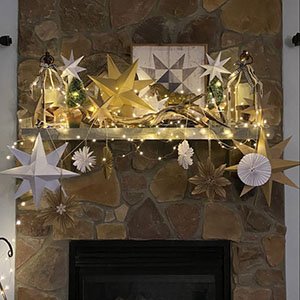
    Ideas for Outdoor Rugs:

    • Geometric Patterns: Add a modern flair through experimenting with bold geometric patterns.
    • Natural Fibers: Go for organic texture of natural fibres such as jute and sisal.
    • Layered Rugs: Use several rugs together to make an intriguing and funky look.

    Potted Plants and Flowers:

    Porch Decor Ideas

    Bring the natural beauty of your porch with different types of potted plant and flowers. It also helps make your screen more lively with shifting colors according to changing of season. Plant together plants of varied variety’s, having a combination of height and texture for an attractive layering effect. Potted flowers come with different types of blossoms to liven up the porch all year long right from the spring to the fall season.

    Ideas for Potted Plants and Flowers:

    • Herb Garden: For aesthetic appeal, as well as edible uses, plant some herbs in pots.
    • Succulent Collection: Come up with an enchanting succulent garden that offers different shapes and color palette.
    • Hanging Garden: You can use hanging planters with cascading plants of all varieties.

    Hanging Planters:

    Porch Decor Ideas

    Hanging planters are a clever, fashionable way of bringing some greenery into your otherwise bland porch. The suspended vessels form movement and interest in the veranda’s décor. The planters can hang either on ceilings or rails and display various kinds of plants having distinctive growing styles, such as trailing vines or beautiful flowers. It creates a garden-like layering on your porch, making it look like a real green oasis.
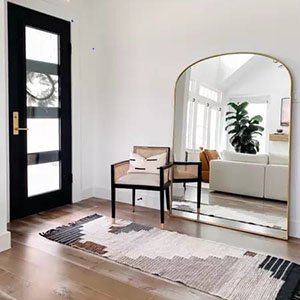
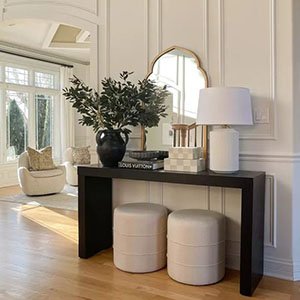
    Ideas for Hanging Planters:

    • Macramé Plant Hangers: Make your place look bohemian by using macramé plant hangers.
    • Color-Coordinated Planters: Select planters which fit into the general color composition.
    • Edible Plants: Hang containers with edible fruits such as cherry tomatoes and strawberries.

    Outdoor Pillows:

    Porch Decor Ideas

    Adding some comforts and stylish looks to your patio with the help of outdoor pillows is no problem. Go for such materials as weather proof materials in a coordinating color or complementing pattern of the entire house design. These pillows are soft, welcoming and provide an opportunity of introducing playful accents which ultimately connect the whole look together.

    Ideas for Outdoor Pillows:

    • DIY Pillow Covers: Make outdoor garden pillows and pillow covers for an added touch of personality.
    • Embroidered Details: For instance, you may add intricate details such as embroideries or pipings to give your garment some sophistication.
    • Seasonal Pillow Covers: Switch your pillow cases depending on changing of seasons or a holiday.

    String Lights:

    Porch Decor Ideas

    String light provides a cozy environment to transform your porch into a magical place within the night. Lights hanging along the porch railing, ceiling, weaving among plants all seem to form a fairytale scenery. The flexibility is enhanced by experimenting on various arrangements, varieties of bulbs, including use of solar powered lights for creating an ambient illuminated outdoor environment.

    Ideas for String Lights:

    • Curtain Lights: String lights will appear magical if hung as curtains.
    • Bulb Varieties: A wide view can be achieved by trying out various bulb shapes and sizes.
    • Solar-Powered Lights: Consider using solar powered string lights which are more efficient with regards to energy conservation..

    Outdoor Lanterns:

    Using lanterns to light up your porch adds an element of sophistication and style into it. Lanterns you choose should be compatible with the decor in order to make it modern, rustic, or traditional. Choosing LED candles and solar-powered ones for low-maintenance and energy-saving lighting. Properly placed lanterns not only make the space convenient, but they are also important in enlivening it through the day and night.

    Ideas for Outdoor Lanterns:

    • Candle Hurricanes: The romantic touch is in using candlestick hurricanes and putting them within lanterns.
    • Multiple Sizes: Arrange lanterns of different sizes creating a visual interest.
    • Hanging Lanterns: Drape up lanterns on the ceiling for a new look.

    Vintage Decor:

    Porch Decor Ideas

    Vintage décor in your porch infuses it with an element of nostalgia, that gives it the rare identity. You can use antique signs, lanterns or rustic crates as focal points in adding interest and texture into your outdoor space. Therefore, you need to seek out items that speak to your sense of style giving the porch as a whole a unique character.

    Ideas for Vintage Decor:

    • Mismatched Chairs: You may do that using a pile of vintage chairs mismatching for your eccentrically seating.
    • Repurposed Items: Use vintage things such as old ladders and crates for home decoration.
    • Flea Market Finds: Seek out treasures from flea markets or antique stores with histories to boot.

    DIY Artwork:

    Porch Decor Ideas

    You may use DIY artwork or crafts on your porch to personalize the place and add some personality to it. These include hand-painted wooden signs bearing words of welcome, construction of self-made plant stands, and other creative activities where the end result is nothing short of expressive. Apart from adding personal touch, it demonstrates your creativity and the zeal you have towards making arts.

    Ideas for DIY Artwork:

    • Upcycled Furniture: Revive your old furniture by giving it a fresh coating and creative finish.
    • Personalized Doormat: Create a personalised doormat with your family name, a funny statement or anything else.
    • Mosaic Tabletops: Create tables in mosaic designs for the outdoors.

    Privacy Screens:

    Porch Decor Ideas

    Using fancy privacy screens or trellises will make it intimate yet practical for you to enhance the intimacy of your porch. In addition to giving an impression of being surrounded by something, these elements can also act as a support for climbing plants with their leafy green background. Moreover, you may wish to customize your privacy screens through creative woodwork, lattices or other forms of designs that boost the general appeal of your porch.

    Ideas for Privacy Screens:

    • Bamboo Screens: Consider the use of bamboo screens for that natural and tropical look.
    • Vertical Gardens: Get an additional green touch by constructing a living wall using vertical garden panels.
    • Custom Woodwork: Create a custom privacy screen with elaborate woodwork or lattices.

    Weather-Resistant Curtains:

    Porch Decor Ideas

    Consider using weather-proofed curtains in your porch setting – they add some chicness and fulfill a certain functional role. Strategy hanging makes it possible to manage shade, wind and create comfortable area just for rest. Duration comes from choosing fabrics for being able to stand through the elements, adding to the design feel.

    Ideas for Weather-Resistant Curtains:

    • Sheer Curtains: Go for sheers so as to preserve this feeling of lightness and airiness.
    • Tie-Backs: Employ decorative tie-backs for hanging curtains when not in use.
    • Patterned Fabrics: Enhance the visual appeal with patterned or printed curtains.

    Outdoor Poufs:

    Porch Decor Ideas

    The addition of outdoor poufs or ottomans helps in amplifying the comfort and flexibility of your porch. These items of furniture provide extra seats, rest for feet, and if you want an immediate coffee table, they also provide a much more dynamic look and feel to your space. These water resistant materials enhance the durability of the poofs hence are great additions to any outdoor set up.

    Ideas for Outdoor Poufs:

    • Colorful Poufs: Use bright and bold colours to capture a jovial mood.
    • Multi-Functional Design: Opt for poufs that offer additional functionality.
    • DIY Floor Cushions: Make some large floor pillows for an informal way of sitting down.

    Welcome Sign:

    Porch Decor Ideas

    Greeting visitors, in person, with a unique welcome sign provides a warm atmosphere for setting one’s porch. This also includes things like a farm sign with your family named, a welcome message, a painted art among others, which give your outdoor space a little more personalized feel. Therefore, consider using components, which are consistent with the general motif or color scheme of the porch’s design.

    Ideas for Welcome Sign:

    • Chalkboard Sign: For a multi-purpose sign, use a chalkboard.
    • Seasonal Greetings: Replace the welcome sign with funny spring messages and quotes instead.
    • Lighted Signs: Add LED lights in the sign for more visibility especially at night.

    Nautical Theme:

    Porch Decor Ideas

    The nautical theme to your porch gives you a feel of being on the coastline. Introduce features like chains, ropes, and the use of blue and white design to establish the naval environment. It is advisable to utilize nautical-themed cushions, lanterns, and other accessories as the elements help in creating an atmosphere of sea breeze.

    Ideas for Nautical Theme:

    • Rope Accents: Incorporate ropes into furniture, accessories, etc.
    • Porthole Mirrors: Consider hanging porthole-shaped mirrors for a nautical touch.
    • Seashell Decor: Arrange seashells in baskets and bowls or use them as DIY elements.

    Bird Feeders or Baths:

    Porch Decor Ideas

    Bird feeders or baths will help you connect with nature on your porch. You can hang them in hanging points or strategic places so that you capture some wildlife from your local area. It enhances the beauty of your porch while bringing birds into your premises for bird watching. This results in a tranquil environment that blends with nature.

    Ideas for Bird Feeders or Baths:

    • Suspended Bird Baths: This look can be achieved by hang bird baths on different levels.
    • Seed Dispensers: Go for different feeders so as to attract different kinds of birds.
    • DIY Birdhouse Display: Put many unique style birdhouses together to achieve an interesting decorative setting.

    Sustainable Elements:

    Porch Decor Ideas

    Sustainable decor of your porch emphasizes its modernity and conscious approach to it. When selecting furniture and decor pieces, favor environmentally friendly materials like products made out of recycled or repurposed resources. More specifically, this is consistent with a green life style while promoting a clean and conscious approach in decorating.

    Ideas for Sustainable Elements:

    • Recycled Plastic Furniture: Select durable furniture made out of recycled plastic for outside use.
    • Upcycled Planters: You can also get repurposing materials such as old tires and pallets for your DIY planters.
    • Solar-Powered Decor: Use solar-powered lights and decoration as a green energy technology.

    Conclusion

    Your porch is an empty canvas, ready for your artistic style and personality imprint. From a traditional to a modern style, all these designs can satisfy any taste and provide great creativity for your deck. Porch decor is considered as a practical choice that elevates the charm of a house, while creating a charming and relaxing outdoor destination. Your yard will be an excellent place for you to show your personal touch, to be close with nature, or to simply greet those coming close to your doorway. These thoughts will make the porch an exhibition of you and a venue which generates lifelong recollections.